
Listen Here



What if the fastest way to grow your business isn’t building everything from scratch—but acquiring something that’s already working?
In this episode, Dave Wolcott sits down with serial entrepreneur 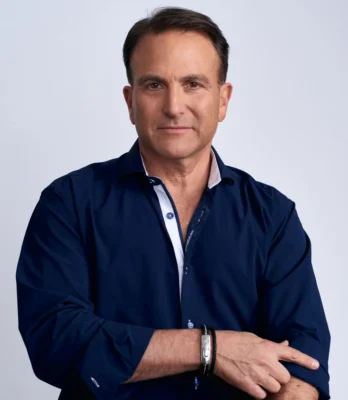 Tom Shipley to explore how strategic acquisitions can help entrepreneurs solve cash flow challenges, accelerate growth, and build enterprise value. Tom shares lessons from his own M&A journey, including how acquisitions helped him overcome critical business challenges, why he prefers profitable companies over distressed deals, and the playbook entrepreneurs can use to source, structure, diligence, and integrate acquisitions.
In This Episode
- Why acquiring an established, profitable business can sometimes offer a more predictable path than building a new venture from scratch
- How to create a clear acquisition thesis, build proprietary deal flow, and structure deals around both price and terms
- The three major acquisition risks entrepreneurs should watch: poor due diligence, weak integration planning, and ego
Tom Shipley is a serial entrepreneur with extensive experience using mergers and acquisitions to scale companies, generate cash flow, and build enterprise value. His entrepreneurial journey includes building and acquiring businesses across consumer brands and other sectors, executing roll-ups, and using programmatic M&A as a long-term growth strategy.
Tom also co-hosts the DealCon CEO M&A Summit, where experienced entrepreneurs come together to learn and execute acquisition strategies.
This episode covers business acquisitions, mergers and acquisitions, M&A strategy, entrepreneurship, business investing, wealth strategy, cash flow, enterprise value, seller financing, acquisition financing, due diligence, deal structuring, motivated sellers, proprietary deal flow, business roll-ups, multiple arbitrage, portfolio companies, and building wealth through business ownership.
Compounding wealth, basically creating a portfolio of assets that can either be sold separately, or sold together at a higher multiple because of the size, the more successful we can be.
Welcome back to Wealth Strategy Secrets of the Ultra Wealthy. I’m your host, Dave Wolcott, and today we’re exploring one of the most powerful and underutilized ways entrepreneurs can accelerate both business growth and personal wealth: strategic acquisitions. My guest is Tom Shipley, a serial entrepreneur who has used M&A to solve cash flow challenges, scale companies exponentially, and ultimately create significant enterprise value. In this conversation, Tom breaks down how acquisitions can often be less risky than building from scratch, why motivated sellers create extraordinary opportunities, and the playbook he uses to source, structure, diligence, and integrate deals. We also unpack the psychology behind successful acquisitions, the importance of seller relationships, and how a disciplined M&A strategy can turn linear growth into exponential growth. If you’re an entrepreneur looking for a smarter way to scale your business and accelerate wealth creation, this is a conversation you’ll want to hear. Tom, welcome to the show.
It’s great to see you again, Dave.
Great to connect, and I know the audience is really going to love this one, especially your journey. I think often in life we all go through these unique experiences, we hit decision points along the way, and based on our expertise and knowledge at that moment, we choose a particular path. You’ve taken a path I’d call contrarian, compared to what most people would do, and it’s been such an extraordinary ride. I think people are going to learn a lot from it. So why don’t we start there? Tell us about your journey as an entrepreneur, and how that’s transitioned into what you’re doing today.
Absolutely. It’s interesting; I like to start where my first real business was, then go back and give some context. The way I look at it is that entrepreneurs move through different levels of success, and every time we have a win or a failure, we rise to the level of the next opportunity. Whatever we did, once we’ve proven we can operate at that level, we can’t help ourselves but push further. I call it “adding zeros.” I remember my first business, a consulting business, and thinking, could I ever get it to $1 million? That was my big dream. My next business: could I get it to $10 million? That would be incredible. The one after that: could we get it to $100 million? Each level becomes a floor of comfort, and once you’ve done it, you can’t help but push to the next one.
Every time we have a success or failure, we rise up to the level of the next opportunity.
My first real business was in 1999, an exciting time; it was Web 1.0, but I always believed in omnichannel marketing. I started the business with $10,000 to kick it off. Two years later, we were mailing out millions of catalogs every month, the pieces of paper that used to go in mailboxes; a lot of people don’t even remember what catalogs were anymore. It was a beautiful business, alongside companies like Frontgate and J. Peterman. We got up to running 12 pages in SkyMall, the in-flight magazine, and had a nice B2B business too. Half our business was online, which is why Web 1.0 was so exciting for us.
Life was good until the dot-com bust hit. That meant a slight consumer recession, especially among our customers, so our conversion rate dropped, our average order size dropped, and suddenly we were burning cash. My CFO came to me and said, “Tom, I hate to say this, but we have 30 days of cash left.” I’m an entrepreneur, so I told him that was nonsense, that we had 90 days. But I knew we were really in trouble, so I started working the phones. I called an investment banker in New York and said, “Lee, how are you? Just touching base.” He said, “Tom, I’m glad you called, I’ve been meaning to reach out. I have the perfect acquisition for you.” At that point, we didn’t really know anything about acquisitions; we thought that was something only for really large companies. I asked what he meant. He said he was representing Boise Cascade; he had a buyer for their $750 million division, but that buyer had no interest in their $15 million division and was actually blocking the sale as a result. He told me I was the perfect buyer for that smaller piece, and a great complement to our business.
That’s where I learned my first lesson in M&A: when you have a motivated seller, don’t worry too much about price. It’s more about the terms than the price. Within 90 days, we closed on that business, and I exited a year later. I thought that was really cool, and it started a cascade effect. Two years later, I had a vision: we had a great playbook for taking a fictitious brand and turning it into an iconic, decade-durable brand using direct response marketing. I thought, if we did this in a business accessories category, imagine what we could do in the subscription-based beauty space. So my partner and I, two former Special Forces guys, decided we were going to build the first $100 million beauty brand. People laughed at us, because we were based in Richmond, Virginia. “What are you guys going to do? You’re crazy, no one’s ever done that.” We had strong conviction, and I knew how to create a compelling story, how to build great offers, and how to get the unit economics right.
A year later, we’d proven it worked. Lifetime value was great, customer acquisition cost was great. We’d paid a lab $5,000 to formulate the product and tested it on our own kitchen table with neighbors coming in, so it was completely bootstrapped. But after a couple of years, we ran out of money, and running out of money, for a lot of your listeners, means what it typically means: the 401(k) is gone, the bank account is gone, the credit cards are gone, the second mortgage on the house is gone. We even figured out we could feed our families by taking loans against our cars, and eventually even that was gone. My partner turned to me and said, “Tom, you have two daughters, I have two daughters, what are we going to do?” I said, “I don’t know, but last time this happened to me, we bought a business.” So that’s what we did: we bought a $15 million online supplement business in Hoboken, New Jersey that was throwing off $1.5 million in cash.
Wow.
There are so many lessons here about exactly how you do that, but the most important thing is that you can solve almost every business challenge through acquisitions. Think about it: we didn’t have cash, we didn’t have a great platform, we couldn’t do A/B testing, we didn’t have customer service, fulfillment, or accounting. And suddenly, through this acquisition, we had all of that. Within three years, we put our little $300,000 brand on top of that platform and grew it to $100 million, then eventually $1 billion in that first skincare brand. We created a whole new category in beauty, women’s hair regrowth, and launched Christie Brinkley Beauty. In 2021, we sold that business to private equity. That’s the foundation of my entrepreneurial and acquisition journey. It doesn’t fully answer how I got there, but that’s really where it began.
What a phenomenal trajectory, and truly contrarian. Most of the audience on this show is focused on building wealth, and that comes in different dimensions as we grow it. As entrepreneurs, and a lot of the audience are entrepreneurs, you really solved two problems. One of the biggest challenges businesses face is not having enough cash flow; the statistics are brutal, it’s the number one reason small businesses fail. You used M&A to actually drive capital. Second, you used acquisition to significantly grow enterprise value in the shortest possible time, which increases your overall equity position and wealth, a really phenomenal trajectory. Let’s unpack those two things. First, let’s talk cash flow. You mentioned exhausting all those familiar options, a second mortgage on the house, loans against vehicles. I’d never heard of that before, but I think we’ve all been there, looking under rocks, becoming resilient to find extra capital. There are plenty of lenders out there, but you pay through the teeth to use them. So how does using an acquisition actually get you capital? Were you able to get SBA funding, or something like that, to support it?
The difference is that on a startup, it’s tough to get funding, whether it’s debt or equity, unless you’re talking to the right people, whether that’s angel investors, a VC, another type of fund, or a family office. For two Special Forces guys starting a skincare business, well, we were good at camouflage, but convincing people to invest in us was genuinely tough, even with great metrics. However, you have two experienced entrepreneurs looking at a business that had been growing every year for five years, with a great business model. The two owners were going to stay involved in the business, but we were coming in to professionalize it. It was a profitable business, growing every year, built by two 25-year-old kids, and we were coming in to buy it. The mezzanine lender, and for people who don’t know, mezzanine lenders are specialty debt lenders who take a bit of an equity kicker along with slightly higher interest rates, underwrote the deal because the business cash-flowed well. Equity financing would have cost us most of the company, but because we used debt, we were able to grow this business fast for just 5% of the business in equity. It was a home run strategy for us.
That’s so creative. One of the things we’re always looking at is how to build wealth through financial engineering, and this is the first time I’ve heard such a great example of doing exactly that. But tell us, because the first thing that usually comes to mind when people think about M&A is the complexity; a lot of people haven’t done it before. What are the risks? How did you think through that logic and know it was right for you?
Well, first of all, with our first two acquisitions, we had no choice; we’d run out of capital, and the opportunity presented itself. The first time, it came to us; the second time, we created it ourselves. From a risk perspective, I built a lot of my businesses through direct response marketing, and I test. If I succeed on 20% of my tests, that’s a home run. I’m not betting the farm on it, but I’m used to testing, learning, testing, learning, testing, learning, knowing that most tests will fail when you’re expanding into new geographic regions, new channels, new offers, or new products. Most won’t succeed, and you learn and grow from that.
Acquisition is different: you’re buying a profitable business. You do your due diligence, understand the business, and acquire it smartly, so the probability of success is extremely high. Compare that to expanding into a new region or country, where now you’re hiring a whole new team. What’s the probability those hires are the right ones? I don’t know, but even a 50/50 success rate with the people actually driving your business is a big risk. Buying a successful, cash-flowing business is different, and I stress “successful” because if you love buying distressed businesses, what I call “falling knives,” you might turn one around for a great return, but it’s highly risky. You never know what’s sitting underneath, like an iceberg, so I avoid distressed businesses for that reason.
There are plenty of successful businesses on the market. You probably know this number, Dave: roughly 1,600 businesses close down every day in the U.S. Around 800 or 900 of those close because of the “silver tsunami,” the wave of baby boomers retiring. Only about 25% of them successfully sell their businesses; the other 75% go through failed sale processes, or never figure out how to sell, and just close down and move on. That’s a huge opportunity for someone offering them monthly payments from the business’s cash flow instead of just shutting it down. The remaining closures come from things like divorce, dissolved partnerships, or partners who just don’t get along, and again, those all create opportunities for buyers to step in. I’ve bought a couple of businesses with just 5% cash at close, borrowed against the business itself, with the rest structured as seller notes, because that was simply the best alternative the sellers had. What they really wanted was a great home for their customers and their employees.
So there are a lot of options out there, and it really comes down to having a playbook. I’m an industrial engineer; I take complex things and make them simple. There’s a playbook for acquiring a business. It’s not enough to watch an influencer’s YouTube videos and think you’re suddenly an expert; that’s like handing children a chainsaw, and I hate seeing entrepreneurs do that. There’s a real playbook, and the probability of success is much more in your favor than starting something brand new.
Some of what we did wrong, the path we took with our Atlantic Coast Brands, was starting brands from scratch. One of them hit $35 million in revenue pretty fast, and even though it was profitable, we were $7 million deep between inventory, media, and everything else we’d invested. Because we were building from scratch, we couldn’t borrow to fund that; it had to come out of our own balance sheet. If instead we’d gone out and bought a profitable business, we could have leveraged debt to do that again and again, and it stacks. That’s why I’m so passionate about acquisitions and about managing the risk properly. If you don’t know what you’re doing, there are plenty of experts you can bring in to teach you, and events you can attend to learn what works and what doesn’t.
What do you think are the top three biggest risks?
Improper due diligence, improper planning for integration and day one, and ego and hubris. Layered into that, it’s important to understand that acquisitions are 50% EQ and fit, systems, processes, and knowledge, and 50% IQ, because ultimately it’s a relationship business. When I buy a business, I want them to know me, and I want to know them. I want to understand their goals. The challenge with a lot of acquisitions is that people run everything through a broker or investment banker and never build a direct relationship; there’s a wall there between buyer and seller. I want to build direct relationships. I need them to trust me, for a number of reasons.
First, I need them to trust me enough to tell me the truth. Do you actually want to stay in the business after you sell? If not, tell me, and let’s find a way to orchestrate that. Otherwise, you blow everything up down the line by telling me you’ll stay for years when you have no real intention to. I once bought a $6 million business with $3 million of EBITDA, and the owner didn’t want to do anything from day one. We got lucky, because there was a CEO already in place who couldn’t wait for the owner to step away so he could take it to the next level. But if I’d known that information up front, I could have planned around it. That’s trust, number one.
Trust, number two: every deal dies about ten times on the way to signing the asset or stock purchase agreement, and a lot of that is miscommunication.
For years, I thought building wealth meant finding the next great investment. But as my portfolio grew, so did the complexity. I had real estate, private investments, insurance, tax strategies, and multiple advisors, yet no one was looking at the entire picture. I was still the one trying to connect all the dots, wondering if my wealth was actually working as efficiently as it could be. That experience taught me something most successful investors discover too late: building wealth isn’t just about owning more assets, it’s about making sure every part of your financial life works together. That’s why I created a complimentary masterclass called the Wealth Friction Tax. It reveals how disconnected investments, tax strategies, advisors, and financial decisions can quietly erode your wealth, and introduces a more coordinated way to manage it. If you’ve built significant wealth but still feel like you’re the one holding all the pieces together, watch the complimentary masterclass at contrarianwealthbuilder.com.
Building wealth isn’t just about owning more assets; it’s about making sure every part of your financial life works together.
The cool thing about this, think about it, is once you understand the psychology between what the seller needs and what you need, almost like a Venn diagram, you can agree to a term sheet, get flexible terms, and sign the LOI. But then your attorney starts whispering in your ear about how these people are basically bad and are screwing you, and on the other side, the seller’s attorney is telling them the buyer is doing nefarious things, look at these clauses, you’re being screwed, don’t trust these people, we have to fight them hard on this. The accountants, whose job is also to look for negatives and downside risk, do the same thing. So both sides start filling their heads with negative ideas, and that creates natural friction, which is why a lot of deals die along the way.
The way I like to handle it: the business points are ours to negotiate. Our attorneys and accountants are doing their job by warning us and taking a catastrophic view of everything, but it’s our job, as the actual buyer and seller, to say we want to get this deal done. Hopefully you’re picking advisors who will help you close the deal rather than break it apart, and not every attorney understands that distinction.
The next thing is, I want the seller to understand: I’m buying your business, and if you have a doubt in your head, or something doesn’t feel right, maybe a clause got entered into the purchase agreement that I missed, or our attorney got wrong, just text me. Let’s get on the phone. I don’t want you lying awake at night running through scenarios in your head, because the narrative you create for yourself is always far worse than reality. Let’s just talk about it directly. We’re going to be business partners, and even after you exit, I’m carrying your legacy forward. Let’s solve things like this ourselves, rather than leaving it entirely to our attorneys and accountants. That’s the kind of trust relationship I want to build, because we’re creating something really special together.
That really resonates, Tom, because being on the other end of it, being acquired, I found that process quite painful, and it was the opposite of that; it was really led by legal, which I can completely see happening. I like your approach much better. Let’s talk about your playbook. If I were a new client of yours, wanting to learn how to do an acquisition and bought into that philosophy, where would you start? How does that playbook unfold?
Absolutely. First, I want you to have a lot of seller conversations. The beginning of our playbook is identifying your buy box: what’s your thesis? You don’t just buy any business. What achieves your goals? What’s the greatest thing this acquisition can actually accomplish? Then you build criteria around the type of business, its EBITDA, its niche, whether it’s growing or flat, and what specific expertise it has. Be very clear about your deal thesis going in: do you want to fully integrate it, or run it in parallel? It doesn’t matter which, but have that thesis defined in advance.
When you’re doing outreach, I don’t like seller-run processes; I don’t like being one of several bidders in a competitive auction run by an investment banker or broker, where you’re on a clock and don’t get a real chance to know the seller. I’d rather run a buy-side process with a lot of proprietary deal flow, things like a LinkedIn outreach sequence, or email outreach, which we do all day long. If you’re consistently having three seller conversations a day, you should see one of those once-in-a-lifetime deals come your way about once a month. I want a motivated seller; I don’t want to buy from an unmotivated one, because then I’ll overpay. With a motivated seller, you can work together to find the right price and the right structure.
One thing I like to say, Dave: your price, my terms, or my terms, your price; you pick whether you want to define the terms or the price. As an extreme example, I’ll pay a billion dollars for any business, if I can pay it a dollar a week for a billion weeks. That’s absurd, obviously, but it illustrates the point. In our situation, we couldn’t afford to buy a business outright; we were about to go out of business and had run out of cash. But the seller was motivated, so we structured terms we could actually afford, and that’s how we got that deal done. It’s a game of price and terms, and understanding what’s actually important to the other side. If I have a great relationship with you and understand your real needs, I can get creative, either giving you the price you want, or structuring terms that help you reach your own goals.
But I need to have enough seller conversations to have that leverage. Otherwise, as entrepreneurs, we run into two problems. One is commitment bias: once I start a process, I’ve told myself I’m getting that deal over the finish line no matter what, even if I have to run through a concrete wall. Not every transaction you start should actually close. The other is desirability bias, similar in effect: we tend to only see the best-case scenario, because as entrepreneurs, we’re wired to create what’s possible rather than accept what’s probable, when most people would run the other way. It’s our own reality-distortion field; people accused Steve Jobs of the same thing. We pull people into our distorted view of reality and make it happen.
But not every deal you start should get done. If all you have is one deal in the pipeline, you’ll have an overwhelming desire to force it through. If you have three really strong deals going and something doesn’t look right on one of them, or you can’t negotiate certain terms and it’s becoming too risky, you can just say, “Fine, we’ll talk later, thank you,” and move on to deal two or deal three. Building a strong buy-side pipeline of proprietary deals is really the key, and it’s the first step. There are eight steps total in the full playbook, but I don’t know how deep you want to go.
That makes so much sense. What would help, Tom, is really underscoring the impact here, how huge this actually is. Can you walk through the numbers again from your trajectory, compared to a typical business? Say a business running at 20% to 30% EBITDA at a certain revenue level, scaling at 20% a year, which is already above most expectations by any measure. How does that compare to what you achieved through acquisition, and how exponential does it really become?
Great question. A lot of people running more mature businesses will say they’re going to grow 15% to 20% a year. The reality is there are black swan events, things happen, and you should honestly be proud if you can get compounded growth of 10% a year over time. After five years at that rate, you’ve increased the value of your business by about 84%, which is great, and that comes from two things: growth in your EBITDA, and, the higher your EBITDA, the higher the multiple someone’s willing to pay for the business; larger EBITDA tends to command a larger multiple. So an 84% increase in value gives you significantly more strategic options at exit.
Now imagine this instead: you spend around 7% of your resources systematically, and you buy one business every year that’s about half your size. Do that for five years, and you’ve increased your enterprise value by roughly 2,000%. Your strategic alternatives become drastically different. So 84% versus 2,000%; that’s the power of programmatic M&A: a disciplined, systematic process of building a seller pipeline, and having a defined approach to due diligence, deal structure, negotiation, closing, and integration. The due diligence process really exists to inform what happens on day one. The wedding is great, but the marriage is what it’s really about, and if you do that systematically, that’s where the real money is; it compounds.
You mentioned buying companies half your size, but you gave some examples of buying ones that were a lot larger. Is there a range that makes the most sense?
Twice we did what I call the minnow swallowing the whale, and I love that strategy; there’s real risk to it, and if it’s a bad acquisition, it gets challenging fast. Generally, the more conservative rule of thumb is to buy a business about a third of your own size, assuming you’re already at a certain scale to make that meaningful. I don’t like buying businesses under $200,000 in EBITDA, because too much can go wrong there; it can go negative fast.
Buying a business a third of your size, one big reason, has to do with your employees. At a third, you’re still the dominant culture. At 50/50, it becomes a real question of whose culture wins out, and who sets the tone. If the acquired company’s employees become close to a majority, like what happened when we acquired Urban Nutrition, you inherit their culture along with their people, and evolving that toward your own culture can take years. So the rule of a third is a good one, partly for cultural reasons and partly from a risk perspective. I also use deal structures to minimize risk to the core business overall. But those are the rules of thumb I rely on: a third is the conservative approach mathematically, though sometimes you start there and a genuinely great opportunity comes along that’s larger, and you end up averaging closer to 50% of your size.
Any final considerations for people who are working through this as part of their overall strategy?
I’ll start with this: every business owner should be thinking about five pillars of capability and excellence. First is profitable scaling, which can solve almost every business challenge, mainly by focusing on marketing and sales. Second is operational excellence: consistently delivering great quality to your customers at an effective price. Third is data and technology, especially now with AI; our unfair advantage has always been our level of technology, data, and analytics. Fourth is JV partnerships, because growth shouldn’t all rest on you alone. And fifth is acquisition, your filler pillar for growth.
If you’re running a business in the seven- to nine-figure range, you should be thinking seriously about investing in acquisitions, because the return on that investment can be significant. You can borrow money for acquisitions in a way that’s much harder to do for a brand-new internal strategic initiative, which always carries meaningful risk of failure. Weigh it carefully, but find experts out there who can help you compress the timeline and reduce risk; there are plenty of specialists who can help with exactly that.
If you could give just one piece of advice to the audience about accelerating their wealth trajectory, what would it be?
I like to invest close to home. When someone comes to me about investing in some new, unrelated business, I always prefer investing in my own vertical, in my own businesses, where I’m in control and I understand what they are. If I can build businesses around my core business, where everything supports each other, that’s really compounding wealth: creating a portfolio of assets that can either be sold separately, or sold together at a higher multiple because of size, and the more successful we become. Someone I was listening to recently, Henry Kravis of KKR, was asked what he’d do if he lost everything, and he said he’d start by buying a portfolio company, then start acquiring businesses into it. It’s the best, and the lowest-risk, way to actually accumulate real wealth that grows over time.
Excellent perspective, Tom. Really appreciate you sharing your journey and so many insights with us today. If people want to learn more about you, your upcoming conference, or anything else, how can they connect?
Thanks for asking. My day job is running roll-ups; my next one launches next year. We didn’t really get into a couple of others I’ve already exited, but the next one is coming next year. Beyond that, what I’m really investing my time in is making sure every entrepreneur has the tools it took me years to learn. Matt Bodnar and I co-host a conference every six months, the DealCon CEO M&A Summit. Our next one is in Austin, October 19th through 21st, at dealconlive.com. That’s where we bring together our resources and our people, and personally curate an incredible group of seven- to nine-figure entrepreneurs; we interview everyone who attends. You can find out more and join our newsletter on the website, or reach out to me directly. My goal is to help as many entrepreneurs as possible, so feel free to email me at tom@tshipley.com.
Awesome, really appreciate it, Tom. Thanks so much.
I appreciate it, Dave.
Thanks for listening to this episode of Wealth Strategy Secrets. If you’d like a free copy of the book, go to holisticwealthstrategy.com. If you’d like to learn more about upcoming opportunities at Pantheon, visit pantheoninvest.com.