
Listen Here



What if the smartest way to build wealth isn’t starting a business from scratch, but investing in one with a proven system for success?
In this episode of Wealth Strategy Secrets of the Ultra Wealthy, 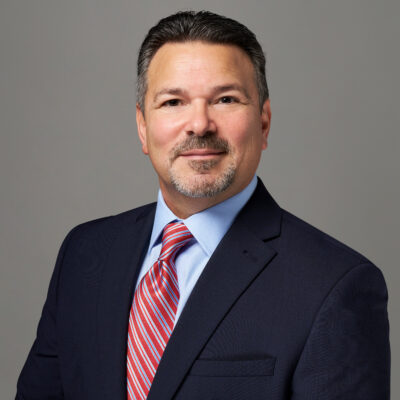 Dave Wolcott sits down with Cliff Nonnenmacher, serial entrepreneur, franchise expert, and author of Beyond the Brand, to explore how franchise ownership can create opportunities for scalable wealth and financial independence. Drawing from his experience scaling 12 franchise brands and managing $250 million on Wall Street, Cliff explains how to evaluate franchise opportunities, leverage established business systems, and transition from working in a business to owning one that operates beyond your daily involvement.
What You’ll Learn
- How franchise ownership can help entrepreneurs leverage proven systems, customer acquisition strategies, and operational support to build scalable businesses
- Five franchise sectors Cliff believes offer opportunities amid AI disruption, including home services, senior care, pet services, longevity and wellness, and youth enrichment
- Why successful franchise investing starts with understanding your financial goals, risk tolerance, leadership capabilities, and long-term exit strategy
Cliff Nonnenmacher is a serial entrepreneur, franchise expert, and author of Beyond the Brand, with extensive experience in business ownership, franchising, and investment management.
After managing approximately $250 million on Wall Street, Cliff transitioned into franchising in 2003, beginning with Cartridge World, where he scaled 36 units. Since then, he has helped scale 12 franchise brands and now guides aspiring entrepreneurs and investors through franchise selection, due diligence, and business ownership through Fronocity.
This episode talks about franchise investing, franchise ownership, franchise opportunities, business ownership, scalable wealth, franchise business models, passive business ownership, entrepreneurship, financial independence, franchise due diligence, business acquisition, business exit strategy, franchise valuation, AI-resistant businesses, home service franchises, senior care franchises, pet industry franchises, longevity businesses, youth enrichment franchises, business systems, Cliff Nonamaker, Beyond the Brand, and generational wealth.
Align yourself with professionals like you. People consult with you, and they want your advice. They want to leverage collective intelligence. I think that’s another tip for the audience: leverage your collective intelligence. Who’s around you that’s an expert in these certain fields? Leverage that intelligence to make a business decision.
Hey guys, welcome to another episode of Wealth Strategy Secrets of the Ultra Wealthy. What if the fastest path to building wealth isn’t starting a business, but owning one with a proven blueprint for success? Today I’m joined by Cliff Nonamaker, serial entrepreneur, franchise expert, and author of Beyond the Brand. Cliff has scaled 12 franchise brands and previously managed $250 million on Wall Street. We dive into how franchising can create scalable wealth, the five sectors poised to thrive despite AI disruption, and why the difference between owning a business and owning a job could determine your financial future. Cliff, welcome to the show.
Thanks, Dave. Thanks for having me.
Awesome to have you on today, and I’m looking forward to diving deep into the world of franchising. So many in our audience are entrepreneurial: they’re either running their own businesses today, thinking about running a business, or maybe even have a side hustle. I think a lot of people struggle with the thought, “I want to be an entrepreneur, maybe I want to leave my W-2.” Or maybe they want to pivot at this point in their career into something they’re passionate about, something that creates impact and juices them more than the nine-to-five they’re in. But that’s a big chasm, a big leap into the unknown, where you’re essentially being paid for your performance. You’re moving away from the time-and-effort economy and into a performance economy, so they see it as more risk, and there are a lot of considerations. I’m looking forward to helping you break that down for people who are considering a franchise. But before we dive in, tell us a bit about your background, which I know is quite an interesting journey. How did you get here today?
Thank you, I appreciate that question. My journey starts at about age eight. I’ll give you the Cliff Notes, no pun intended. At age eight, living on Long Island, I was raking golf balls. I was entrepreneurial at a very young age. I sold those golf balls at country clubs and made $100 a weekend, which is about $300 inflation-adjusted, at age eight. It wasn’t something I toyed with; I took it very seriously. I was out there after school, at night, when the rangers weren’t around, so I could hide in the woods and rake golf balls without the country club staff seeing me. I made a bit of a mess of the fields, since you’re taking mud out of there.
That took me into different business opportunities. As I got older, right out of high school in 1990 or 1991, I basically started Uber Eats. I delivered for 16 restaurants, an auto parts store, and a pharmacy in Marco Island, Florida, which is three miles by six miles. I lived there for 15 years. I scaled that business and sold it, then got involved in water sport concessions, which were behind the hotels I used to deliver food to. I ended up with contracts with Hilton Grand Vacations, and then locations on the Jersey Shore where I did water sports: parasail rides, boats, concessions, sundries, cabanas, chair rentals, umbrella rentals, anything beach and water sport related.
I did that for years, and I ended up distributing the Fun Noodle, the foam tube you float on, when it first came onto the market. I was buying tractor trailers of those things and distributing them around the country. I also owned video stores, I’m dating myself, because it was a bad-weather hedge. I was in the weather business: my business relied on good weather and calm seas. So when conditions were off, I bought a video store, which I thought was a good hedge, and it was an excellent one.
That took me into investment banking. I had money at a young age, started trading, and became an investment banker. I was with Salomon Smith Barney, which is Morgan Stanley Smith Barney today, and managed around $250 million with them right before the Asian contagion, to give you a timestamp. Then I had my bad boss moment. We were million-dollar producers, and I asked my boss for a printer on our side of the office. There was one networked Lexmark printer for 50 brokers. If you printed anything, it was gone. Not only was it a waste of time walking through the office, “How was your weekend? Did you see the game?”, all of those productivity killers, but I asked for a printer on our side of the building and he said no, because if you want a printer, you buy it.
So I bought one and used it. The printer cartridge cost $250 to replace. I melted a hole in the toner hopper, refilled it with aftermarket toner, and printed 4,000 more pages. I found a company in Australia that had reverse-engineered printer consumables, bought the rights to it, brought it to America, and scaled 36 units under the name Cartridge World, where we saved the consumer 50% on their printer consumables. It didn’t matter whether it was ink, toner, or fax supplies, or Brother, HP, Lexmark, or Canon; we handled it. That was my introduction to franchising. I literally fell in love, left the firm, and that was 2003. I have never left, and I’ve scaled 12 brands since then. Now I help people navigate this process to buy them.
What was your single biggest learning after running all of these different franchises?
That’s an interesting question. I’m going to go with this: I was raised to believe that if you want something done right, you have to do it yourself. That is the worst advice you could give another human being, unless you want to keep them poor. Once I read a quote by J. Paul Getty, that he would rather have 1% of the efforts of 100 men than 100% of his own effort, that was the moment I started to create wealth. Until then I was just a business owner, or so I thought. I was really an employee of my own crappy little company, because I believed I had to do everything. Once I understood how to train, hire, fire, execute, hold people accountable, and scale, that was the moment.
Running close behind that has a lot to do with people. I learned in business that people will exert a limited amount of energy to get what they want, but they will fight like hell to keep what they have. I learned to incentivize staff very differently from traditional incentives, because you can dangle all the carrots you want, and a person will exert only a limited amount of energy to get something, like hitting a bonus pool. In one of my businesses, we spent $50,000 a year on property damage, and no matter what training we did, they continued to do about $50,000 a year in damage. So I said, let’s flip the script. I’m taking 50 grand and putting it in a bonus pool. It’s your money at the end of the year, in proportion to your share of payroll. If you damage anything in a homeowner’s house, it comes out of that pool. Miraculously, the damage stopped. That was one of my greatest lessons in business: understanding how to motivate and incentivize staff to do what I need them to do, so we’re all in lockstep.
A person will exert a limited amount of energy to get what they want, but they will fight like hell to keep what they have.
Dan Sullivan has a phrase, “the rugged individualist,” and that typically happens to every entrepreneur early on, where you think you can do everything and do it better than everyone else. It’s probably one of the reasons you became an entrepreneur in the first place. But you realize your one biggest asset is time, and we have the same 24 hours a day as Elon Musk does. So how can you run multiple businesses at the scale he’s doing? You have to be great at incentivizing people and creating systems. It’s easier said than done. But what a perfect segue into franchises, where you can get leverage from proven systems, proven marketing, and client acquisition all the way through to the end. So talk to us about what you really like to see in franchise businesses that can be super successful today.
I do think franchising is one of the single greatest methodologies to create wealth without being an Elon. I don’t need to be a disruptor to create wealth in franchising. I don’t need to be a visionary or the smartest guy in the room, and I don’t need to create or disrupt a category. All I need to do is find the right fit that aligns with my investment objectives, through due diligence and by aligning myself with someone who understands the franchise landscape. Am I trying to replace my income, create generational wealth, or scale a massive enterprise? What are my investment objectives, and which brands can help make them a reality?
I became obsessed with it because of a lot of the things you just touched on. We have what we call proof of concept, the POC. The brand has been operating in several regions of the country, maybe several cities, with different demographics, not just an area like Thousand Oaks, California, where household incomes are a quarter million, but high-net-worth areas, upper-middle-class areas, and middle-class areas. We understand the consumer purchasing behavior and how this business scales in those communities.
Customer acquisition is everything. I tell everyone the same thing: there are only three ways to build a business. You have to acquire new customers, increase their frequency of purchase, and increase the average ticket. Those are the obsessions you should have in a small business, period. There’s no other way to build a brand. You could also acquire a company, but that really means acquiring customers and staff. Franchisors obsess over those metrics and KPIs. They’ve figured out how to acquire customers, how to retain them, how to hire people and keep them, how to price the product, how to execute the service, how to be operationally efficient, how to have a net margin above a certain level, and how to exit, which is what we’re doing all of this for, so we can meet a guy like you. We want to exit, cash in, and then say, “I’ve created wealth, now what? How do I preserve it and create an income stream for life?”
I think the exit in franchising is super important, because you could argue that anyone can exit. Not true. 85% of businesses on BizBuySell right now will never find a buyer. If your listeners went on BizBuySell and went through the inventory of businesses for sale, 85% of them will never find a buyer. They’re just small businesses being run by exhausted baby boomers who’ve been doing what I said: “If you want something done right, do it yourself.” Guess what? No one wants to buy your job. And if I buy your business from the baby boomer and eliminate you, because you’re gone and I hire a manager, I go net negative. That business is worth zero. Any business with zero EBITDA is worth zero, and it’s an asset sale.
What we’ve found in franchising is increased liquidity and a higher multiple of EBITDA than the same rival in the independent space. A franchise plumber versus an independent plumber with the same revenue gets a higher multiple. That’s not my data; it’s BizBuySell data they’ve aggregated, showing that franchising commands a premium, about a 1.5x multiple above the independent.
I love all that. That speaks to me, especially as an asymmetrical investor. Is that because you’re leveraging all of the proven systems and everything a franchise has to offer?
Exactly. One of the concerns a buyer has is, “Dave, I’m buying your business. Where are you going when I cut this check? There’s no clawback provision. I can’t call you back. You just left. Do I believe you’re really going to pick up the phone for the next two or three months to hold my hand through that transition?” When someone’s looking at Dave’s business, and Dave is part of a 200-unit brand, the buyer knows that whether you betray me or are there for me, the brand will always be there. I can always call support and operations, and they’re going to help me with whatever situation I come across for the next decade, literally. There’s comfort in making an acquisition knowing you’re not left alone, especially when you’re buying an existing business. You’re jumping on a moving train, if you will.
If someone is looking at getting into a franchise, is it possible to do it as a side hustle? Or does it need to be their full-time gig, where they put everything into it? What is it best suited for to be successful?
I like the way you ended the question: what is it best suited for? I think the optimal situation is that I’m a corporate executive, I’m unhappy, and I want to create wealth for myself. I’ve created wealth for everyone else, and now it’s time to take all my skill sets and build something for me. I quit, fully immerse myself in this new business, and fight like hell to win. That’s optimal. Is that typical? No. I’ve been doing this 25 years. Was that the story 20 years ago? Absolutely. If you asked an investor 15 years ago, “Are you going to quit your job to do this?”, it was almost a stupid question. Of course I am. Why would I spend $400 or $500 thousand and leave it to a manager making 60 or 70 grand a year to protect my half million?
Today, I call the average investor half pregnant. Everyone wants to keep one foot in corporate America and another in self-employment to manage risk and see if they can get this thing going so they can transition. The risk tolerance of the average person, in my opinion, has declined significantly over the years, for obvious reasons: everything has gotten so expensive. You just can’t pick up and leave. How far does a million go today? I don’t even know that being a millionaire is a flex anymore. You almost can’t even buy a house in my town for a million. So the average investor is now super cautious, belt and suspenders: keep the job, keep the benefits, keep the cash flow, and get the business going on the side.
There’s a scenario for everything you just said. Can I keep my career and do this on the side? Yes. Can I quit immediately and go all in? Yes. Can I get an SBA loan if I quit my job with no earned income? Yes. Can I get an SBA loan for a startup, or only for a resale? You can get it for both. So there are lending opportunities for every scenario you laid out. But optimally, I like to see the investor go all in, protect the investment, and live and die by that decision, instead of making it a side gig and making their job the priority over their new business.
That’s a great distinction. I think a lot of people wrestle with that and need to make that commitment to themselves before they get into it: what level are we going to play at? Do you have an approach or framework you work through with brand-new clients, to help them figure out what franchising really looks like for them, what they’re trying to get out of it, and then how to turn this thing up and get a return on their investment?
Exactly. We start with them, not brands. That’s the name of our book, Beyond the Brand. Stop talking about brands. Let’s talk about you. Why are you here? I’ve been doing this for 30 years, and every day it’s the same conversation. People are tired of making corporate America rich instead of taking care of themselves. They feel like they have P&L responsibility, they’ve built the department and scaled it, and it’s the same thing whether it’s office politics, or the guy or gal working for a boss half their age with half their experience. It’s all these weird stories: “I’m 50 years old and I have to ask a 27-year-old for time off during the holidays.” People are done with that type of nonsense. I think corporate America has a bit of a PR issue right now, because the culture is changing, and the next generation of workers wants nothing to do with the Gen X and baby boomer corporate lifestyle. They’re far more entrepreneurial and have far more options. I was raking golf balls; they’re making YouTube videos. I was delivering food; they’re trading crypto or NFTs. Look at what they’re doing compared to how you and I came up. They don’t view the path the way we were told to view it.
For years, I thought building wealth meant finding the next great investment. But as my portfolio grew, so did the complexity. I had real estate, private investments, insurance, tax strategies, and multiple advisors, yet no one was looking at the entire picture. I was still the one trying to connect all the dots, wondering if my wealth was actually working as efficiently as it could be. That experience taught me something most successful investors discover too late: building wealth isn’t just about owning more assets, it’s about making sure every part of your financial life works together. That’s why I created a complimentary masterclass called the Wealth Friction Tax. It reveals how disconnected investments, tax strategies, advisors, and financial decisions can quietly erode your wealth, and introduces a more coordinated way to manage it. If you’ve built significant wealth but still feel like you’re the one holding all the pieces together, watch the complimentary masterclass at contrarianwealthbuilder.com.
Get good grades, go to college, go into debt, get a job, find a spouse, buy a house, have kids, get a dog. They’re not even having babies. Think about what I just said: they don’t want anything to do with your lifestyle. I think corporate America has a big issue, and maybe it’s a perfect storm with AI coming in and the next generation wanting nothing to do with those jobs. Maybe corporate America says, “We have a labor problem? No problem, we have artificial intelligence, we don’t need you.” I’m not sure how this is going to play out, but every day I deal with the complaints. People generally come to me from a negative place, not with platitudes like “I want to control my destiny” or “I want more control of my schedule.” They come from “I hate my boss, I hate my commute.” They’re calling me back into the office; I’ve been free range since COVID, and now they’re bringing us back in. “I moved to Kansas and my office is in Manhattan. Not happening. I’m not getting back on that plane, kissing my family goodbye and living on the road 120 days a year.” That’s what I’m dealing with.
Then we understand their investment level and risk tolerance. Our favorite word in the industry is “risk proclivity”: where are you on that spectrum? What’s your liquidity situation? What does your net worth look like? What other income streams do you have? Do you have a working or non-working spouse? Show us your retirement assets. What’s illiquid that we could create liquidity from? This might be a good conversation for you to touch on, ROBS, Rollovers as Business Startups, which 98% of Americans aren’t even aware of, which is just crazy: taking an illiquid asset and creating liquidity out of it. So we understand their whole world and what they’re trying to do. Now we discuss brands. I’ve often said prognosis before diagnosis is malpractice. Know your client, know why they’re here, and then we introduce the brands that actually solve the problems they’re trying to solve.
What are the top mistakes you see franchise owners make?
Warren Buffett’s quote describes what my clients suffer from. They suffer from two things. The first is confirmation bias, which sounds simple but is one of the most destructive ways of thinking. It’s actually catastrophic. Confirmation bias is wild to me. Someone can say, “I’m going to buy this investment,” and you tell them, “I know ten people who bought that and got their heads handed to them.” They answer, “I knew you’d say that, you want me to buy something else.” And you’re thinking, I literally just tried to save you from financial annihilation, and you throw it back on me that I’m only telling you the truth because I want you to buy something else. That’s wild. It’s a big problem in my business: you tell someone you’ve already done due diligence on an industry or brand they want to purchase, and they don’t want to hear it. It’s no different from their algorithm on X or social media, scrolling through everything they want to see, confirming all their thoughts and suspicions. We live in a world of feeding people what they already want to know, and they’ll endlessly go through that list.
When you’re an investor, you need to be disciplined. I want to get back to the Warren Buffett quote, because it ties into my world: to be successful, all you need is a sound conceptual framework for making decisions and the ability to keep emotions from corrupting that framework. That’s my investor’s biggest issue: emotions, catastrophic thinking, being paralyzed by fear. That’s a lot for us as consultants to overcome. And believe it or not, it doesn’t matter what the client’s net worth is; we still deal with those things. We just deal with them differently, because a decamillionaire making a million-dollar investment is very different from someone with a $1.5 or $2 million net worth making a million-dollar investment. But we still deal with the same issues in how people make decisions.
Couldn’t agree more, mindset is everything. It’s in my book; it was literally the first chapter, foundational to everything: how you think and how you make decisions. If you have a scarcity mindset, whether you’re a decamillionaire, centimillionaire, or millionaire, you’re still going to have that scarcity mindset. So it’s really about understanding your strengths and understanding yourself really well. In fact, being an entrepreneur and owning a business is probably one of the biggest gifts you can have in terms of self-exploration, self-discovery, and growth as a human being, because you’re challenged in so many ways across so many different spectrums, and you have to be grounded and come to grips with all of those things so you can make the right decisions. And as we were saying, optimize for what is right for you, because what’s right for you could be totally different from what’s right for me. There’s no cookie-cutter approach. It’s about creating something built for you specifically, because that’s what’s going to help you get through the hard times, when the market changes or your best client leaves. You need to be able to trust your intuition and that foundation of what you do really well.
Mindset is everything. It’s foundational to everything: how you think, how you make decisions.
Absolutely.
Are there any sectors or particular brands? I know we don’t want to go too deep into brands, but help the audience understand what’s coming to the surface right now. We have some clients doing Amazon distribution businesses extremely well, probably so well that Amazon’s going to crack down on that. Any sectors or industries you’re seeing rise right now?
Definitely. We focus right now on five areas that we feel are the furthest from AI disruption, and maybe even from humanoids. If humanoids enter the industry, which they will, we’ll benefit, because that’s labor savings: a $20,000 or maybe $30,000 one-time purchase, and I have a humanoid working around the clock doing the routine tasks I was paying someone for. So the sectors I’m going to describe benefit from some technology but won’t be replaced by it.
The first is what we call the feminization of men, and let me explain why we call it that, not to be political. I’m not talking about the fifties and sixties; I’m talking about current-day young men, whose sperm counts and testosterone levels are half of their grandfathers’. This is one reason both sides of the aisle agreed on IVF in the last election: our children don’t want to have children, and even if they want to, they can’t. It’s a very big issue. So when we talk about the feminization of men, we’re talking about men’s health. We’re also talking about a man’s inability to use tools and be self-sufficient, including maintaining his number one asset, his primary residence. Most men can’t use tools, period. I don’t know what happened, but it’s common. For the last two decades, we told men not to go to trade school: go to college, get a degree, get a job, move on with your life. So we have a massive vacuum. I could go on and on with quotes from the presidents of Ford and GM. There are half a million jobs open in the automotive industry right now, paying six figures, that they can’t fill. That’s frightening.
What does that mean for the investor listening? If you invest in anything that requires the use of a tool, or maybe testosterone therapy, or ED, one in four men under 40 will have erectile dysfunction. That’s not normal. There are a lot of things happening to men, women, and human beings as it relates to health that are not normal. So I love HVAC, plumbing, fixing garage doors, painting, and junk removal: any business that requires hand dexterity, feet on the street, and pressing the flesh with the customer. The anti-Amazon, anti-AI brands, real brands. You’re not getting a haircut through Amazon or AI. You’re not buying a haircut over the internet. Those are just ideas.
Next is the silver tsunami. This country is aging rapidly. We’ll be a super-aged nation in less than ten years, which is when over 20% of your population is over the age of 65. We’re going to look like Japan. For all the investors listening, I think we all know what happened in Japan for the last 20-plus years because of depopulation, nobody having babies. They’re an ancient civilization, and look what happened to their society and markets. Look at the Nikkei. Look at what’s happening in Italy, Germany, Denmark, and all the super-aged nations around the world that aren’t repopulating. It’s a massive problem. And you don’t just have to care for the elderly to capitalize on the elderly. There are products and services you can provide, like scooters and wheelchairs. I’ve got seven-figure businesses that just put in ramps, to get the elderly in and out of commercial and residential properties. There are so many things you can do as a subcategory of the silver tsunami.
Third is the humanization of pets and animals. I just said five times that we’re not repopulating, so what do our youth do? They buy dogs. They buy one, two, three of them. It’s a $150 billion market in America today, the pet and animal category. I would argue, to make a point, that I’d put a million dollars into dog daycare before I’d put a million dollars into child daycare. Why? The trends are against child daycare, because we’re not repopulating, and if you don’t have children, what do you need daycare for? And the pet industry doesn’t mean you’re just selling dogs. You could be training them, boarding them, running retail, or doing mobile dog grooming. I’ve got a client making $1.25 million a year with 15 mobile dog grooming trucks in Long Island. The guy has never groomed a dog in his life. That’s another distinction I think is important for your show: nobody expects you to do the work. We want you to own these businesses and work on them, not in them.
The next category is the pursuit of youth. We’re aging rapidly, and we want to look good. Dave, you’re on camera, you want to look and feel good, you want energy. You’re wealthy, so what are you going to do with your money? You want to live. You want to be active, ski, sail, play pickleball, be competitive, and win at 50, 60, 70, 80. You want to keep your cognitive capability. Look at what Gary Brecka just launched, the Ultimate Longevity Center, which he did with Tony Robbins. They’ve sold hundreds of locations without an existing location. Peptides, NAD, testosterone therapy, hormone therapy, red light therapy, sensory deprivation, cold plunging, getting your blood work done, understanding your biomarkers and your T level. No modern doctor is going to tell you to check your testosterone level; I have to do that on my own, holistically, with people like Gary Brecka. It’s a massive category.
And I would argue, Dave, and I’ve done episodes on this in your industry, you call it sector rotation, and in my world it’s very similar. If money was going to gyms for the marketing of caloric burn, which is really what they’ve been marketing for decades, come in, burn calories, lose weight, pay me a monthly fee, run, push, pull, get your heart rate in a zone, we don’t need that anymore. We have semaglutides now. I could sit at home and do absolutely nothing, I no longer crave a cookie, I no longer need to work out, and I’m losing two pounds a week. Not me, I’m talking about the average semaglutide user. Who knew a pharmaceutical product would be a disruptor in the fitness industry? So where does fitness money go now? Not just to semaglutides. It goes to red light therapy, the Gary Brecka longevity institutes, and the med spas. You’re seeing sector rotation within my own industry.
And lastly, the fifth category we focus on is anything involving youth enrichment: our children. Public schools, in my opinion, have failed miserably. They have failed these kids, who aren’t ready for life. They took away home ec, welding, auto shop, gym, music, art, everything. Parents want their kids to be ready, productive, good members of society, heads of household, and to have a nice life. So anything involving youth enrichment, whether music, art, cooking, home economics, science, technology, engineering, or math, anything to make our kids better, is a great market right now, because parents want it. I had a family member who owned a hitting academy; all he did was batting. I said, “I can’t believe the revenues you have.” He said, “Cliff, a parent will spend an ungodly amount of money for their kid to hit a double, just a double.” And it’s true. What will a parent spend to give their kid an edge with a tutor, or in STEM, or just a little push to get that kid to the front of the line in a highly competitive society? These kids need a little advantage. Those are the five we focus on, and I think investors will win if they go a mile deep and an inch wide in those verticals and own their market.
Really great breakdown of those sectors. Cliff, I’d like to peel back on AI a little, because everyone is trying to get their arms around it, and you alluded to it with the sector around blue-collar jobs, plumbing, HVAC. Those types of businesses are very popular right now, and from an exit standpoint, a lot of private equity is doing roll-up strategies and going after them. But do you see AI at some point catching up to these businesses with human hands? For instance, you could have your lawn cut by a drone or a robot, and eventually a humanoid could maybe even cut hair, though it won’t give you the same human experience. What’s your take?
Well said. First of all, blanket statement: it’s probably the most destructive technology ever to enter humanity. I think tens of millions of jobs are going to be eliminated, and I don’t know that they’re going to make up the jobs. I’m not sure where this goes, but I’m already experiencing it in my own business, where I don’t need certain people. I’m not replacing them, and I don’t see myself ever replacing the people who are no longer with us, because technology has replaced them. I don’t care if you do coding or you’re a graphic designer, you could not come close to the speed at which I execute with AI relative to an employee in a corner office who’s been tasked with coding. I think we’re all in for a rude awakening. And quantum computing isn’t even here yet. When it arrives, it’ll hit the financial markets big, because it can do computations so much faster. I recently asked what one of the most complex mathematical questions is, and the example was a wormhole in the universe. How long would it take us to compute that today? Thousands, if not a million, years with today’s technology. How long would it take quantum computing? It’s measured in days. Wow.
So when you think about where we’re heading with humanoids, I think Elon was very smart not to make an R2-D2 but a C-3PO. He made something with hand dexterity, something that fits into the world we’ve already built, something that can reach out. Look at the height of your light switch, or the door handle. The world we built for you and me is built for them too, and they’re going to transition right into it seamlessly. The only thing separating us from them has been hand dexterity, and that’s going to change. So I think you’re one of two things going forward: you’re either disrupted or you’re the disruptor.
Here’s an example. There was a story about a Tesla self-driving automobile with four humanoids in it pulling up to a house to do a real estate home inspection. Their eyes are FLIR, which means they can take moisture readings and see straight through the attic. They could see a raccoon’s nest in there, moisture above where the chimney is, and all these issues: imperfections, nail pops, corner bead issues, moisture, you name it. They could test all the appliances, test the amperage and voltage, and tell you the dishwasher has two more months to live, based on the analysis they’ve conducted. The self-driving car walks into the house and bangs out an inspection. Who owns that business? I want to own that business. I am officially the disruptor. Unfortunately, I’ve displaced five of my employees, bought $20,000 or $30,000 Optimus humanoids and a self-driving automobile, and dispatched them into the field.
I think there’s going to be a lot of disruption, and you’ll have to pick a side: disrupted or disruptor. I think entrepreneurs for the most part will be the disruptors, eliminating labor and replacing it with technology. That’s my opinion, and I can see it now with 1-800-GOT-JUNK. I’ve got two guys in a truck; one has a worker’s comp claim and one has a sexual harassment claim tomorrow. Two humanoids offer perfect customer service, lift ten times their body weight, and flawlessly carry the couch to the truck and to the landfill, end of discussion. And safer: even Warren Buffett had to comment that self-driving automobiles are safer than people driving. How does that impact Geico? It’s going to have an impact, because premiums go down. So I’ve got a safer automobile, a safer experience, and two humanoids. Come on, man, this is crazy.
In these simple businesses I’m referring to, with low barriers to entry, picking up junk is not a high-barrier business, and junk removal, house painting, and maid service are all low-barrier businesses. You could argue, “I’m going to buy a humanoid and have it clean my house,” and now Molly Maid is in trouble, and Mr. Handyman may be in trouble. But there will still be a massive swath of people who aren’t comfortable buying these things, don’t have the liquidity to do it, or lost their job to it: “I’ll never have one of those things in my house. You destroyed my family.” Women aren’t ready to have them in their homes yet, either: “I don’t trust this thing. What is it going to do? Could it hurt me?” So we’re not fully there yet, but we will be, and I’m highly confident it’ll creep into every area of our lives.
100%. We need to be thinking about this as investors, as family members, and as business owners. It’s going to impact literally every area of our lives. One of the biggest opportunities I see, and it really started post-pandemic but AI is accelerating it, is that humans by nature are connected beings. We want community. So in a world where humanoids and artificial intelligence are doing all this work, we’re craving the human side of things. Anywhere you can humanize your business, whatever business you’re in, or if you’re investing in businesses or about to buy one like a franchise, it’s like you’re saying with plumbers: you could have gone on ChatGPT or YouTube and spent a couple of hours figuring it out, but wouldn’t it be nice to call the guy who always comes by every quarter and checks on you, where you have that human connection and relationship, and who tells you how to optimize things you wouldn’t get from those tools? Or even coffee: you’re seeing fully robotic coffee shops where you can just get your coffee, but people want to be surrounded by other people in that environment and have the barista serve them. So there are always going to be opportunities on the humanization side of business. That’s my observation right now.
I agree.
Cliff, this has been a whirlwind of great wisdom. I really appreciate your insights, and a very unique lens for the audience, whether they’re investors or potential franchise owners. It’s so much better than turning on the news and seeing headlines that only scratch the surface of what’s going on, where the opportunities are, and what the current issues are. If you could give the audience just one piece of advice to accelerate their wealth, what would it be?
Well, one, be a disciplined investor. Next, be an asymmetrical investor: only invest in things that have a disproportionate amount of upside versus downside. Most people don’t do that. Look at all the people who bought Crumbl Cookies for $1.5 million and now are filing for bankruptcy because they bet the farm on a cookie. A thousand-calorie cookie. Be disciplined. People lack discipline and get emotionally involved in the decision-making. And I think, align yourself with professionals like you. People consult with you, and they want your advice. They want to leverage collective intelligence. I think that’s another tip for the audience: leverage your collective intelligence. Who’s around you that’s an expert in these certain fields? Leverage that intelligence to make a business decision. I’m not sure that answers the question, but that would be my advice.
Cliff, if people want to reach out to you and learn more about exploring a franchise, get a copy of your book Beyond the Brand, or check out your podcast, what’s the best place for them to reach out?
Franocity.com, there they’ll have access to schedule an appointment with me, call the office, email me, and so on.
Excellent. We’ll make sure to put that in the show notes for everyone. I appreciate your time again, Cliff, so many great insights, and we’ll see everyone on the next one.
Thank you so much.
Thanks for listening to this episode of Wealth Strategy Secrets. If you’d like a free copy of the book, go to holisticwealthstrategy.com. If you’d like to learn more about upcoming opportunities at Pantheon, visit pantheoninvest.com.