
Listen Here



Most investors spend decades accumulating assets only to discover they still lack control, cash flow, and true financial freedom.
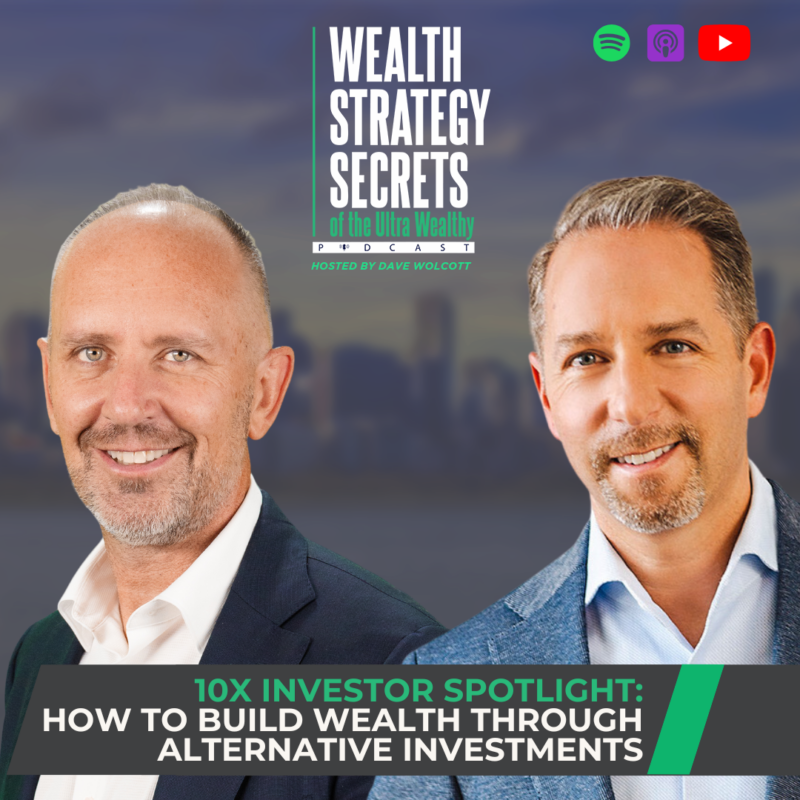
In this Investor Spotlight episode, Dave Wolcott sits down with Pantheon 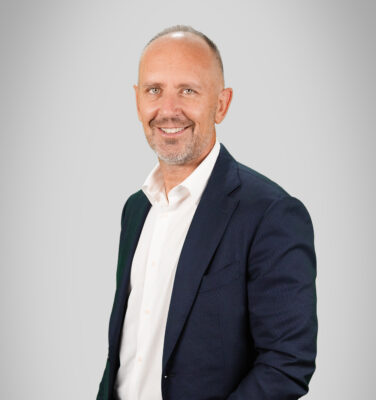 Mastermind member Travis Purvis to discuss his transformation from a traditional W-2 executive and stock market investor into an entrepreneur building passive income through alternative investments, tax strategy, and holistic wealth.
Travis Purvis spent more than 30 years building a successful career in the energy industry, ultimately leading global organizations before retiring early. Today, he is an entrepreneur, commercial real estate investor, founder of North Peak Commercial Advisors Texas, co-founder of Emeth Capital Partners, and an active member of the Pantheon Mastermind community.
This episode covers passive income investing, wealth strategy, alternative investments, financial freedom, tax strategy, commercial real estate, entrepreneurship, family office investing, cash flow creation, and wealth building strategies for accredited investors.
In This Episode
- How alternative investments can help create passive income and financial freedom
- Why holistic wealth includes health, relationships, purpose, and financial strategy
- The mindset shifts required to transition from accumulation to intentional wealth building
Don’t wait. Get started now. Take one step, one action, make one decision. Just take a step. And it may feel like a risk, but I think the risk is in not doing the thing. Welcome to the Wealth Strategy Secrets of the Ultra Wealthy podcast where we help entrepreneurs like you exponentially build wealth through passive income to live a life of freedom and prosperity. Are you tired of paying too much in taxes, gambling your future on the stock market, and want to learn about hidden strategies for making your money work for you? And now your host, Dave Wolcott, serial entrepreneur and author of the best-selling book, The Holistic Wealth Strategy.
How’s it going, everyone? And welcome to Wealth Strategy Secrets of the Ultra Wealthy. Today we’re doing something a little different. One of the things I’ve always believed is that some of the most powerful lessons don’t just come from experts or industry leaders; they come from real people who are actively doing the work. And that’s why I’m excited for today’s conversation. This is our 10X Investor Spotlight, where we sit down with members of our community and explore what happens when you intentionally begin building wealth differently, more strategically, more holistically, and with a longer-term vision. Today we’re joined by Travis Purvis, an investor and Pantheon Mastermind member who has been on a journey that I think many of our listeners will relate to. This isn’t about arriving at some final destination; it’s about the evolution that happens when you stop simply investing and start thinking more intentionally about your entire wealth strategy. From refining investment philosophy and evaluating opportunities differently to thinking about taxes, cash flow, legacy, and even operating more like a family office, Travis has experienced firsthand how your perspective begins to shift when you commit to learning and implementing these principles over time. If you’ve ever wondered what this journey actually looks like in real life, this episode is for you. Travis, welcome to the show.
Thanks, Dave. It’s really good to be here.
Yeah, what a pleasure to have you on today. And I know the listeners are definitely going to enjoy this. And as we were talking about, I think it’s always so powerful when you can really hear from someone that you can follow their footsteps. They’ve taken the journey and they’re ahead of you in certain ways. And there’s just so much powerful learning to really grab those insights from that person and then just bring that into your own journey and figure out how you can accelerate things from there. So really grateful to have you on, Travis, and really talk about that journey for listeners today. So why don’t we start with talking a little bit about your origin story—kind of who are you? Who is Travis Purvis? And then really, I’d like to also understand what was your mindset coming from maybe that conventional thinking or traditional financial planning, what you had understood about the world of investing probably five, 10 years ago, and how has it evolved since then?
Yeah, sure, Dave, happy to do it. And again, thanks for having me on. It’s just great. It’s been great getting to know you over the past year and learn from you. So it’s kind of funny—I wanted to laugh when you said somebody wanted to follow my footsteps because I feel like I’m so new in the journey, but at the same time covered a lot of ground in the last year. So, yeah, let me start from the beginning. I’ll zip through kind of the early years, but I was born actually right here in Houston, Texas, where I’m sitting now, but moved at a young age to Wyoming. So I grew up in Wyoming. My father was in the oil and gas industry, a family of four kids—I was the youngest of four. My dad, however, lost his job in the early 80s when I was around eight years old. And so I really grew up with a scarcity mentality around money. Money was always the subject and was always difficult to come by. And so that really shaped how I thought about my future. And my thoughts were really around, “Hey, I’ve got to get a good-paying job. I need to get an education, I need to go to university, I need to get a job immediately, as fast as I can. And I need to make money and save money because I don’t want to be in this situation when I’m in my 40s, 50s, 60s.”
So that really drove me to the University of Wyoming—it was the closest university from where I grew up. Got a degree in petroleum engineering, graduated in 1994, moved to Denver, got a job with Amoco and started my career. And at the same time met Rebecca, my wife now of 30 years. And so that then started us into a long career—I say a 30-year, 31-year career. And in that time, we had our first two kids, a boy and a girl. And then along the way, we adopted three kids: one from Ethiopia, one from China, one from Sierra Leone. And so moving all over the world within the US and then to Scotland, Russia, many years in Dubai, and then back here to the US. So that’s a lot of stuff compressed in 30 years, compressed in a few minutes, but that’s really the origin story.
Yeah, no, it’s such a great, eclectic background and everything. And I always find it interesting that the international experiences of learning about different cultures and learning about money, values, all those different things in different cultures—they really shape who you are today, your identity, your belief system, and those things. And so you’ve had an amazing background in all of that that’s pulled it together and I think is really part of that transformation that you’re kind of going through today. So let’s kind of talk about that a little bit. I want to go more into what has really changed for you since you started to get more into alternative investments, things like being inside of the mastermind community. How has that really changed your perspective? What’s the biggest thing you’ve learned?
Well, Dave, I think back to the question you asked at the beginning was, where was—what’s my mindset? What was my mindset really at the end of that corporate career and what is it today? And so when you think about it, had this great corporate career, ended up running a global company and in my early 50s and really had an opportunity that was kind of unexpected, but to retire early from oil and gas. And so I took that opportunity, and I think at the time, I was really starting to see—and look, I was doing exactly what I was taught: save money, save, save, save, save, save, and then someday you’ll have this pile of money that you can start taking little pieces off of for the rest of your life. And the more I thought about that, the more that just felt broken. It felt like I realized that kind of scarcity mentality that really I carried throughout my whole life, despite the success I had in business, and thought, “Well, is that it? There’s got to be more than that.”
So when I had the option to retire and did, I really just took that opportunity to really stop and reflect on where I’d been, what I’d been through, and where I wanted to go, and really just became a student of learning. I dove deep into learning about different asset classes. That’s when I met you, and your message about holistic wealth really resonated with me. Because prior to that, back in ’24, I started on a fitness journey, and at the time, like most—I would say like a lot of men in their late 40s, early 50s—I had just been busy, busy, busy, busy. Always liked to work out, but realized one day that I was 50 pounds overweight and kind of “fit fat,” if you will. And so I started a fitness journey in ’24 with a company called Superhuman. And shout out to my coach, Sully—he’s an incredible guy, incredible mentor of mine in that space. And proceeded to lose 50 pounds and got myself in a much better place in terms of clarity of mind, energy, all those types of things. So that really allowed me to then be open and to be receptive of a lot of new information. And so really started to pivot and, like I said, become a student of this new path. And in the midst of that, became an entrepreneur. And we’re going to talk about that and what that whole journey’s looked like.
Yeah, awesome. Tell us about what does holistic wealth mean to you?
Yeah, well, it resonates with me, Dave, and for those who haven’t read Dave’s book, it’s a great read. But for me, I think about it in kind of four pillars. For me, it’s my faith, it’s my family, it’s my fitness, and it’s my financial life. And so one of the things you really helped me with was some vision work that we did within the mastermind. And that helped me get real clarity around those four pillars and how I approach them. So I’ll just run through the four of them briefly.
But faith for me was really the anchor. So being full in that area of my life, faith is the foundation. It’s how my day starts. It’s the lens at which I look at everything through. Deeply involved in my marriage to my wife, Rebecca, and we were very active with young married couples through our church. So there’s a lot of things we like to do there and just the richness that that brings—we just love doing that. So that’s really that first piece, being very healthy in that area.
The next one, family: like I said, Rebecca and I just had our 30-year anniversary this past fall, and she’s just been a great life partner to me. With our five kids, we’ve got an incredibly rich and diverse family from 28 years old down to 16—well, two 16-year-olds and a 17-year-old. And our kids are just doing great. We have our first grandchild and another one on the way. So the fullness we have there and seeing our kids choose great partners and make great decisions—at least the older ones, the teenagers, the jury’s still out, but we’re confident we’re going to get them there. But that’s such an important part, and having richness of relationships is so very important to us.
And then that third piece was the fitness piece that I talked about earlier. But that was so critical to me having the energy levels I enjoy today and the focus I have today—it’s just been incredible. And it wasn’t a silver bullet; there wasn’t something simple that happened. It was just we got very clear on my nutrition, on my movement, and on resistance training, and just showing up every day and doing that work. Some people call it the “dark work”—doing it when nobody else is looking, just doing that every day, every day, every day, every day. And that just really got me to this place of where I am today. And what was really fun, just as a part of that, Superhuman inducted me into their Hall of Fame this past fall. And that was just really cool—more so just recognition of all that hard work of getting up at 3:30 in the morning, 4:00 in the morning when there wasn’t time or normally wouldn’t be time, making time, saying, “Hey, that’s a priority.” So that was pretty awesome, and I just love that.
And then the last piece is the financial, and we’re going to jump into that a bit more because I’d like to explore that a lot more. So that holistic wealth for me is really around those four pillars. And something I was thinking about, Dave, is there’s this quote—and I’ll probably screw it up—but there’s a guy that said, “Could the person you were 12 weeks ago do the thing you’re about to do? Because if the answer is yes, you’re not growing.” And what I can say confidently today is things I’m doing today I couldn’t have done before, and I can do them now. And I have the confidence to do them, and the competency to do them, and the energy to do them, and the faith to do them, because I’m continuing to grow and evolve. And each day, just try to raise that standard a little bit higher and push a little bit more into that future self. And that’s been a really fun journey.
Here is the continuation of the transcript with your requested corrections. All duplicate words, stumbles, and repetitive filler phrases (like “right”, “you know”, and “I think”) have been removed. Capitalization, spelling, and punctuation have been normalized while keeping the exact phrasing and grammatical structure completely intact.
Yeah, that’s really awesome, Travis. And what do you really attribute that to?
You mean the motivation or just the change?
So the ability to be able to do that. I mean, that takes a lot of courage to be able to step up. And whether that is in any dimension you’re talking about in your faith, in your finances, a lot of people might see that that’s a path—there’s some optionality there—but it really takes a lot of courage to be able to get there. Was there some moment, was there some epiphany or something that gave you the clarity to be able to push outside of the norm?
Yeah, I think the irony, Dave, is most people—and I’m going to say most people, because I was exactly one of them—get lulled into this false sense of security, of this accumulation idea. It’s like people think, or I thought, that was going to give me security. And then once I started thinking about it, I actually realized that there’s a lot of uncertainty in that future. And so that uncertainty for me is like, is that going to be enough? Is that it? Combined with, is this what the rest of my life’s going to look like? I’m just going to age and kind of maintain my life the way it is? Or am I going to look back and have regret that I didn’t become more, do more, become a better husband, a better friend, a better father, a better peer, a better whatever? I just didn’t want to have any regrets. So it wasn’t a fear that evolved. It was just more of a realization of, “Hey, I think I’m a pretty decent guy, but I think there’s a lot more that I can do. I think there’s a lot more impact that I can have.” And it’s not growth for Travis’s sake; it’s growth for everybody around me’s sake. So I think I can do more and be more. And I don’t want to look back and be sitting when I’m 80, 90, or Lord willing, 95, and say, “I wish I would have done that. I should have tried that.” I don’t want to live a life with those types of regrets.
Surround yourself with people who are smarter, stronger, and wiser. You can’t help but become better.
Yeah, I love that, Travis. I think how I would describe this is just really this identity shift, moving really from a conventional investor and into what I would call a wealth visionary. You were very articulate in how you defined the model of accumulation theory. It’s so interesting because even though it’s just wrapped around money and this is a way to kind of retire, it actually starts to create a plan for your life. But when you start to challenge that plan by saying, “Hey, I’m going to work really hard my whole life, I’m going to sock away all this money, and then just take a little bit out each year, hope I don’t outlive my money,” then there’s all kinds of uncertainty—taxes, inflation, fees, all these things. Actually, it’s more uncertainty. And then it really forces you into this lifestyle that’s just really average and subpar. It’s probably fine for a lot of people, but I know the people listening to this show and people like yourself, you want more out of life and you want it today. You don’t want to wait until 65. It’s just really incorrect. So the psychology around the whole thing is really powerful. And what you’re demonstrating is that you challenged the traditional conventional model, you flipped it on its head, and you really did the deep work on what’s really important to you now. You created that vision, and now look at you—the things that you’re doing are really amazing.
No, I appreciate it. That resonates, Dave. You said, “I don’t want to be average,” and that’s exactly right. I don’t want to be average. I want to be above average in everything that I do, and every way that I show up, and everything I create or touch. I don’t want to be average in how I listen. I don’t want to be average in how I learn. One thing that’s definitely true about me, and it’s probably one of my greatest strengths and probably my greatest weakness, is I’m pretty fast on the trigger. This last 12 months has been fast and a lot has happened, and we can talk more about the details. But from a wealth perspective, if you look at my allocation 12 months ago, my allocation was 100% equities. Today it’s very different—it’s very, very different. And it’s through very specific actions that I took. We can kind of talk through those that I saw, learned, and then took action—took immediate action.
Yeah, so let’s talk about that, Travis, specifically. What was the shift that you made in terms of repositioning your asset allocation stack, and really, why? Let’s also help the audience understand why you made some of these changes.
Sure. So out of the gates when I left, there was an exit and there was money involved in the exit, which was great. So first and foremost, the tax question came up, and that really started the front end of the learning. What I realized very quickly is I didn’t need just somebody to do my taxes; I needed somebody to help me build a tax strategy. So I did that very early on. Ended up with a guy that’s outstanding—he and his team actually came through you, Dave. That’s how I got that introduction, and we built a plan. I got very clear on the types of investments that I could make that would have a direct impact on offsetting the tax associated with that W-2 income that I had to deal with. Good problem to have. So we worked on that tax strategy, and that was very clear in terms of the types of asset classes I could place that would give me those types of tax benefits that would really be beneficial.
The next thing I did was work around estate planning. I got all those things sorted out because, again, I wanted to make sure that we had a proper family trust established and that assets would transfer efficiently in the future. Control on how legacy is distributed, all these types of things—especially given a wife, five kids, and now grandkids in the picture.
The third thing—I don’t want to lose track here—but I took defined benefits plans that I had and I converted them very quickly to self-directed IRAs. Now, we could have a whole different discussion on should I just even just pay the tax and get out of those and pivot with those, but I just realized I wanted better control of them. I didn’t want those just tied up in a mutual fund or an ETF or an equity. I wanted to be able to very specifically deploy that capital the way I wanted to deploy it.
The next thing I did is I set up two properly structured whole life insurance policies for a place that I could warehouse capital and then practice infinite banking, so I could turn around and actually redeploy that capital via policy loans. I did that as well as part of that process. And then I just got after it. In the midst of that new structure and that new framework, I was able to confidently deploy capital across several asset classes, including private credit, oil and gas, did some land development, some other real estate investments, and some litigation fund investments. So really kind of a broader reach, if you will, in that regard, but also some specific focus and very much in line with my tax strategy. So that really took up that 70% that I talked about earlier, and then the other 30% is in equity, and I’ve got a 5% target in Bitcoin as well on the crypto side.
Yeah, excellent. And how do you feel about your portfolio and your financial life right now?
I feel great. And the reason it feels good is because it’s very clear to me and it’s going to become very predictable. This portfolio is going to start producing, or is producing, and has a pathway to producing a passive income number that is exactly where I want to be and will actually exceed what I feel that I need in terms of just running the life and the lifestyle that we want to have. And that doesn’t even count the active income that’s now happening in the new businesses that I started. So we can touch on that here in the next part of the discussion, but really it just gives me great confidence in my future, and it’s not tied to a 9-to-5 job in that regard.
(Commercial Break)
If you’ve ever wondered how the wealthy use energy investments to reduce their tax bill while generating cash flow, we just answered every question on camera. Go to pantheoninvest.com/energy to find out. (End of Commercial Break)
And were there any key lessons or takeaways in making that shift in your overall thinking around investment strategy that you could share?
You want to show up better, you want to learn, you want to grow, you want to take that step. And it’s that quote I shared earlier: “I don’t want to be the same person I was 12 weeks ago. I want to be better.” And that takes real intentionality and real investment in self.
Yeah, that’s great. So tell us about your next chapter. I know now you’re transitioning into becoming an entrepreneur and that must be exciting for you. So tell us what that’s looking like.
Yeah, you bet. The thing that was really fun to do along with just all this growth and alternatives and investing and holistic wealth, I started a couple companies over the course of the past year. The real estate investment was something I had done in the past, I mentioned on the commercial real estate side. So I have two very good friends that run North Peak Commercial Advisors in Colorado. And long story short, we decided to launch North Peak Commercial Advisors in Texas. And the reason we did this, Dave, is I was an investor in the space for many years, but if you think about it, real estate for investors—their property is their biggest asset they own. And yet so many of them are working with brokers who are purely transactional. And I didn’t want to do that because I had experience being with a group that was built around a completely different model.
So for me to now go from investor to owning this company and running North Peak Commercial Advisors in Texas was just a lot of fun because then I could bring that same bespoke service, if you will, to clients. How I look at every transaction is not through a lens of it’s just a transaction; it’s actually an investment and it matters. And your largest asset deserves more than just a broker. I want it to be very relationship-based, not just transactional. We proved the model in Denver and now we’re in Texas. And Texas is this large, vibrant, active commercial real estate market. So it’s a model that we wanted in Colorado and there’s just more opportunity in Texas. I think our clients here deserve that same level of service that made North Peak number one in Denver. So that for me was just a great opportunity, and that’s been really fun.
The early innings of that business have been great. Not only started in this market, but I’ve got several new folks—young guys that have joined me—and it’s just been really fun to mentor and coach and work with them. It’s just been great connecting with our clients and growing those opportunities in the business. So I’m just having a lot of fun doing it, Dave. And it’s just so very different than 31 years in corporate America. So I’m just having a blast.
Yeah. And you know what that is, Travis? That is actually freedom of purpose. You had a super successful career in the corporate world and everything, and that was great. But it’s so great to see you evolve really into following your passion—like what lights you up. People light you up. And now you’re taking your energy from your health—you’ve 10Xed the energy from your health—and now you’re putting that into the passion inside of your business. So now you can wake up every day and be fascinated and motivated about what you’re doing. It’s very purposeful, so it doesn’t feel like work. It’s actually exciting. And then you’re also bringing that energy to your family, doing amazing things in your faith, and what you’re doing in your community. So it’s so neat to see how this is all intertwined. All of these different dimensions are completely intertwined. And the energy you create from one dimension just reinforces the other, which keeps taking you to higher and higher levels.
The beauty of that, Dave, is it’s not one plus one equals two, it’s one plus one equals three equals five. It’s great. And what was fun from the business and all of everything that’s happening is we just created another business—stood up another business here very recently called Emmeth Capital Partners. And the reason we did that, or the reason I did that with two separate partners, was I had a lot of folks reaching out, saying, “Hey, I want to be in real estate, but I don’t want to take out a deal myself. I want to be a part of something.” And so we stood up Emmeth. The name Emmeth is rooted in truth and integrity, and we want to make choices with a long view. So really what it is, is we raise capital, structure deals, and execute. That’s the operation. It’s situations where real estate is sound, but the capital structure is broken.
We’re in the early innings of that business. But we’ve got clients in Texas, in the US, and around the world that want to deploy capital. And so we’re going to help them do that through Emmeth. And then, of course, North Peak is a great platform to where we can transact deals as needed. So they’re all kind of fitting together, which is a lot of fun. So more to come on that, but we’re excited for our future there.
Yeah, that’s excellent. So it sounds like your next decade could be your biggest decade yet.
Yeah, I know so, Dave. There was a part of me when I left corporate America that thought, “You know, how do I replicate that income?” And I absolutely believe sitting here today that not only will I do that, but I’ll far exceed it. But it’s just different now. I’m doing it for different reasons. My purpose has evolved into something that’s not a me thing, a Travis thing. It’s the world around me. It’s the family, it’s the community I can impact, it’s our church, it’s all the things that we do. And I’m just really, really excited about the investment that Rebecca and I are going to be able to make that’s going to benefit people around us. I’m pretty excited to see what that next 10 years looks like. What I’m creating is a life that I don’t want to retire from. This is a new thing. I think the word retirement is just completely overrated. I want to build a life that I’m not retired from. I’m just going to continue to grow, and produce, and give generously, and do all those types of things.
Yeah, no, that’s really fantastic. You’re truly embodying that, and you’ve challenged the conventional norm of what that is, and now you’re completely taking it to the next level. So what a great role model you are to your family, your community, and others. Again, really appreciate having you in here because it’s these individual journeys that are really empowering to people to learn from. Take these insights, these takeaways—how can you build that into your own journey and try to accelerate it? Because I live life with no regrets at all, but one of the biggest things that I hope for other people is they can do this in a fraction of the time that I did. If you have the right education, you have the right mindset, and the right learning, you can just get there so much faster.
But a lot of us have had to go through this entire arc of following the traditional path, trying to break it down because you’re really changing all these belief systems and your identity along the way.
Yeah, it’s so true, Dave. It’s funny, I was smiling there because there’s so many things I’ve learned in the last year that I wished I would have just known as a W-2 employee. Imagine the impact I would have had, the benefit I would have had back 10 years ago. Imagine a W-2 employee, accredited investor—you get a bonus, and then you take that and you go invest in an oil and gas deal. Then you get this incredible depreciation in year one and this tax benefit that you just think about.
I mean, think about just that—the value of that at the time versus putting it in the stock market or whatever it was. There were so many things I could have been doing. You don’t have to become an entrepreneur to do many of these things. Of course not. And so those with a W-2 employee listening to this, there’s just so many things that can be done. And you’re right, you can really fast-track that journey with just a little bit of knowledge and some decisiveness, if you will.
So what type of advice would you give people who are just really—let’s say they’ve never actually done their first passive deal? Let’s say they have never joined a mastermind community of higher performers, different ways of thinking, or really invested in themselves. All of these concepts are somewhat new to alternative wealth strategies, holistic thinking, and really thinking about life with a different construct. What would you recommend for people? Like, where do they start? What should they dig in on?
Dave, I think my answer is going to be a little unconventional. And my advice is actually going to have nothing to do with money. But what I would challenge anybody listening—and I did this—was get off the couch and commit to getting 10,000 steps a day. Because when I started my health journey, my coach had me on 10,000 steps a day, and I thought, “Okay, I can do that.” It took some effort, and today I do 15,000 steps a day. But what happened was what I didn’t expect: those steps gave me something that no investment had given me to that point, which was uninterrupted time to think, to listen, and to process. Some of the best decisions I made in the past year came on those walks.
So I think when you start moving with intention, everything else starts to move, too. To answer your question, when I did that, it gave me time to start listening to guys like you. And when you start finding those credible people, they’re linking with other credible people, and that’s just somebody else you can start to build on and learn and grow. For me, that was so important. It was just that dual benefit of the health benefit and then the time benefit, because now I’m kind of a captive audience for myself, and I can just receive information. By doing that, I very quickly learned who’s credible in the space, and then I started to understand where I could start to make decisions. Whether it be the tax strategy, the whole life policy, the estate planning, or placing the investments, those things just kind of spilled out from that effort, if you will.
Yeah, no, that’s fantastic. It’s all tied together. And kind of back to what you said earlier, just the process of investing in yourself. I always think it’s ironic because I didn’t typically enjoy school in the early days—learning about subjects I didn’t think were all that interesting and being in the confines of the traditional school system. However, now I spend six figures a year on my education, constantly in all forms—into health, as you say, into investing, and into relationships. Your relationships are everything to you. If you have one bad relationship in your life, it can really weigh you down, so you have to treat literally every dimension that’s super important to you to create that ideal life for yourself.
Because your world is actually all created internally, and then externally, it’s literally a mirror. So things show up for you—your relationships, your health. Money will show up for you if you’re grounded about money and you have an abundance mindset; it will literally show up for you and be attracted to you. But if you have a scarcity mindset, that money will actually be repelled by you. If you’re always fighting for that last dollar or hanging on to literally everything, then it will literally repel you. So it’s really fascinating. What you’ve been sharing today is just gold for people listening because they can take that and incorporate that into their daily life, their thinking, their actions, and investing in themselves—and it’s just designing this amazing life that you want to live because we only have one shot at it.
Your relationships, your health, and your wealth all show up when you’re grounded in abundance.
That’s also true, Dave. And I couldn’t agree more in terms of how wealth comes or is repelled based on that posture—it is so important. And I bet the ROI—you mentioned six figures—the ROI is far in excess of a million dollars. How do you put a value on health? There is a huge value because now you’re going to be around longer and you’re going to be able to do more, serve more, give more, create more, love your wife better, and love your kids better.
And I will say this: life is just better when you marry the right woman. I’ve just had the good fortune of having Rebecca, and she is a great life partner to do this with. That’s just fun. We’re just at a cool stage of life now in our 50s, and it’s just a fun place to be. I look back and I’m so grateful that I started down this road because I don’t know what I’d be doing now—playing golf? Not that that’s bad, but there’s just so much more to be done, to be had, and to be experienced, and it’s just fun to be doing that.
It’s so rewarding for me to watch you on that journey, and the acceleration that you took is really, really impressive. You’ve been a great role model, Travis, and again, I really appreciate you for your time. If there’s one piece of final advice that you could share with the audience on how to accelerate their own journey, what would it be?
Well, in addition to challenging everybody listening to go and get 10,000 steps a day for the rest of their life, I would say my advice is don’t wait. Get started now. Take one step, one action, make one decision—maybe in line with something we talked about here today—but just take a step. It may feel like a risk, but the risk is in not doing the thing. So that’s the advice I’d give, Dave.
Awesome. Really appreciate it. Travis, if people want to reach out and connect with you, do you have contact information you want to share?
Sure, yeah. People can reach me through LinkedIn—Travis Purvis on LinkedIn—or through travis@northpeakcre.com, and you can find us on North Peak Online or Emmeth Capital Online. But I’m sure you can throw the stuff in the show notes, Dave. I’d love for people to reach out, and I’ll be more than willing to jump on a call and just talk about whatever. We can riff about anything, and I’d be thrilled just to help in any way that I can.
Fantastic. Appreciate you, Travis.
Thanks, Dave. That was a lot of fun. Thanks for listening to this episode of Wealth Strategy Secrets. If you’d like to get a free copy of the book, go to holisticwealthstrategy.com—that’s holisticwealthstrategy.com. If you’d like to learn more about upcoming opportunities at Pantheon, please visit pantheoninvest.com—that’s pantheoninvest.com.