
Listen Here



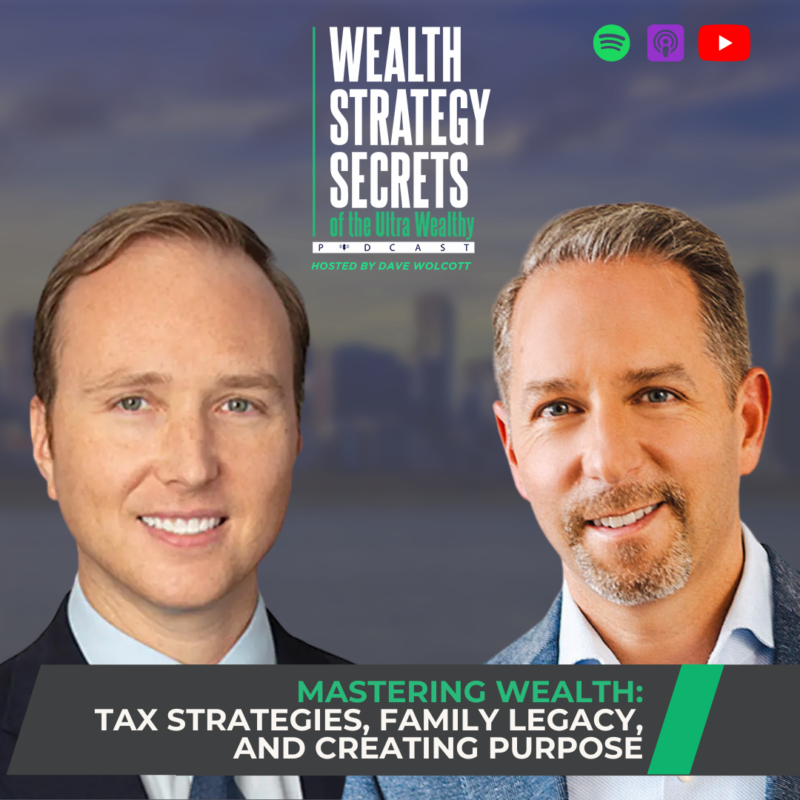
Today’s episode features an insightful conversation with 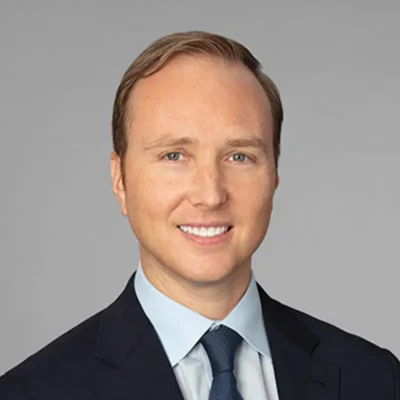 Gabe Schulman, partner at Lennox Advisors—an expert in holistic financial planning for hedge fund managers, private equity leaders, investment bankers, and venture capital executives. Gabe’s journey is a testament to determination and the power of consistency: from humble beginnings in northern New Jersey and a college job with Northwestern Mutual, to leading comprehensive wealth strategies for ultra high net worth clients.
But Gabe’s expertise goes far beyond investment acumen. In this engaging discussion, he explains why true wealth is about more than just maximizing returns: it’s about long-term preservation, tax efficiency, and creating a life filled with meaning and purpose. Drawing on 15+ years of advising some of the world’s most sophisticated investors, Gabe shares his philosophy on financial discipline, the importance of a trusted advisory team, and the pitfalls even the wealthy face—like insufficient estate planning or failing to educate the next generation.
Listeners will also discover Gabe’s personal passion for contemporary art and philanthropy, as well as his thoughts on how aligning your financial strategy with your values leads to success and fulfillment. Whether you’re just starting out or already managing significant assets, this episode is packed with wisdom and practical takeaways for achieving holistic wealth.
In This Episode
- Holistic portfolio construction and tax-efficient wealth preservation
- Common mistakes of high net worth individuals (and how to avoid them)
- The role of passion, purpose, and giving back in building a fulfilling life
- How to navigate today’s complex investing landscape with disciplined consistency
It really just comes down to consistency. It’s never been easier to be distracted in the world. Social media, constantly seeing all these other people’s lives. Try not to be motivated by validation to others. Love yourself and create a plan and stick to it. It’s kind of an old-school concept, but be consistent.
How’s it going everyone? And welcome back to Wealth Strategy Secrets of the Ultra Wealthy. Today’s guest is Gabe Schulman, partner at Lenox Advisors, where he advises hedge fund, private equity, venture capital, and investment banking executives on holistic wealth planning, tax strategy, estate planning, and portfolio construction. In this episode, we unpack how ultra-high-net-worth investors really think about preserving wealth, building tax-efficient portfolios, creating meaningful lives beyond financial success, and why true wealth is about far more than just maximizing returns. Gabe, welcome to the show.
Hi Dave, thanks for having me.
Pleasure to have you on the show today and looking forward to today’s discussion to really unpack some of your strategies, kind of what you’re seeing in the marketplace, especially as it relates to high-net-worth and ultra-high-net-worth individuals. Before we jump into that, tell us a little bit about how you got here.
Sure. So I grew up in northern New Jersey. I spent a lot of time in Woodside, Queens, working for a small business there where I learned about various lessons in life in a blue-collar environment. I went to college in upstate New York, SUNY Binghamton. And during my time at Binghamton, I became involved with an insurance company. I looked for an internship as soon as I got to school because I’d always had a job working growing up. I started working for an insurance company called Northwestern Mutual, which carried me through my college career. I was actually able to conduct some business with Northwestern Mutual.
And after college I accepted a position with them and worked for them for about two or three years. I know this is pretty interesting time to graduate. I graduated in 2007, 2008. So not ideal time to be in the job market. But luckily the job that I took did not have any type of requirement aside from just being willing to make hundreds of phone calls per day. So I just hit the pavement really hard. I targeted hedge fund and private equity executives and after a lot of phone calls, I convinced a number of them to meet with me. I teamed up with a senior advisor and we went and had some success, and we were selling insurance products from that company.
Then fast forward a few years later I was recruited by my current firm that I’m a partner at called Lenox Advisors, which is really more of a holistic financial planning firm. Northwestern Mutual is a great insurance company and I really valued my time working there. But based on the clients I was meeting, the common theme that I was seeing is that they needed more than insurance products. So I was looking to broaden my horizon in terms of the services that I could offer them. Ultimately I accepted a position as a vice president with the company. Over the last 15 years I’ve expanded my business substantially, and last year I was promoted to partner of the firm. I work almost exclusively with hedge fund, private equity, investment banking, and venture capital executives, helping them do 360-degree planning across all aspects of their financial lives and really making sure that their families are protected both from risks associated with becoming disabled, dying prematurely. But there’s a really huge emphasis on taxes.
Most of my clients, as I’ve learned over time, seeing wealthy people not so obsessed with maxing out IRR, but it’s more about preserving capital and being tax efficient in all the various investments that they get involved in and really looking for somebody that has their back, that can do due diligence and has their family’s best interest in mind.
That makes perfect sense. Tell us a bit about portfolio construction from your viewpoint. If you were meeting with a new client, how do you really look at things and take an assessment, understanding their risk tolerance if they’re over-concentrated in certain areas, and trying to build the right portfolio for them?
To answer that question, I just take a few steps back and point out that the majority of my clients’ assets that we manage, we do so through a platform that we have which is a registered investment advisor entity called Wealthspire. Wealthspire is one of the largest RIAs in the country—there’s about $600 billion of assets under management and advisement. It’s important to note for those who aren’t familiar with what an RIA is, an RIA is an independent platform. When you think about the big banks out there—the UBSs, Morgan Stanleys, JP Morgan Chases of the world—obviously great institutions, but they have proprietary products. Sometimes their advisors are incentivized to sell those products to their customers. Whereas an RIA platform is open architecture, so we have access to the universe of financial products and investments.
We’re really able to do best-of-breed money market, equity, fixed income, and liquid alternative investing for our clients. The irony in terms of my practice as it relates to asset management is that my clients are arguably some of the most sophisticated investors on the planet. But they’re typically very limited, either because of compliance or because their expertise might be somewhat myopic. They might trade commodities at Goldman Sachs, trade TMT investing at Citadel, do healthcare investment banking at Jefferies, or do merger arbitrage at some hedge fund that you’d never heard of. Just because they’re really good at that doesn’t necessarily mean they’re well-versed in managing a globally diversified and tax-efficient portfolio.
We tend to construct portfolios not in a vacuum; we want to factor in the client’s entire financial life, all of their assets, and think about a global asset allocation. At the end of the day, the money that we manage is kind of boring. It’s done in a very methodical way across equity, fixed income, and liquid alternatives. But we’re not trying to knock the ball out of the park here because our clients are creating most of their wealth from their fund, from the private deals they’re doing, or some of the other more speculative things. The money that we manage is kind of boring, and we’re really focused primarily on minimizing fees and taxes versus beating any individual index or individual equity.
We also do a lot of lending within our platform. Just because of our AUM size with our main custodian, Charles Schwab, we’ve negotiated very low margin rates for our clients, so we can lend against our portfolios at Fed Funds plus 50 basis points. The beauty of that, for those that don’t know, is that it is a deductible expense against portfolio income at the end of the year. Especially for our clients in New York or California who have very heavy tax burdens, that creates an even more enhanced, lower-cost, effective way to borrow against their portfolio.
Whether they want to use it to finance real estate transactions or invest in other private deals, our clients typically are heavily committed on the private side and they’re constantly having capital calls. Instead of having to keep a tremendous amount of money in cash—which we all know is not tax-efficient because you’re paying ordinary income tax on cash, not to mention inflation—that’s a very nice way for them to optimize their capital structure and utilize debt to meet those capital requirements.
Do you have any other top tax strategies you like to employ with your clients?
Certainly. On the tax side, coupled with estate planning, our clients are really keen on utilizing certain tax codes as they relate to life insurance planning. For example, there are certain insurance products that you can put after-tax dollars in, and the growth of those dollars and removal of those dollars are completely tax-free for the rest of your life. The byproduct is that there’s a permanent death benefit which never goes away. When you pass away—not if you pass away in a certain time period—it will pay your beneficiaries, whether it’s an individual, an institution, or a trust.
For many of our clients, they have a sensitivity to what are called estate taxes, which are imposed on wealth for any US citizen above $15 million per person. If there are two US citizens in a marriage, they can give each other an unlimited amount of money. But when they give money to the next generation, as of the big beautiful bill passed last year, they’re only able to give away $15 million on a federal level. Each state has a different level for their individual states, from 0% to 16% of taxes. But every dollar above $15 million per person, or $30 million cumulatively, is taxed at 40%.
I don’t care how wealthy you are, if you are a billionaire, you typically don’t have 40% of your wealth above $30 million in cash or in liquidity. What our successful and intelligent clients do is they buy life insurance that creates liquidity. When you put a dollar into a policy, it’s levered; you have an immediate levered death benefit. When you die, the beneficiary—which is typically a trust, so it’s outside of their estate—will receive those dollars instantly. That money can be used to pay the government the tax which is due within nine months of when you pass away.
That helps clients avoid liquidating assets at unideal times, whether the market is in a trough, or whether there’s a private deal that’s not paying off any type of dividends or payment yet because they’re waiting to sell portfolio companies, or if they own massive real estate portfolios and it’s just not the right time to sell it. Taxes are a really big item for our clients. That’s one of the things they do.
Then I’m sure everybody’s heard about the AQR Delphi Fund and some of the other active indexing strategies out there, which are quite interesting. It pairs nicely with our clients’ overall risk management and capacity to invest because, again, they’re very limited from a compliance standpoint. We’re able to create an index-like approach for them, but with some additional tax alpha through the algorithmic trading that comes with some of those active indexing strategies.
What are some of the biggest mistakes you see with your clients?
I think the biggest mistake is really the clients who try to do it themselves and don’t have a trusted team of advisors. For example, I can’t tell you how many young, successful people I meet that don’t have a will, a power of attorney, a healthcare proxy, or guardians set up for their children. They just don’t realize what a disaster it would be if, God forbid, something happened to them and they didn’t have those documents in place.
Another huge mistake is our clients don’t have liability coverage. If you have a net worth of $10 million, $30 million, or $50 million, you should have one times your net worth of umbrella or excess liability coverage. If you’re on vacation somewhere in Europe or in the Caribbean and something happens—not even anything significant, but let’s say you get into a jet ski accident with somebody in Turks and Caicos—they’re going to Google you, find out who you are, and come after you. They’re going to make it their full-time job to try to sue you. Why wouldn’t you transfer that risk to an insurance company for a few thousand dollars per year? So that’s a really big one.
Perhaps the biggest one is that clients don’t necessarily take the time to educate their children about the wealth that they’re ultimately going to inherit. That’s a really important one. We are active with our clients’ children as soon as they’re five or six years old through a variety of different kid-focused, child-oriented programs because, ultimately, they’re going to be in charge of these dollars. We don’t want that to be something that hurts them if they’re not educated financially. It’s very important to do trust planning to make sure that, God forbid, if something happens to you, your kids don’t inherit money outright at 18. We all know that that’s usually a dangerous thing for an 18-year-old to get tens of millions of dollars. I would say that those are really the top three biggest mistakes that we see.
To add in, I think a big mistake that clients make is that they don’t carve out time for fun. We want our clients to have interests and try to involve them in a variety of different extracurricular activities and promotional events that we do. A lot of my clients are involved with and interested in collecting contemporary art, automobiles, or watches, or have certain charities that we’re happy to support and encourage them to be actively involved in.
Yeah, let’s unpack that a little bit, Gabe. Talk to us about investing in collectibles or things that people are actually passionate about, and that could be from a philanthropic standpoint as well.
Sure. Right off the top of my head, and in my own personal backyard, one of my avocations or interests is contemporary art. I’ve been a collector and patron of contemporary art for about 15 years. I was just mesmerized and romanced by the beauty of New York City when I moved here at 22 years old with not really many pennies to my name. One of the places that I found a lot of intrigue in was art galleries in my neighborhood in Lower Manhattan. I just kind of got swallowed up by that world and met a lot of young artists. I was young at the time to be collecting art.
I had a certain ambition, or lack of foresight, being confident in buying these subjectively valuable objects. But it opened a whole new lens for me to look at the world through, look at my life through. I quickly realized there were a lot of other wealthy people in this arena, and I was initially intimidated by them, but over time, I realized that they actually were more interested in meeting me than I was in meeting them because I was the young person attached to and hanging out with all these artists who were my peers at the time. I developed almost a vertical of clients within that realm. When you have something that you’re genuinely interested in, I don’t care if it’s art or sports or golf—some guys like golf, some people like name your hobby.
If you have something in common with somebody else, it just creates this instant, genuine connection. It’s really tough to compete with me. If there’s a client that likes art and he’s speaking to me and he’s interviewing you and considering working with you or anything else that I might be interested in, it’s hard to compete with that genuine connection because at the end of the day, everything that my firm does, that your firm does, that even the wirehouses do, it’s all a commodity. The only thing that matters is the relationship and the trust and the credibility. If you can do things to develop yourself, develop your X-factor, so to speak, that’s going to increase your chances. That’s going to make you more relatable on a variety of circumstances. It’s not about being the jack of all trades and the master of none, but finding things that you’re passionate about because passion is contagious and people can sense that when they’re around you, and people want to be around that. The more things that you could find to embrace and be inspired by, not only will that make you more motivated to work hard and be successful, but it’s going to make other people around you feel that you’re passionate about something.
And then that’s going to spill over, even subconsciously, to make them feel confident that you’re going to have their back and going to help them create the best financial plan possible.
Completely agree with that. I think, not only from a personal standpoint and passion, but also from an investing standpoint, you’re investing in something that you, number one, know and understand, and then number two, you have this passion around it. Then it can really drive this really innate level of understanding, appreciation. Frankly, you’re going to get better deal flow, you’re likely going to have a better outcome, and at the end of the day, it’s enjoying the journey along the way. Even if the outcome doesn’t really pan out the way you want to, you’re really aligning yourself with what’s important. Because we’re never going to win playing someone else’s chessboard. You’ve got to create your own.
Well said.
So talk to us a little bit about that as well. I know we both resonate on the point of holistic wealth. I actually wrote a book on it called The Holistic Wealth Strategy. We talk holistically about all of these different forms of capital. So not only financial capital, but you’ve got intellectual capital, you’ve got social capital, emotional capital, physical capital—all these other forms of capital that really, truly define fulfillment in a way and I think what true wealth actually is. Some people, when they’re younger, they’re just chasing the financial capital. It’s more of this concept of rich. They’re seeing things, but as you keep adding zeros to your balance sheet, you realize it doesn’t materially change your life. So what will change your life? Having more alignment and conviction to those things that are really important to you, the values, your vision, and things like that, we find is really tremendous to have that alignment. Give us your prerogative on that take of holistic wealth as well.
I love to talk about this because I like to joke that that pursuit of IRR, so to speak, is definitely a young man’s game. I have many years to go in my career. I’m still young by some people’s standards, but I’m definitely not the young guy at the firm anymore. I used to be the youngest one here by 10 years, and then I woke up one day and there were dozens of people that were working under me. But I think what I found meeting especially with these executives in capital markets is the younger they are, the more in the invincible stage they are. They think they could do everything themselves and they think they can outperform the market.
Sometimes they’re not actually the nicest people, but I think a lot of that comes from insecurity. I’ll never forget when I was 22 years old, one of the biggest clients I got in my first year was a 43-year-old, not that much older than I currently am, Managing Director at Carlyle. He was one of the nicest guys I had ever met. He didn’t hang up on me when I called him. He took the advice, he cared about his family, he really appreciated me being there, and he gave me the time and ultimately made a bunch of introductions to me that led to even more deals and helped me catapult myself into having an actual legitimate business. I found that somebody who’s successful and has financial success is oftentimes looking to give back.
That’s a model that I’ve employed in my own practice and with all the junior people that I’ve mentored over the years. I think that the financial pursuit, the pursuit of financial gain, has a diminishing return. I think there is a number that once you’re above that number, your life doesn’t really change materially. Now, it really depends on how much money you spend, but I think there is a limit to how much you can spend. There certainly is a diminishing return. It’s just important to have these other outlets. Charity is a huge one. There’s a few causes personally that I’m pretty involved in that give me fulfillment and give me purpose and give me the ability to have impact, which I feel is very important. Those hobbies, those avocations, it’s fun to have these things to pursue that will just continue to fulfill you and allow you to just be around more people that you can impact and you can help.
For me personally, art and artists is one of them. I’m fortunate to be in the position to have been a patron to—beyond just acquiring an object, the painting, a sculpture, a video work—to be a patron to many young artists, whether it’s supporting their studio space, whether it’s supporting a trip they want to take somewhere, whether it’s supporting creating the works by buying them canvas materials. I’ve been behind the scenes on a 15-year project in the Lower East Side called Beverly’s, which is an artist-run exhibition space and nightlife venue. I’ve been able to be the main backbone financially supporting that for many years. These are pursuits that I’ve taken on in my career that have just opened up many doors for me, really from a soul level of fulfillment.
Success isn’t just about building wealth, it’s about building a life that fulfills you.
That’s awesome. Can really appreciate that. My son’s actually an artist; he’s a starving artist.
Is he in New York City?
No, actually he went to FIT. Yeah, he knows New York. He’s in Philly right now, but he’s trying to figure out the whole world, navigate it, and—well, he’s very talented. Great.
I’d love to speak to him. I’d love to maybe just point him in the right direction if he has any questions.
That’d be awesome. It’s really cool that you’re giving back in a way that’s really meaningful to you. It’s a great role model for all the audience out there listening. Even if you don’t have financial capital to support things, it could be your time, it could be your knowledge, or it could be what you can do in a community. There are so many opportunities to give back. The great thing about that is that’s actually the biggest reward you can get in life. It fills up your cup so much, and when your cup is overflowing, you can just keep giving to so many people. So it’s a great thing.
And operating in that abundance mentality zone, there’s no other dopamine hit that can even match that. That also just spills over into your business—whether it’s our business or really any effort that somebody is making to be successful. The happier you are, the more you can lead with sharing and being—I don’t know if you’ve ever read The Go-Giver—but really seeking to provide and deliver value to people first. Whatever comes back your way is typically magnified a lot more than it would be otherwise if you didn’t focus on helping others first. That’s the biggest lesson that I’ve learned from the business, the biggest benefit that I’ve had.
I really think that the ultimate luxury in terms of success is owning your time. This is a phenomenal business to get involved in if you’re willing to work really hard for 10 or 15 years. Over time, you’re able to determine who you work with, where you want to work, and where you go because you collect these relationships and, most importantly, you build this trust and credibility with people. You can have a huge impact on not just their lives, but the lives of their children, their grandchildren, and beyond.
If you’ve ever wondered how the wealthy use energy investments to reduce their tax bill while generating cash flow, we just answered every question on camera. Go to pantheoninvest.com/energy to find out.
Yeah, 100%. It’s really operating from a higher level of consciousness, and it’s actually a lot of hard work. It’s really contrarian to the way everything is built around us, right? Where it is all like a David Goggins-type approach—go, go, go. We’re reacting; we’re using force to get things done versus alignment, power, and synchronicity. When you can be truly aligned to the values that are really meaningful to you, the universe will pay you back in dividends and really let you live in that abundance mindset, which is great. It’s awesome that you’re doing that. I think all of us need to be role models to our communities, to our families, and to those around us because it’s really that opportunity where we can leave our mark on the planet and do great things, and that’s just going to impact more and more people.
Well said. Just to piggyback on your prior point about alignment, especially in New York City, it’s really hard to not get pulled into this hustle-culture mentality because it’s really tough here. It’s tough to survive here; it’s tough to even break even here. You have to be very successful just to be broke. I forget who it was, but somebody said you have to be rich just to be poor here.
It’s hard to keep that North Star, but it’s very important. I think that the world and the planet are moving in that direction—toward a greater consciousness and the greater good of society. There’s no shortage of despair here, and you don’t see the wealth gap in many other places more than you do in New York City. But just by striking up a conversation with somebody, or seeing somebody in the park who maybe doesn’t have their own apartment and asking them what their name is and where they’re from, telling people you love them… spread it around. It doesn’t cost anything, but it has a huge exponential effect on the universe, and it’s an important part of having some type of contribution to that.
Love that. Gabe, tell us your final thoughts. We’re literally in the middle of a quasi-war in the Middle East, we’ve had the Ukraine war before that, we’ve had tariffs, we’ve had interest rates, we’ve had this political race. There are so many different macro themes going on—geopolitics, interest rates. How are investors supposed to really make sense of it all, and where are you seeing opportunities right now for 2026 and beyond?
Well, my answer is nothing earth-shattering or that exciting, but I think it really just comes down to consistency. I’ve seen a whole variety of different ups and downs over my 15-year career: the Great Financial Crisis, Brexit, COVID, 2022, the tariffs. It seems like the stock market’s trading like a meme—like the whole market is like a meme stock. I looked earlier, the S&P just broke 7,500. I mean, it’s unbelievable. Certain AI stocks are literally going up 10, 15% a day.
It’s hard to not get distracted by that. It’s never been easier to be distracted in the world—social media, constantly seeing all these other people’s lives. Try not to be motivated by validation to others. Love yourself, create a plan, and stick to it. It’s kind of an old-school concept, but be consistent. You’re not going to time the market, you’re not going to pick the right stock at the right time and sell it at the right time, and even if you did, you’re going to pay taxes.
The most important metric for investing over the long run is: what is the net after-tax return? That’s what you should be focused on. I would be concentrated on putting more money into the market constantly. Don’t worry about what the market’s going to do over a 30-day, a 6-month, or even a 5-year period. Be investing for the future. Delay gratification today. Try to save money, max out whatever different retirement plans and tax-deferral plans are accessible to you, seek the advice of a professional or someone who has more experience than you, be humble, and stick to the plan.
Sage advice, for sure. I think that’s one of the biggest gaps that we see people have—really not having a comprehensive strategy. It can be one-dimensional because they’re only maybe working with one particular advisor. The CPA might be just saying this, or the planner says one thing. But as we talked about earlier, having that comprehensive 360-degree view that really looks at estate planning, asset protection, tax strategy, investing goals, and time horizon… all of these things matter. It’s a bit like a Rubik’s Cube, if you will. You have to move all of these things around dynamically to invest. Ultimately, if you can align toward your vision, your goals, and those things that are most important for you and your life, and then you just put the process in place and implement that process without worrying about all the peaks and valleys—those are the people who are wildly successful.
The wildly successful investors align their strategy to their vision, then trust the process instead of reacting to the peaks and valleys.
Yeah, it’s actually not as hard as you might think. The hardest part is really the discipline. You’d be shocked by some of the wildly successful clients we meet and the level of wealth they’ve created at a young age without really having a plan. I think that especially in the capital markets world, people can become wildly successful in their 30s, and certainly, the 40s is a decade where a lot of wealth is created. But a lot of the people we meet have maybe seven or eight different people giving them advice. They have an accountant, a trust and estates attorney who hopefully did their wills, an insurance person, and a money manager or two.
If they’re not completely self-directed, they have various points of contact for the private investments they’ve made along the way as a limited partner, and the list goes on and on. Those are all usually very nice people, but they don’t typically communicate with each other. It just leaves our clients with no real plan—just a disjointed picture. So we step in and essentially become their quarterback. We aggregate every aspect of their life, build out a website, collect data, and then our team of CFPs (Certified Financial Planners) comes up with proactive recommendations. We help them execute, and then we hold them accountable. Accountability is a big part of this as well. As you become more and more successful, there are typically fewer and fewer people you answer to.
Having someone who is comfortable saying, “Hey, you shouldn’t do that, don’t buy that, don’t go there, don’t put your money into this—you don’t need the incremental risk,” is a tough conversation to have with someone who is very successful. In many ways, my clients are paying me to just tell them no.
If you could give just one piece of advice to the audience about how they could accelerate their wealth trajectory, what would it be?
I think just embrace learning. Whether it’s through reading, coursework, or whatever your specific area of interest is, just try to master it and get really good at it. Perhaps most importantly, try to find a mentor. Maybe it’s not even in your specific industry, but try to reach out to somebody in your network—maybe it’s a parent or an older sibling of one of your friends if you’re on the younger side—and develop a rapport with them and ask them about their experiences. I love to read biographies and hear about other people’s success. Nowadays, it’s more podcasts; Founders is a popular one that I like to learn from, or Acquired. Just be a voracious learner. Seek to understand and learn about as much as you can. By having different perspectives on things, I think that will equip you to be successful and make better decisions in your lifetime, in your business, or whatever you’re pursuing professionally and personally.
Awesome. If people want to connect with you, Gabe, where’s the best place?
I’m a super old-school guy, so I actually have an email address that’s very outdated, but I like to joke with my wife that it’s vintage. It’s just gabeschulman@aol.com, so feel free to reach out to me. I also have a profile on LinkedIn for anybody who wants to reach out. But I really appreciate you having me on today, Dave. I hope this was helpful to your listeners, informative, and thought-provoking as well.
Thanks, Gabe. Really appreciate your insights.
Thanks for listening to this episode of Wealth Strategy Secrets. If you’d like to get a free copy of the book, go to holisticwealthstrategy.com. If you’d like to learn more about upcoming opportunities at Pantheon, please visit pantheoninvest.com.