
Listen Here



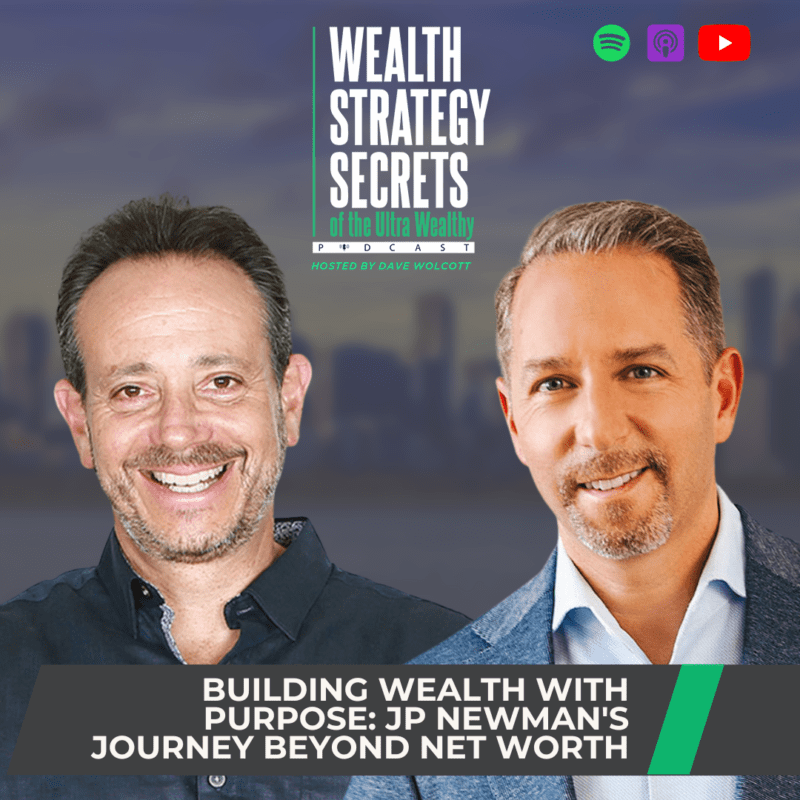
Today’s episode features an inspiring conversation with JP Newman, the founder of ThriveFP, a private equity firm behind over $2 billion in multifamily transactions. With nearly two decades of real estate experience and a passion for “purpose-driven capitalism,” JP brings a fresh perspective on building wealth—not just financially, but holistically.
Our host, Dave Wolcott, dives deep with JP, exploring his unique journey from growing up in an entrepreneurial family, to an early career at Sony Pictures, and eventually launching ThriveFP out of his own bedroom. More than just discussing numbers and deals, JP introduces his life philosophy of becoming a “Fulfillionaire,” showing us how money alone doesn’t lead to true security or happiness. He explains his framework for “4-dimensional wealth,” which weaves together purpose, people, presence, and play to help individuals design a lifestyle anchored in authenticity and abundance, rather than chasing arbitrary goals.
JP also shares why he’s excited about current market conditions, especially the emerging opportunities amid market distress, and reveals key lessons learned from past cycles—emphasizing patience, learning from losses, and the importance of aligning financial decisions with deeper values.
This episode is packed with practical advice and mindset shifts that will challenge and inspire you on your own wealth-building journey.
In This Episode
- JP’s personal story from Sony Pictures to building ThriveFP
- What it means to be a “Fulfillionaire” and the 4 dimensions of wealth
- Navigating today’s multifamily market and investing in times of uncertainty
- How childhood beliefs and mindset shape your financial future
Not only that money will give you fulfillment, but I really feel like in these times where things feel like there’s a lot of excitement but maybe some instability, I always will believe that it’s the heart-centered servant leader that’s going to change and impact society more than any government.
Welcome to the Wealth Strategy Secrets of the Ultra Wealthy podcast, where we help entrepreneurs like you exponentially build wealth through passive income to live a life of freedom and prosperity. Are you tired of paying too much in taxes, gambling your future on the stock market, and want to learn about hidden strategies for making your money work for you? And now your host, Dave Wolcott, serial entrepreneur and author of the bestselling book, The Holistic Wealth Strategy.
Hey everyone, welcome back to Wealth Strategy Secrets of the Ultra Wealthy. Today’s conversation goes far beyond real estate and investing. We’re diving into what wealth actually means. My guest, JP Newman, is the founder of ThriveFP, a private equity firm with over $2 billion in multifamily transactions. But what makes JP unique isn’t just his investing track record; it’s his philosophy around purpose-driven capitalism and what he calls becoming a “fulfillionaire.” In this episode, we unpack where we are in the multifamily cycle heading into 2026, why some of the best opportunities are emerging from distress, and the critical lessons learned from the last market run-up. But we’ll also go deeper.
We talk about the psychology of money, scarcity versus abundance, how childhood beliefs shape financial behavior, and why net worth alone will never make you feel secure. JP shares his framework for four-dimensional wealth: purpose, people, presence, and play, and how to define your own abundant lifestyle number so you’re not chasing someone else’s definition of success. If you’re ready to think differently about investing and fulfillment, this one will challenge and inspire you. JP, welcome to the show.
Thank you, Dave. I’m very excited to be here with you and continue our conversation. That was super fun.
Yeah, JP, always such a pleasure to connect. And we had the opportunity to do this recently on your podcast, so we’ll put a plug out for that as well. I’m excited to turn the tables today and really dig into your mind a little bit and talk to folks about your journey. You’ve had quite a journey, as most of us do. But I think what’s fascinating is what you’ve learned from that journey—how far you’ve come, where you are today, and really your view of the world, because I think it’s very unique. As we’re talking, I think you have just a really authentic take on wealth and what that means to people.
And I think that’s where so many people actually struggle, right? But when you can really get the clarity on what wealth really means to you as an individual, that creates that clarity; that creates so much more of an easy striving towards that goal. So, I’m really excited to kind of unpack that today and share some insights with the audience. So, let’s talk about your journey. How did you get into real estate? How did you get into wealth building?
Yeah. So, I think I come from an entrepreneurial family. My dad was in commercial real estate. And so, really, as a kid, I was actually investing in real estate. I was very, very fortunate to have a father who educated me on real estate early on. Again, not super sophisticated, but enough to really understand the power of passive cash flow and that there was a lot of freedom. That sounded really fun to me—figuring out a way to do just that. And so I definitely had my father to thank for really mentoring me in the early years.
But I actually started my career not in real estate because, of course, you’re never going to follow your family business; you’ve got to do your own thing. So for almost 15 years, my first career was actually in television and animation, family entertainment. I worked for Sony Pictures as Vice President of Family Entertainment and got to produce a lot of animation. I was at Sony for five and a half years. We built a $250 million family entertainment catalog. They mostly left me alone because they were so busy on the fancy art films that they weren’t that interested in the Muppets and the Dragon Tales and the Trumpet of the Swan. So I got to do a lot for a 28-year-old.
I got to do a lot there. And most importantly, dude, I think for me it was really like my MBA. I think a lot of my success now in real estate is because I got to work for a large corporation like Sony. I was the youngest Vice President out of like 400 people in my division. I was in the home entertainment division. It was a really good lesson on the fact that sometimes the best work doesn’t win; it’s the best work that’s understood by your audience that wins—in this case, by the C-suite and other people and getting along well.
And what you think or what you’re passionate about may matter to a certain degree, but what’s more important is that people can feel you as well as understand you, and that they feel like you’re in their court. I think I learned a lot about that. My sister used to joke when I started at Sony, because I was so entrepreneurial, I would just like go headfirst into so many different projects. She says, “You know, you’re like a bull in a china shop a lot of times because you think that winning in your job at Sony is like getting the fastest direction from A to B,” which is a very entrepreneurial mindset that seems to make sense. And what I learned from corporations, actually, it’s not really A to B. Sometimes it’s A to C or A to D and building consensus—and early consensus. So by the time that you actually present your idea, like the film you want to make or an initiative you want to take, everyone’s actually on your side because you’ve quietly and humbly, nonchalantly done your homework ahead of time by really getting people to feel like they’ve bought into you early. So by the time you got to the boardroom for a vote, you really have done all your work ahead of time.
And I think that’s one of the biggest lessons I learned during that time. I think I still use it today, whether it’s presenting to investors or thinking of a new initiative for Thrive or even launching my new movement, “Fulfillionaire,” which is my new podcast workshop. I really try to think about that with the team—how do you build consensus early and clarify what the mission is, and hopefully get people on board to that mission.
Yeah. And tell us a little bit about how you are situated today at Thrive.
Yeah. So I created Thrive about 19 years ago. I started it really out of my bedroom. Thrive is basically a private equity firm based here in Austin, Texas. We specialize in multifamily and debt, and we’ve done about 20,000 apartment units. So we specialize in multifamily, a lot of B and C class—so a lot of workforce housing in the Sunbelt, like Texas, and a lot in Utah, Salt Lake City, kind of the South and the Southwest states. We were syndicators, so we’ve got about 300 high-net-worth private investors, accredited investors. And then, through the years, we’ve done about $2 billion of real estate between loans, like bridge loans and hard money loans on one side of the business, and the other side of the business is really just buying these multifamily units.
Typically, they’re three to seven-year hold plans. And I’m really passionate about value-add and really creating that value-add, not just in making the building pretty and not just in having great sinks and doing things that are tasteful and environmentally friendly, but really making sure that we’re creating thriving communities, which is partly where the name Thrive came from. It’s actually ThriveFP, and the “FP” is for Purpose, for Profit. I like to declare we are absolutely a for-profit company, and I think it’s really important. I really got inspired by my friend John Mackey, the founder of Whole Foods, about how if you’re using conscious capitalism, then every stakeholder needs to win, not just your investors and not just your shareholders.
About 10 years ago, I changed the company name to ThriveFP to really declare to the world that every stakeholder wins. The residents need to win. How can we be accretive and not extractive to the residents? Our staff here needs to win. Our maintenance people, our general contractors—how are we really truly creating a win-win for everyone who is a stakeholder in the apartments, from the investor on? So that has been something I’m super proud of. It feels like a great legacy. I still feel like there’s a lot of work to do. I did create a nonprofit to support free programs for residents called Veritas Impact Partners, based in Dallas, Texas. We now actively manage about 7,000 units, affecting about 21,000 families.
My goal is to get to 100,000 units, which is 300,000 families, because my legacy, I’m hoping on the Veritas side, would be that free programs in health education and finance come with your rent. So you don’t just get a pool or a laundry room; you actually get Teladoc, free telemedicine, and all these great things. So really, ThriveFP (the For Purpose, For Profit) is the channel where it’s a for-profit company that syndicates and invests in this real estate, and then there’s also the nonprofit to really push how much impact we can really make. And I’ll always feel like there’s more to do than I’m doing. It’s not like I “did it”; it’s a work in progress.
Yeah, I love that alignment there, JP. That’s really awesome. Let’s talk about the market a little bit. We had Neal Bawa on just a few weeks ago talking about his assessment around multifamily. I think there’s some mixed thoughts out there in terms of where the market is. Have we actually hit bottom? Are there buying opportunities now? Some people seem kind of scared, but maybe that’s really the time people should be buying. What are you seeing in terms of 2026 conditions?
Yeah, I love this idea, Dave, of how at the very top of the market, there’s always irrational exuberance, and at the bottom of the market, there’s irrational fear. It’s kind of just where human nature plays. With all the AI and all the formats and processes, we’re still humans with lots of emotions. And I kind of feel like if you look at it right now, we went from hyper-supply to what we’d call the depression or the recession where prices went down. Whenever you get to a new cycle, that new cycle is always basically recovery and then expansion.

I kind of feel like we’re in this place right now, somewhere between the downturn (or the depression or the compression) and heading right towards recovery. I almost feel like, if I was to guess—and this is kind of an educated guess—we’re probably right on the precipice between recovery and the downturn. And we all know that you make the most amount of money between recovery and expansion, and you can even make some money in the beginning of hyper-supply before you overexpand and create the cycle again. It goes on and on. So I actually feel like right now is the beginning of the best time to buy.
We did buy a property 90 days ago in Dallas—250 units. We recapitalized a project that was about to go to foreclosure. We arranged to save the equity; in some ways, our equity certainly went in front of theirs, but we gave them a chance to continue to manage the building and a chance that if it does recover, they could recover some of their funds.
We got the bank to give us a three-year extension since we were coming in with fresh capital and management. So it felt like it was a win-win. Instead of the equity just getting wiped out and foreclosed on, we got in without having to have a bidding process at a price that was 25% less than what they paid. There’s still a chance they’ll make something and they’re still managing it for us. It gives their investors a chance that if the market does recover in Dallas, which it could, that they’ll get some recovery rather than a full wipeout.
And I did just make an offer—I should find out today—on another property. It’s 358 units in Dallas, and it’s also a foreclosure. I’ve been following this property for a year. I tried to buy it from the owners in a very similar situation. It went into a “death spiral,” which a lot of these properties have; they ran out of cash and actually ran it into the ground. It’s 10% occupied right now.
I’ve never seen a property that rough in my 20-year career. I haven’t seen anything quite that rough, but it’s a really good neighborhood and it was a good building before they starved out of cash in a good neighborhood. And all the neighbors are good; this is just the eyesore of the neighborhood. I tried to buy it, but they said no. It went to the bank. The bank foreclosed on it. And now I’m working with the bank to try to buy it. And it’s actually another 20% less.
The reason why I’m willing to take a chance on literally throwing a lot of money—I’m looking at $25,000 a unit into recovering this building—plus reputation. Right now I have homeless people there. You can imagine what happens to a building that loses its reputation, gets starved of maintenance, and they start to board up the windows. You get all kinds of problems. So I’ve had—I don’t love doing projects like this, but I’ve had great success in doing projects like this.
I know these projects. I know what you need to do to recover them. You’re looking at prices that run back to an 8.5 or a 9 cap rate depending on how I take rents by doing the hard work. I realize that there’s a lot of risk for me; there are two years of no cash flow while just rehabilitating that building. But once again, I’m getting back to a spread. Dave, what are interest rates today? Would you say they’re around 5.5% to 6% if we were to get kind of a loan at this point?
Sounds about right.
So you look at all this and you’re back to like 250 to 300 basis points of spread for taking the risk. And I’ve been waiting for that. When I say spread, I simply mean if I can borrow the money at 5.5% and I think—based on today’s current rents—that once I fix up that building I can get to an 8.5% cap rate, well, that’s a 300-basis-point spread between the interest rate and the cap rate. Which is a lot of upside if—but I’m taking a lot of risk and I have to execute the business plan really well. I’m going to have to work with the local police departments, local community associations, and probably do lots of volunteer work, lots of like my Veritas, a lot of like free programs and really, really rehabilitate a building that for two years, I mean, the pool house is green and everything is just gone. So it’s almost harder in some ways than new construction, and I wouldn’t touch it. But now with prices getting to be where they’re being, I’ve seen the contraction. Things are starting to make sense again. And that’s why I’m bullish about this piece of the market. I know that was a really long-winded answer, but I hope to explain to you why it’s interesting to me at the time.
Yeah, no, it’s interesting. I’ve been hearing similar things from a lot of different operators—that we are right at the bottom of that cycle and there’s going to be a lot of money to be made for those who move into buying. But, you know, a lot of people have some wounds and scars from deals in ’21 to ’23 that were challenged. But if you can take—any time you’ve lost capital and whatever investment that’s been, but can you take the loss and take the learning from that and 2x to 10x your learning into the next opportunity—
I love that.
You’re going to become such an exponential investor. If you just think about the loss individually, you’re thinking of it more as a scarcity type of approach. Like, I just lost a piece of my pie and yes, absolutely, you’ve worked so hard to earn that precious capital. It’s a terrible situation and everything, but I mean, look at, I mean, Jamie Dimon, BlackRock—all these people have lost billions, right? And they’ve become better investors over time with a lot of these changes working through the different cycles.
You know, Dave, I think it’s a really great point. We do get so caught up on the losses. Even at Thrive, with morale, it’s about reminding people that we have those vintages. I would argue from 2020, some of these purchases were just too expensive. After 11 years of a perfect—or near perfect—track record with 36% IRRs to our investors, we’ve had some L’s lately, and they are really hard. In real estate, it’s funny: if somebody bought a stock at, let’s say they bought Apple stock at $100 and it went down to $75 or $50, they wouldn’t like it, but you’re pretty resilient. You just know that stocks go up and down, right? Okay, it’s at $50. Or Bitcoin went from $116,000 to $70,000 or whatever. Like, we’re used to that.
But somehow in real estate, especially when the market gets so good like the last cycle we had, I think people forget that these are cycles. And they’re just cycles and they go through directions and there’s ups and downs. If an apartment building in Dallas was 100, the “stock” is now at 60. It’s 40% down in a lot of the C-class and maybe it’s 35% down in the B-class. And nobody’s wanted to have to—the banks, nobody’s wanted to realize the loss and they kept like pushing it. But I love what you just said: the idea of taking the loss, learning from it, and moving forward with that knowledge. I’ve spent a lot of time thinking about why, but I think I did better than a lot of people.
We knew not to buy too many units, but every unit I bought in that three-year period is going through the same thing: bought them too expensive, expenses went up, revenue went down. So, you know, we have some realistic things that we did. And I think actually the biggest lesson that I’ve learned from that, that I want to take into this next cycle to 2x to 10x, to your point, is I think that I joked with my partner in 2020 and I said to him, I think if we went golfing for the next few years together or went to Costa Rica, we could make more money by not doing anything than continuing to look for the deal that makes sense. So I think I had some of the wisdom in me, but then there’s always somebody, there’s always another deal, right? And so I think the lesson that I’ve learned for me is patience. And it’s hard to be patient. Your investors are happy; they just sold a deal and they just made 28%. Everybody wants to know “what’s next, what’s next?”
When you’re not like a wealthy family office, when you’re not the Rockefellers and you’re investing multi-generationally over 4 generations and you have people like, “What’s next, JP? You did great. What’s next?” I kind of wish that I went to Costa Rica for 3 years and explained why in a very meaningful way or found a niche, you know, something else to do. And like I said, we were—we just—to credit to us, we had 9,500 units in 2019. I’m down to 1,500 units right now. So, I knew to sell more than to buy. And I’m really proud of Thrive and myself to follow that instinct, but the 1,500 that I kept or bought… it’s like I really could have been out of everything. But that takes a lot of courage. It takes patience, but it also takes courage to say to your investors, to your company, to your employees, “We’re on hold. This is the wrong part of the cycle.” I’m proud of what we did, but if there was—there’s another lesson to learn, I’d rather really learn that lesson and then wipe it off. To your point, like wipe off, wipe it off and say, I did the best I can. We did great. We’re getting through these. Don’t know how we’re all going to look, but we’re somehow going to land this plane. And with the knowledge that I have, it’s kind of insane to like to not to go take this into the next market. So, I just think that’s a really good way to look at it, Dave.
Yeah, it really is. And I think it’s really the evolution of an investor. And if you look at athletes, I mean, just think about that, right? You miss that one shot off the tee or you’re going for that putt that cost you the entire championship. But when you look back over that, maybe over the next 5 or 10 years, right, that losing that one championship or that one game, right, is going to be inconsequential to what you’ve actually accomplished over your career, right?
Yeah.
It’s the same thing investing, whether that’s your first $50,000 into an investment or maybe it was a couple hundred thousand dollar investment and it really stings, it really hurts, right? I think, you know, people are looking for certainty. And so when you can start to build a system out of building wealth, right, and start to create that certainty and that more of that resilience, you know, when you look back 5 to 10 years ago, it’s like, wow, that really did hurt. That was painful. But look at where I am now. I wouldn’t have been able to get here, you know, because now I have increased my financial IQ to be able to be making better decisions on due diligence and also I think, you know, to your point, right, a lot of these things investors shouldn’t be in in the first place. Right. There’s a risk premium when you see, you know, high IRRs or something. Right.
There’s a risk premium there. Right. And you need to really kind of calculate that. Right. It’s the same thing like if you get into Bitcoin or frankly a lot of stocks. Right. Who knows if they’re going to actually go up, but you better be prepared. Right. That they could go down, you know, that you could lose everything. Right. And I think when you have that type of mindset, you’re going to be better off, but just balance that in your overall portfolio. Now, let me shift that now, JP, given that is kind of like a baseline, right? From a real kind of pragmatic perspective. And let’s really talk about, you know, the psychology and the mindset of this, which, you know, I know you and I really resonate in terms of, you know, how to think about this overall, right? Because again, some of this ties to how we were raised, right? We might have this scarcity mindset. So, if we lose money, we feel like we’re losing kind of a part of us or something, right? And then it’s interesting how different people react to losses or gains, or let’s talk about what is even your target anyway, right? And I love your version of, you know, “Fulfillionaire.” So, you know, let’s kind of unpack that a bit.
Yeah, you know, really out of my own journey of chasing money for a long time. I was a Tony Robbins kid with the Sony Walkman at 20 years old who would, you know, just listen and doing the vision boards and really working hard with affirmations, like really wanting it. And the way my life worked, I was a late bloomer. I chased money for a long time and I probably had 20 companies, including a dot-com. I worked for Sony, I did all these things. And I was very entrepreneurial spirited, but it really took me until my mid-30s until I really finally came into my own. There was a lot of failures, a lot of disappointments. And the funny thing is, like, when money started coming to me, when my company Thrive started making money and I started getting the things on my vision board, I wasn’t finding the feeling.
I was chasing the money. But then when I actually got the money, I couldn’t find the feeling. The feeling of peace, contentment, joy, celebration, I found myself kind of stressed and anxious. And I didn’t understand. I’m like, my God, I’ve been preparing for this and I actually won. Like, I’m getting to these dream numbers. And I remember I bought my— I had a vision board and I had a BMW convertible. It was the nicest one at the time. It was called the 645. It was the fancy convertible. And that was on my vision board. And when they delivered it to me, I remember just sitting in that car, I was like putting my hands on the steering wheel and feeling really stressed and not understanding how I could be achieving my dreams. And it really took me a long time, which is what’s led me to “Fulfillionaire.” For me, I didn’t have a format. I realized there was no map around what money is and what money isn’t. So, all I was doing was chasing and doing that, that it was supposed to make me feel happy. But I didn’t have any structure of like with the meaning of it or actually anchoring it in anything other than money, which at the time was like, if I’m worth X amount of dollars, I should be happy.

I didn’t realize it takes more than X amount of dollars. It takes having your money connected to what I call 4-dimensional wealth. And in 4-dimensional wealth, we’re talking about your purpose wealth. You’re talking about your people wealth. You’re talking about your presence wealth, and you’re talking about your play wealth. And what I mean by that is each one of those four— I call it the four Ps— is a connection to something really important. It’s either— just real quickly, like on purpose wealth, it’s really the connection to your legacy. Like, what are you here to do? I call it the “why that makes you cry.” Like, what are the most important things of your purpose? And is your money fueling that for you? For people wealth, it’s obviously it’s yourself, it’s your relationship and your connection to yourself, your spouse, your family, your community, the things that actually make us the most joyous. And what’s that relationship and how is money supporting that? Presence wealth is really your connection, not to time, because everyone talks about time. It’s actually connection to your experience, meaning how present are you and intentful in the things that you are doing? Are you in your body? Do you have mind-body coherence when you speak, or are you on Red Bull kind of getting through your day on adrenaline to get through your checkbox?
And finally, I think the one that’s most important that people don’t talk about, and I think it’s super fun, is play wealth. Sounds really indulgent. What’s play wealth, JP? Is it being on a yacht? Actually, play wealth is your connection to joy and aliveness. And I think so many people, they work at the sacrifice or expense of their joy and aliveness. And so that simply could be like, what is it that just lights you up? I know for me these days it’s pickleball, it’s curating dinners, it’s being with you right now on this podcast. I love artistic, creative things to do. And ultimately, the more and more you stoke that play wealth, the more you generate creativity. And to me, creativity is actually spirituality. If you want to know what it feels like to feel plugged in and present and joyful and in the flow. I think everyone’s an artist. I think everyone’s a God-given artist, whether you’re an accountant, a basketball player, or a painter. I think we all have these beautiful gifts, and I think it’s really important to stoke them if you truly want to create fulfillment as a “fulfillionaire,” as opposed to a person who’s collected a lot of money.
So until you actually connect your money to the 4 dimensions of wealth, it’s really, really hard to actually know that you’ve arrived. And so for me, on my journey, it took me like 10 to 15 years to figure this out, like a format of— I mean, I just had to literally figure this out. And then I realized, because I’ve dealt with thousands of investors, that a lot of my really wealthy investors were struggling. They were mentally struggling with joy. And the big thing is, you know, Dave, is safety. And you know this because you teach us a lot, like where they’ve made a ton of money, but they don’t know if it’s enough. Like they don’t— the number doesn’t mean anything. Like, do I have enough? Do I need to 2x my business? Is $10 million a big enough net worth or do I need to double it? And we all know that most people, including billionaires, always want to double their net worth for some reason. And so my journey led me to: What’s winning? How do I stop getting off this treadmill? Like, what is winning? I gotta relax because I’m pretty stressed here, and I’m winning, and yet I’m feeling really stressed. So I’m not sure that I think I’m really winning. And that’s really what my own journey of realizing that I needed to find a number for me that was going to give me peace and safety.
And I realized it wasn’t net worth. Net worth, I call a vanity number. I mean, a net worth, we all know, you’ve seen balance sheets. I’ve lent so much money to people that have $100 million net worth and they don’t have $100,000 in the bank. And so to me, net worth is very subjective. And I think, Dave, I know you talk a lot about passive cash flow, whether it’s alternative investments. I know you do a lot of these things. So I think for a lot of us, how do you actually find your winning number? And I say your winning number is the number that it takes between your active income, the money you earn at your job through your product and service, and your passive income. And that together is your annual event of what you earn.
A wealthy mindset is about play, purpose, and presence, not just accumulation.
And once you get really clear on the 4 dimensions of wealth— when I can— this is what I do in my workshops. How much money do I need to live this life of being a great father who can take my kids on a 1-month trip, you know, take my wife out for dinner, do that meditation, that yoga course, and keep my body healthy so that I can really be present? Go on that vacation or go join that league or go do that speakers forum, which I just signed up for a speakers forum so I can really practice my hobby, and taking drum lessons. Like, what’s it going to cost to do all the things I want to do that I’m feeling fulfilled? And I always tell people, when you actually really do it and you get away from the Instagram dream of— I call it the “Lamborghini Bros.” It’s great to have Lamborghinis, but I love— they’re great cars. My partner has one, but that’s not the point.
The point is, when you actually get to not some far-fetched dream that you’re seeing on social media, but your dream, and you own your dream. And now, especially with AI and all these fun tools— and I know, Dave, you talked about this, I know you have a great piece of software— you can birth your number, and that is your number. And then why not create a financial plan around that annual income, which I call your abundant lifestyle number? So today you have your current burn rate. This is where you are today. In 36 months, where would you like to be in your abundant lifestyle number? And then why don’t we create a financial plan? And you and I can so geek out on this. That’ll get you. And you actually have a target of what— not only what winning looks like as far as a number, but now you have all these emotional anchors of like, wow, I can see that trip to Japan with my kids. I can see taking the drum lessons. I can see being the best speaker out there because I spent money with a private coach. Like, I see the wins as they come in.
And the way I do it through my program, which is through the wealth pyramid, is it almost feels like a game. You get little coins and awards and it shows you where you’re at in your progress and what have you. And it’s quarterly check-ins. And to remind people that it’s so much easier and so much more alive and real to only go 36 months out. If you try to figure out where you want to be in 10 years from now, which a lot of people who I’ve mentored have, it becomes fuzzy. So if you go 3 years out, you do quarterly check-ins. And you know, you have permission as an artist to change that number. So David, maybe next year, like I know for me, next year I want to do a couple of new things. I think I might want to do flying lessons. That’s not in this year’s budget. Like, I think I want to learn how to fly. It’s a new item on my bucket list. Like, you get to be the creator, and the more and more you get better at manifesting that number, getting closer to that number, and I know you know this, like the closer you get, it’s like you’re working those manifestation muscles, whether it’s a small win or a big win. The wins get easier, just like your first earning, your first $1 million is the hardest million, and then the second and the third and the fourth and the fifth get easier and easier.
And I think it’s the same with manifesting fulfillment through this really intentional process. And that’s what, that’s the passion that drives me to do “Fulfillionaire,” or my podcast and my workshops, is really liberating people away from chasing the pile of money and really finding the feelings of peace, joy, and aliveness, and really giving. Because once you’re feeling fulfilled and safe and abundant, you’re in a totally different space with the ability of how much and how much you want, how much to give and how many places you want to give to or people you can affect and using it for good. And I know for me, from my own experience, and I’m guessing, Dave, for you, that ability to change people’s lives or help people is like the biggest dopamine hit for me these days. It makes me want to earn more money, actually. Like, I still think I might want to double my net worth, mostly driven by the amount of people that I can affect.
Yeah, love it, JP. That’s really speaking my language. It was so well-framed in your framework and everything. And I think, you know, as you were kind of going through that, and I’m thinking about that context, right? You know, we’ve seen really this growth path to self-actualization or consciousness, right? And I think, you know, a lot of people are trying to figure out what that journey is, but we get stuck with things like from our past. Again, this could be neural programming we’ve had as kids and everything, right, with that environment that we grew up in. So we want to achieve that, right? We want to get to that place of joy, but maybe we have some guilt, right, around actually doing something nice for ourselves. And then there’s this whole kind of scarcity and financial security component that, again, we look at— we go to the gym and we see what the stock market’s doing and there’s so much volatility. It creates all this uncertainty.
And then we have this culture, right? That’s all this hustle and grind, you know, like David Goggins style, you know? Well, I guess I need to get up at 4:00 and I need to go do a marathon before I start my day and then go cold plunge and do all these things, not for the right reasons, but because I need to hustle and grind. And that’s going to get me closer, right? But ironically, the more you can really strip away all of these things of needing to do something and listening to your amygdala, right? That is your brain. That is our fight for survival in our brain telling us scarcity. I need this. I need security. I need to have that. But if you just think about in your life, have you been okay? To this point, you’ve been okay. You’ve always been able to provide, right? You’ve always figured it out.
Everyone on this podcast, you’ve always figured it out. You’ve come so far today. So are you going to figure it out this year if Bitcoin goes to zero or that real estate deal, you know, changes, doubles or halves or whatever it does? You’ll figure it out, right? But the more that you can actually practice that, which is actually letting go and then operating from what you talked about, which is this place of joy and this place of playing to play. That’s where billionaires play because you’re not operating from that scarcity mode and you’re playing. And what you’re being driven by is purpose. It’s impact, you know, and that when you’re in that level, right, of operating, you can be your most creative and you can be your highest impact self at that point.
Mic drop. You couldn’t have said it any better. You know, the one thing I have a lot of compassion for, Dave, and I really love everything you just said, and I’m in complete alignment with you on that. You know, our beliefs from childhood are really heavy. And I actually talk about it in my workshop. It’s almost like an iceberg, where 80% of the iceberg’s underwater and only 20% showing. And yet, these beliefs that are underwater, the 80% underwater that we’re not even aware of in our subconscious— money doesn’t grow on trees, you can’t have it all, like all the scarcity things, money is the root of all evil.
Like, we’ve been programmed through family, friends, religious institutions that, like, money is evil or money is dirty. I had someone say to me the other day, “I hope one day I can be filthy rich.” And I just stopped that person. This is a good friend. I’m like, “Did you hear what just came out of your mouth? You want to be filthy rich?” Like, there’s so much languaging and beliefs that we reinforce these things, that money is somehow unholy or dirty or will not bring you joy. And so, if you have some of that scarcity, I know, I mean, I was literally taught to eat everything on my— you don’t waste, you eat everything on your plate. It doesn’t matter if you’re full or hungry. And it took me years.
Part of my— the reason why I was anxious, by the way, when I got the BMW was because my belief was, and it was told to me, you can’t have it all. So by accepting that BMW, I figured maybe I’d get divorced, maybe I’d lose my friends, maybe I’d lose my health, maybe I’d lose my business, maybe I’d get in a lawsuit. Like, why would the brain haunt me with all these horrible things when I finally got to experience joy and abundance? Because I had these beliefs like an iceberg that were below water that were driving me, and I’m just sitting here in my BMW feeling anxious and not making the connection as to why I’m feeling anxious. And it took me a lot of work, a lot of therapy, quite frankly, to really uncover and discover that belief and replace that belief with something more empowering. If you notice now, my belief, when I said to you I want to double my money so that I can give more, I actually have a number, an audacious number of how much money I want to give away through my kids and through my family foundation. It’s a really big number, and it’s probably driving me more than anything. So then my belief went from that money is— from “you can’t have it all” to “money for me is the source of creating abundance and purpose.” Like, the ability to impact not just a few but now to impact many, I would say, is probably the best way I can explain it to you. And then I get to get curious on how to do that.
Yeah.
And then it gets more fun because I want my— you know, my kids are in my family foundation. I have more work to do, but I’ve declared to them this is what we’re doing together. So that the dream I have, like the vision so far, is like literally these family meetings where we literally create endowments and every year we give X amount of dollars away and then passing that on to my kids, my two boys, for them to pass on to their kids. So like somehow people will forget about JP Newman, but maybe that endowment will go on. And that sounds really juicy to me.
Yeah.
What a difference from “you can’t have it all” or “the shoe’s going to drop” or, you know, “something bad is going to happen to me” to like, “Wow, I wonder how much impact I can make even if my name is forgotten.”
Yeah, it’s so powerful. It’s such a different way to operate, right? And how you wake up and attack every day and just, you know, coming from that place of abundance is really huge. So just kind of summarizing that, you know, if you’re kind of listening to this, I think one of the big takeaways here is really, you know, all these things that are really holding us back, right? Whether they be from childhood or beliefs or systems that are out there that we’re in, those are all internal feelings, right? Regardless of what your net worth is, right? Because look at monks, for instance, right? Who can live with no net worth but are, you know, completely fulfilled and have very little, you know, compared to what we have, right?
So, a lot of these things we can work on today, wherever you actually are on the journey, right? And quieting that voice in your mind and being centered, being grounded, having the right value system, the right vision that you can really develop. So, starting with that inside and then understanding that money is actually just an amplifier, right? So kind of like when you got that BMW, right? You had some dissonance there. And all that did was amplify the dissonance. And it’s going to be the same thing, right? For a billionaire is going to have the same issue. So you’ve got to fix this level. And if you think about this, right, being an entrepreneur and an investor, the biggest gift you could have towards, you know, self-discovery is really, you know, being on that journey, right? Because where are you going to be tested so much to actually learn about yourself, develop yourself to who you are today, JP? If you were working in some company for your career, you wouldn’t be tested in this manner.
You would not have had that type of evolution. So, it’s really a gift that businesses and investing can really help us try to scale that. And then, all this external noise, right, can really just— you can put that away and really operate from the inside. And then, the second point I wanted to make is to also to be conscious that we’re actually living in a world of systems, right? So you can be part of someone else’s system, like the banking system, like Wall Street, right? Or you could create your own system, right? Where you’re empowered, you have control, you are making decisions. And this is kind of one of the things JP and I are really talking about, where you take control of your own wealth, how you view wealth, what your target is. Forget about the net worth number. It looks great on paper. Like you say, it’s a vanity number.
But let’s create our own system that has metrics to support what we’re looking to get out of life, not living under someone else’s. Because just think about the traditional plan is I have to defer until I’m 59 and a half. I can’t experience joy and everything. I have to hustle and grind for 40 years. And that’s what everyone else is talking about.
Them, right? They’re talking about retirement. Everything’s about retirement, you know. Yeah, I joke and say there’s your go-go years in life—the go-go when you got the health and the wealth. Then there’s your slow-go years. If you’re lucky, you maybe get to 80, 85 and you’re still doing cruises and you’re kind of— you can’t run, can’t play pickleball, but you’re doing the cruises and the other things. And then there’s your no-go years. And I feel like sometimes we talk way too much about the slow-go and the no-go years, as opposed to the go-go years when you still have your vitality.
And so, to your point, Dave, that shouldn’t be our ultimate plan. I mean, yes, you don’t want to die homeless and you don’t want to die broke. I get it. Like, you got to have money. But why aren’t we solving for our joy today as much as we can and realizing, to your point, it’s like— and that’s what I love about Fulfillionaire, you know, the play on words “Fulfillionaire,” besides the obvious thing about being fulfilled, is I always say fulfillment is not a financial status. It’s not being a millionaire, it’s not a billionaire, it’s not a centimillionaire. It’s a way of being where you know your cup is full. And your cup can’t be full if you can’t pay rent, or if you’re behind on your bills, or if you’re stressed out and you’re not making your basic needs and surviving.
Fulfillionaire isn’t about being rich, it’s about knowing your cup is full.
It’s very, very hard to be a fulfiller. So like, this is not a one-size-fits-all, everybody can be a fulfiller. Yahoo. Honestly, it takes money. They have some energy, some investment, some income to support this. But the one thing I’ve learned, Dave, through the years is when I take people on this journey, the money that it takes them to live the life, to be truly fulfilled, once they actually— most people don’t even know their burn rate. But once we get them to actually look at their burn rate, look at where they want to go and put a number to it, it’s often— I’d say 90% of the time— it’s less than they think to get to that status of their cup filling full. But what do most people do? They don’t exactly know.
They rely on a financial planner. You see these statements, they’re not exactly, “I think I’m earning 8%, not sure what I’ve earned to date, not sure actually what I need.” I just figure if I just keep saving money or keep doing risky investments, maybe I’ll earn 40% on Bitcoin and somehow one day I’m going to have enough. That’s really insane. And I’ve done that before. So, I’ve lived that life of that insanity of just “invest in this and hope this goes” and “take a little more risk here” and just keep throwing money at it. And somehow, I’m going to find that feeling if I just keep throwing money at it and assume that money keeps coming back. And that’s just not how it works.
But I don’t believe— I think we all have, right? We’ve all been stuck under that system and that’s what surrounds us. And I think, to be clear, I think that’s probably good for some people, right? Some people kind of need that discipline. They need a structure. They don’t maybe have the time or the financial IQ to do that. But for the people you and I are talking about, there’s so much more out there. But you need to make the paradigm shift into rethinking what your goals, what it actually means to be a fulfillionaire, to be fulfilled in your life, and then a plan. Then you can reverse engineer a plan to get there. How am I going to get there with cash flow today, you know, versus some net worth number in the future?
You got it. I’ll tell you. And one other thing, Dave, that I found for me— here I am, I’m 58. My youngest kid just went off to college in the fall. Very proud of my boys. They’re both just doing great. But it’s interesting that I’m realizing that as much as I’ve come in my journey, and I’ve really created my own personal financial net worth. I think I’ve done a really good job of creating all the things, you know, I always call it the 4 things: You’ve got your investments, you’ve got your tax strategy, you’ve got your asset protection, and you’ve got your estate planning. And they all kind of— they’re all important. They all interact with each other. You got to just get that all right. And I feel like I’ve spent a lot of time building a solid foundation for me and my family.
But that doubt or the fear can always creep in. It’s almost like a spiritual practice where I don’t think fulfillment is like you earn a status, you cross the finish line, then you never feel fear again. I think it’s an active discipline, just like a religious practice, a spiritual practice. If you’re an athlete and you go to the gym, you don’t go to the gym and stop going to the gym and expect to have a good body. I mean, I think that that idea of constantly when the fear creeps in or like, “God, is that number enough? I’m making this. Is $2 million a year enough? Is $3 million?” Because the mind will do that. It just will. It is designed to help you survive. It’s doing its job. It’s not even being mean. It’s just doing its operating system on you.
And I just think that being with the right community, hearing your podcast, going to the “Fulfilling Your Things,” constantly reassuring with other like-minded people that we’re on a path here to greatness, to impact, to meaning, to fulfillment, to peace and joy, because that’s what the money’s meant for. To remind yourself constantly in the things that you do and the people that you hang out with, for me personally, is incredibly important because I don’t think any of us are immune from letting that fear, doubt, and worry kind of creep back in if you don’t constantly understand— and keep creating too. And also just keep creating so you don’t get stagnant.
Yeah. JP, if you could give just one piece of advice to the audience about how they could accelerate their wealth trajectory, what would it be?
The number one thing, it’s going to sound so simple, Dave, but I’ve just mentored so many people. If you don’t really know your burn rate of what you spend a year— because a lot of people don’t want to look at it. Look at your credit card statement. I bet you most things go through your credit card statement at the end of the day. Most of your bills, you need to know what you spend and you need to know what you’re earning between income and investments. And so many of us, we see these statements and they don’t make it— these big investment bankers in Wall Street don’t make it easy for you to understand where you’re at. But if you could just simply take ownership of what you’re bringing in and what life is costing you and seeing that delta, that is like step one that is crucial rather than kind of hoping and praying or keeping the money under the mattress or thinking that you’re doing well because a financial planner tells you you’re doing well. And I know that’s so basic.
There’s a lot of steps you got to go from there, but taking control of just that is a great first step because from there we can map out investment strategies, liquidity, relationships of liquidity to passive income. There’s all kinds of things you can do. But if you don’t know your basics, you can’t map anywhere. If I said to you, “Dave, come visit me at my office, but I’m not going to give you my address, but it’s somewhere in Austin and there’s no computer and no map to get here,” how inefficient and stressful is it going to be to come visit me in Austin? And that’s what most of us do. We don’t even know our own map. We’re outsourcing the most important thing as far as our money health, and we’re outsourcing it to either someone else or we’re doing a lousy job of it ourselves for 90% of us, maybe 95% of us. And then some of us really have it down.
Sage advice. It all starts there, right? Building with the basics and then creating a system out of it. Yeah. JP, fantastic discussion as always, and glad we could share these thoughts with our audience because the world needs this, right? We need to change the paradigm shift from some of these systems that are out there and create courageous, brave people who are fulfilled in life. And it is really going to make the world a better place. So really appreciate your mission, what you’re doing, how you’re impacting people. Wish you all the best in the future. And if people want to connect with you, what’s the best place?
Yeah, on the real estate side, if you want to know more about real estate investments, passive income, I’m always happy to help. We have a monthly newsletter called the Thrive Pulse. It just kind of tells you where we think the market’s at. And if you want to know more about that, you could sign up at my website, which is thrivefp.com, and “thrive” is T-H-R-I-V-E-F-P.com. If you want to know more about Fulfillionaire and our workshops and kind of getting to know about my podcast, it is fulfillionaire.com. A lot of people misspell “Fulfillionaire,” so I’m actually going to spell it out: https://www.google.com/search?q=F-U-L-F-I-L-L-I-O-N-A-I-R-E.com. I love the word, not always easy to spell.
We’ll put it in the show notes for everyone. So if you’re driving, no worries.
Okay, Dave, I really enjoyed this conversation so much. Thank you so much for inviting me on your show. And I just know we’re so aligned. And one final thought on what you said— not only that money will give you fulfillment, but I really feel like in these times where things feel like there’s a lot of excitement but maybe some instability, I always will believe that it’s the heart-centered servant leader that’s going to change and impact society more than any government. So I feel like what we’re talking about is not only relevant to the individual—and hopefully this conversation might have given your audience one or two new ideas to upgrade their nervous system and create more fulfillment, which would be for both of us our heart’s desire—but I also think that there’s a bigger mission here. That when you upgrade or anyone in your audience upgrades, the impact that you can do on the world is beyond imagination. And I just don’t want to leave that out because I think the work that you’re doing now on this show is maybe even more important than most people realize. It’s bigger than just individual finance.
Yeah. Grateful for that, JP, and recognition of that. And yeah, the world definitely needs it, right? There’s too much strife out there and it just doesn’t need to be that way.
It really doesn’t. Yeah, it doesn’t. I’ll tell you, next time we talk, I’ll tell you about the Fulfillionaire Foundation. When fulfillionaires get so confident, they take a pledge to tithing to their favorite organizations. I’ve got a vision for 10,000 fulfillionaires to pledge to tithing, but I’ll bend your ear on that next time we get together.
Awesome.
Let’s do it.
All right. Thanks again, JP.
Really appreciate it. Thank you, Dave.
Thanks for listening to this episode of Wealth Strategy Secrets. If you’d like to get a free copy of the book, go to holisticwealthstrategy.com. If you’d like to learn more about upcoming opportunities at Pantheon, please visit pantheoninvest.com.