
Listen Here



What if the greatest measure of wealth isn’t your net worth, but how fully you’re actually living your life?
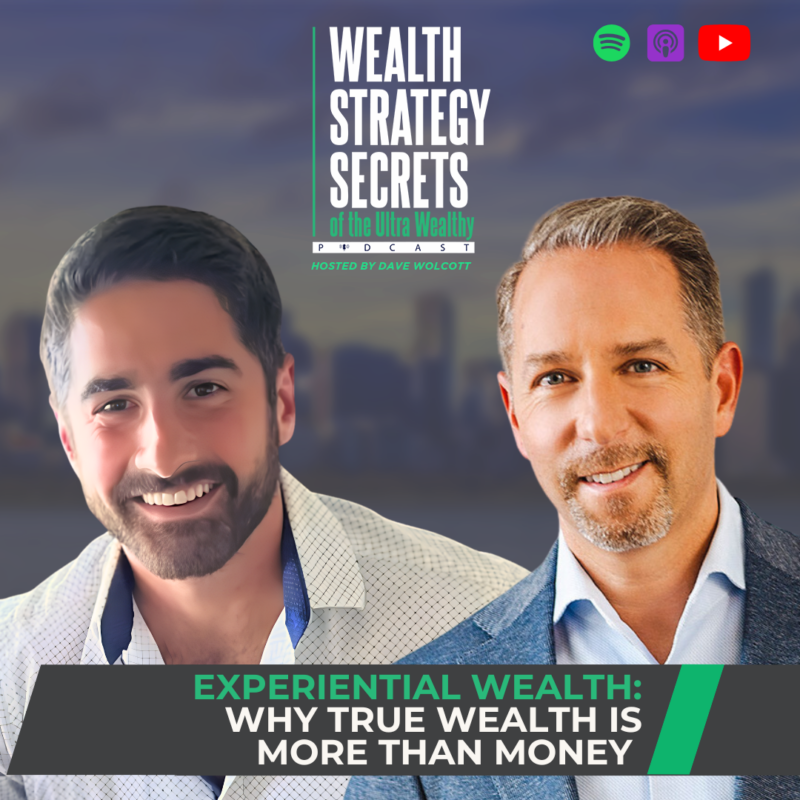
In this episode, Dave Wolcott welcomes back Eli 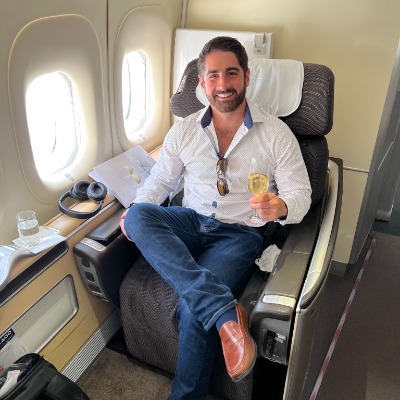 Fasenda, founder of Freedom Travel Systems and creator of the Experiential Wealth philosophy, to explore how entrepreneurs can turn financial success into meaningful experiences. They discuss Eli’s six-part framework for creating unforgettable memories, how strategic travel rewards can help make luxury experiences more accessible, and why the ultimate return on investment may be the joy, connection, and freedom you create along the way.
In This Episode
- Why financial success doesn’t always translate into a fulfilling life—and how experiential wealth can change your perspective
- Eli’s six-part framework for creating meaningful experiences through travel, relationships, presence, and intentional planning
- How entrepreneurs can strategically use credit card rewards and travel points to create more experiences without unnecessarily compromising their financial goals
Eli Facenda is the founder of Freedom Travel Systems and creator of the Experiential Wealth philosophy. He helps entrepreneurs and high-income individuals optimize their spending and travel rewards to create meaningful experiences with the people who matter most.
His work combines strategic points optimization, luxury travel planning, and intentional lifestyle design to help successful individuals get more enjoyment and fulfillment from the wealth they’ve built.
This episode covers experiential wealth, financial freedom, wealth strategy, lifestyle design, intentional living, holistic wealth, meaningful experiences, travel rewards, credit card points optimization, luxury travel, passive income, time freedom, personal development, entrepreneurship, family relationships, mindfulness, return on joy, and creating a fulfilling life beyond financial success.
Pretty much everything great that has happened in my life, every great decision, came from an insight, which was usually a byproduct of being in a relatively quiet mind and not trying to think too much about the actual thing. Having the space to actually hear your own intuition is another way I could say it. And learning to trust that has been amazing.
Hey everyone, welcome to another episode of Wealth Strategy Secrets of the Ultra Wealthy. What if the greatest measure of wealth isn’t your net worth, but how fully you’re actually living your life? Today I’m joined by Eli Facenda, founder of Freedom Travel Systems and creator of the Experiential Wealth Philosophy, who’s challenging the traditional definition of financial success. Eli helps successful entrepreneurs turn everyday spending into extraordinary travel experiences, while rethinking how we leverage our money, time, and relationships to create a truly rich life. In this episode, we unpack his six-part framework for creating unforgettable experiences, how to unlock incredible luxury travel through strategic points optimization, and why the ultimate return on investment might actually be your return on joy. Eli, welcome back to the show.
Dave, great to be here, man. Super excited to dive in today. This is going to be really fun.
I’m really pumped to have you on the show and continue the discussion. We’ve had so many great dialogues in the past. One of the things we talk about a lot, in fact, I wrote about it in my book, Holistic Wealth Strategy, is: what does wealth actually mean to people? We spend all this time accumulating our wealth, yet we often struggle with how to use it in an intentional way, a way that enriches our life through our relationships, our experiences, and the things that really let us squeeze the juice out of life. I love your term “experiential millionaire.” I know you’ve evolved the business tremendously, but I think it’s such an important way to think about your wealth from a holistic standpoint, and how you’re using time, travel, experiences, and relationships to enhance that wealth.
Wealth isn’t just about accumulating assets. It’s about how you’re using your time, travel, experiences, and relationships to enhance your life.
You’ve nailed it. It’s been a big transition, because when we first started out as a business, the essence of what we were doing was helping people maximize credit card points. While the mechanics of what we do as a service, and what I still do in my work, still look a lot like that, we spent time doing some soul searching to reflect on what we’re actually doing, what this is really about, and why it’s making an impact.
It hit me on a trip about two years ago, when I was proposing to my then-fiancée, now wife. What I’ve found, and you could probably check this for yourself, is that a lot of my best ideas, the big ones, the 10X ideas, the non-linear ones, don’t come from logical thinking. They happen when my mind is quiet enough, and I’ve been not thinking about things for long enough, that something fresh comes through. We were in Paris, France, at the Park Hyatt, a super luxury spot. It was 5:30 a.m., and I normally sleep until eight, but I woke up and was just hit with something. I pulled my computer out, I had to write, and my fiancée looked over and asked what I was doing. I said, “I don’t know, something’s coming through, I have to write this down.” It turned out to be a concept I was trying to articulate called experiential wealth.
What it pointed to was this: when you think about a rich or wealthy life, what actually makes a life rich? What gives you the feeling of being wealthy? As I reflected on it, I realized it’s certainly not just the money. Money is a helpful tool and a mechanism to create more. But what’s the actual feeling of richness? For me, the richest moments of my life, the ones I’ll look back on when I’m 90 years old, are going to be really deep, meaningful moments of connection with the people I love most. That’s what experiential wealth is. It’s when you stop thinking of wealth as just accumulating financial capital, and start thinking about how rich the feeling of your life is, how much you’re actually savoring and enjoying everything the money is supposed to get you.
I know a lot of people with a lot of financial wealth and a lot of money in the bank, but their experiential wealth, the richness, the joy, the connection, the intimacy they’re getting from life, is hardly anything. That’s a really difficult place to be. So this is how you convert the financial success we’re building into something that actually feels worth it. That’s what I’ve been discovering and unpacking for the last year and a half, it’s what I’m writing my book about, and it’s the direction our company is moving in. Points are still part of it, but they’re just one facet of creating a life full of really rich, meaningful peak experiences.
I think the underlying problem is that we all live in a world with a multi-trillion-dollar financial services industry that has framed wealth building as an accumulation theory: you save your entire life for a nest egg, and then at 65 you can start spending it and have freedom. Then you can start traveling, at age 65. That’s one of the things I disagree with most about the traditional financial planning model, and it’s why we align with creating passive income in your life no matter your age, even in your 20s or 30s. You can achieve that financial freedom now, because financial capital is basically just energy. As soon as that energy and money comes into your pocket, it’s going to go out and be spent somewhere else. But if you can intentionally design how you want to use it to enrich your life, to feel wealthy, not just to feel rich by buying gold or a fancy car, that’s different. And travel, of course, brings us so much joy, along with the relationships. When I go to Italy, and I know you do as well, I’ve been fortunate to go since I was 16. You go to an amazing environment, with beautiful weather, amazing food, unbelievable ambience, like being in Sardinia, and you have the person you’re madly in love with, or your family, the people you care about. You’re stacking all these things together, and you can’t buy that.
No, you can’t. What I’ve reflected on is: how do we actually do that? What’s the intentional process? Is there a system? I actually discovered there’s a formula for creating those peak experiences, and I’m happy to share it. But I think what you named is really important, because what I heard is reclaiming your own sovereignty over how you govern your life and how you want your money to serve you. That means making the financial strategy you deploy in your life fit your overall life desires, not making your life fit inside someone else’s boxes and rules about what you’re supposed to do with your money. When we take that power back, it’s so much more freeing, and you get to live more in accordance with what you actually want. And when I think about a wealthy life, that’s number one: are you living in accordance with what you deeply desire? Most people are so caught up in hustle culture and the rat race that they don’t take much time to think deeply about what they really want out of life.
Make the financial strategy you’re going to deploy in your life fit your overall life desires.
I’ll give you one example. My experience with this philosophy is that I really like having a range of experiences, things that push different edges of who I am. A couple of months ago I got an invitation to go hunting in Hawaii. I’ve never hunted before. My friend Jordan sent me the text, and I told him, “Dude, I’m not going on a hunting trip, that’s not me.” He asked, “Do you eat meat?” I said yes. He said, “But you’ve never seen where your meat comes from. You just go into the grocery store and it shows up.” I thought, good point. “At least if you do this, you’ll see the food chain in person.” I’d never thought of it that way, because I always thought of hunters as reckless. He said, “No, the way we do it, they call it sacred hunting. It’s a very intimate experience. You really connect to the animal.” And it’s actually deepened my appreciation for food, because now every time I eat something, I see what went into it, and I think, wow, I’d better enjoy this.
On that trip, we were on Molokai, a tiny island with about 7,000 people, whereas Oahu has a million. One of the guides grew up on Molokai. He’s got mango trees in his front yard, goats, deer in the backyard, bees and honey, he can bow hunt, and he can fix his own house. I was fascinated by his state of being. He has no agenda, hardly uses a phone, and has a beat-up car he doesn’t care about. I asked him how he likes living on Molokai. He said, “It’s amazing. I’ve got beaches, mountains, friends, community, great food. I can fish right there, hunt right there. I don’t need anything.” And I thought, hold on. This guy probably doesn’t have that much money, but he can fix his own house, grow fruit on his land, has animals in his backyard, can go have adventures, and has no schedule to attend to. He hardly needs money, just some for arrows, gas for his car, and maybe some materials. But he was so alive and so joyous that it really shook me. By my terms, this guy is wealthier than a lot of people I know who have ten figures in the bank, but it’s not giving them the life they want.
So this has been a whole rediscovery for me: how can you have the financial wealth to go do the things you want, and also the sense of joy this guy, Ames, has on Molokai, where life is a playground? He’s living like a little kid, which is awesome to watch and rare to find. I think that’s a cool North Star for us: having both experiential wealth and financial wealth, so you don’t get caught in a trade-off trap, thinking you can either have money or enjoy your life. That’s the biggest trap we should all try to avoid.
Yeah, because there’s a cost to it. We all fall into this trap, because people are trained to judge their net worth by a number, whether it’s a brokerage account or the value of some real estate asset. You think, well, the number’s going up, so why am I not having more freedom or more wealth in my life? At some point you realize it’s not going to change, in fact it’s getting worse, unless you intentionally redesign and re-architect what your life should look like and create the chessboard you want to play on.
You probably see this more than I do, but how many clients have you had who actually get in touch with what they want and say, “I actually want to downsize. I don’t want this giant house,” or “I’d rather have a smaller business that’s really profitable and lean and fun”? I’ve found a lot of people who’ve climbed to certain peaks financially or in business get there and say, “I’m going to move back into a two-bedroom apartment downtown. I’m going to lay off two-thirds of my team. It was unnecessary and didn’t add more joy.” It’s like the Marie Kondo philosophy, the Japanese woman who talks about cleaning up your house: does it bring you joy? I feel like we should do that with our lives and businesses. It can be a really powerful tool to ask: am I getting a return on joy from where I’m deploying my resources?
Let’s unpack the strategy, because one of the things I love about your work is that it’s basically financial engineering to get what you want. I love uncovering unique hacks that let you do some financial engineering to get the life you’re after. So let’s dig in.
Totally. Let me set the frame. When I think about experiential wealth and my mission in serving clients, I’m investing in the 90-year-old version of you, looking back with a lot more smiles than you would have had if you’d never met me. That’s my main goal. I want you thinking about more memories, deeper connection, more fun, more fulfillment, more aliveness, and a bigger sense of “hell yeah, I had the money and the success, but I actually lived, too.” That’s the goal.
Now, these peak experiences aren’t always fancier, nicer, or more expensive; that’s a trap too. Sometimes the peak comes from something more meaningful, slower, more intentional, more aligned, more simple. Getting in touch with that is really important. Sometimes it does look like luxury, and don’t get me wrong, I love that. Often these experiences come in the form of travel. You can apply this philosophy locally, in your everyday living, but if you apply it to your bigger experiences, it makes those moments even more extraordinary. So there are two sides to this, and then a third piece: how do we actually execute? That’s where your resources come in. To execute on a big trip, you need money, space in the calendar, and points. We can unpack the points element if we want to, but think of that as the step after you know the experience you want to create.
The trap I’ve seen people in the points space fall into is that they have a bunch of points and ask, “How should I use them?” And I say, let’s think first about what you actually want. What do you want these experiences to look and feel like? Start there, and then we’ll think about how to deploy your points, your money, or your time to create it.
So there’s a six-part framework, broken in half. The first half is three pieces, which I call the science of creating an incredible trip. The second half is the art of an unforgettable experience. People often ask me, “Eli, where should I go? What’s the best place?” Good question, wrong order. This framework is six Ps, and the first P in the science of an incredible trip is people. Who do you want to create the experiences with? Dave, are your parents still alive?
Yes.
How old are they?
Mine are in their late sixties, getting into their early seventies.
If I think of the people first in my life, I start to look at who the closest people are, my immediate family and my closest friends, and map what season of life they’re in, what season of life I’m in, and how much time I have left to create the big memories with them. Let’s use my parents as an example. They’re in their late sixties, early seventies. If I’m really lucky, I have about 20 years with them. If I’m medium lucky, maybe 10. If I’m not that lucky, it could be five, or it could be a day; we don’t know. Let’s assume medium lucky, and I get ten years. Of those ten, how many will they be healthy enough to go on big trips where we can create epic memories? Five, maybe a little more if they really take care of themselves, but let’s say five. And how many per year will I realistically create? Maybe one to two. So I really have five to ten big experiences left with my parents, before they reach an age where we can still spend time together but won’t be going off to share unique experiences. I took them to Scotland last year, and I’m bringing my mom to a Tony Robbins event in Miami this year.
So that changes a lot. If I put people first, I might say, “I have 30 years to do golf trips with my close friends, and I still want to do that, but this year, because I’ve done this work, I’m going to prioritize my parents, because my time with them is the scarcer resource.”
The second P is purpose. If I’m going on a trip with my parents, what’s the dynamic of this experience? What’s its purpose? For me, at this stage, my business is doing well, and I feel incredibly grateful for everything they provided for me, so half of these trips are simply to say thank you. I want to give them experiences they were never able to give themselves, or give to me, and it’s so fulfilling to be able to give that to them. I want them to feel appreciated, have a really fun time, and find connection points that are interesting to both of us.
Here’s an example. I played baseball in college, and my dad was my coach growing up, my whole life. Baseball was our thing. As guys, half the time there aren’t always deep ways to connect, but we have a few things. Once a year, I go down to Florida and play baseball with him in his men’s league; he’s 70. It’s like a spring break tournament, and we have an awesome time. That’s our connection. So this summer, I got tickets for the whole family to go to the Home Run Derby in Philadelphia, where he actually worked as a teenager, selling beer at that stadium. That was really meaningful, and we got to bring my nephew, which was super cool. That was the purpose.
Once I figured out that baseball is a great connection point for us, the third P, place, becomes more obvious. What places meet the purpose and the people you’re doing the trip with? Now you have a clear idea: here’s who I’m taking, here’s the flavor of the experience I want and why it’s meaningful, and here’s where we could go execute it. For that trip, if it’s baseball and family and I want it to feel simple and easy, that’s not the Japan trip I’m thinking about doing with my family; that’s a different one. So that’s the first half. Is that making sense? Any questions?
It makes so much sense, and it’s also counterintuitive. When most people say, “We’ve never been to Italy, we want to go,” the next question is, “Where should we go, Rome, Florence, or Venice?” You’re just picking a destination. But wouldn’t it be amazing to go with your spouse, say you proposed on a boat or on a lake, and say, “We’re going to go on a gondola in Venice, just like when we got engaged years ago.” Then you have that experience, and you could do it in all these places, but you choose Venice because you haven’t been there.
You nailed it. A lot of people see the experiences I have and think, “I could never do that.” And I say, no, you could. There’s just a dimension of thoughtfulness you may not have fully put into your experiences, because most people don’t think like this. Once you adopt this way of looking at the world, in terms of how you create experiences, it unlocks a lot. I call it being the leader of fun. I don’t like to wait for other people to put together awesome experiences for me to participate in. I do go to those, and they’re fun, but if I want to do something, I’ll bring the people and create the energy for it. I don’t know if someone else is going to create a ski trip with 50 awesome entrepreneurs in the Alps, so I’ll make it happen. It takes time, energy, and thoughtfulness, but it’s fun.
But with this philosophy, you can’t be thinking about ROI. That’s not how this works. You have to think about the return on joy, the return on connection, the return on fulfillment. That’s the purpose. So, are you ready to go into the second half?
Yeah.
This is the art of the unforgettable experience. We’ve covered the science of an incredible trip: who we’re going with and the purpose. Part of that purpose also shapes how luxurious it needs to be, or not. The Hawaii trip, for example, was about getting in touch with a more primal side of myself, so that wasn’t the time to stay at the Four Seasons. We stayed in the most basic accommodations we could, we basically slept outside, because that’s what I wanted from the experience. So it’s not always more luxury. But sometimes you want an epic getaway and reset, and flying first class and staying at a five-star resort is exactly the right thing. The skill is knowing when it’s time for which.
So the first P in the art of the unforgettable experience is presence. It’s kind of cliché, but probably out of all six, it’s the single most important thing for walking away from an experience feeling fully satisfied and satiated.
For years, I thought building wealth meant finding the next great investment. But as my portfolio grew, so did the complexity. I had real estate, private investments, insurance, tax strategies, and multiple advisors, yet no one was looking at the entire picture. I was still the one trying to connect all the dots, wondering if my wealth was actually working as efficiently as it could be. That experience taught me something most successful investors discover too late: building wealth isn’t just about owning more assets, it’s about making sure every part of your financial life works together. That’s why I created a complimentary masterclass called the Wealth Friction Tax. It reveals how disconnected investments, tax strategies, advisors, and financial decisions can quietly erode your wealth, and introduces a more coordinated way to manage it. If you’ve built significant wealth but still feel like you’re the one holding all the pieces together, watch the complimentary masterclass at contrarianwealthbuilder.com.
Presence means showing up fully, and what I mean by that is you’re not mentally off in a bunch of other places, distracted. For most of us, that looks like turning off email, turning off Slack, canceling or moving calls, and not checking your phone constantly. You’re there. One of the best things I’ve noticed is that this is about savoring: how do you actually savor the moment? One of the best things I’ve done for presence is to notice things in the environment. You can be walking down the streets of Portofino, one of the most beautiful parts of Italy, thinking about work and not even fully there. If you want an unforgettable experience, how will it be unforgettable if no one is present to make it so? You have to be fully there, like the lights are on in someone’s home.
Sometimes, and I’ve had plenty of times like this where I need to take my own advice, it takes two days to completely settle into the experience. That’s part of the game; I’m not saying to beat yourself up about it. But the more present you can be, the more you’ll be moved by the experience. It’s funny, because we have a lot of clients, and sometimes I’ll ask, “Oh my God, first time in Paris, how was it? The Eiffel Tower, it’s iconic!” And they say, “Eh, it was okay.” I’m thinking, it’s one of the greatest marvels of human history, and it wasn’t satisfying enough for you? What’s going on? Then I realize you probably took a bunch of calls, weren’t really there, looked at it and said, “Okay, cool building.” You didn’t give yourself the space to take it in, to marvel at it, get curious and wonder about it.
So you need the space. Presence is a lot about that. If you notice things, go in with a clear head, let your mind settle as much as you can, and let the experience absorb you, that’s also where the best ideas come from. That’s the non-linear benefit of really taking in amazing experiences: you have ideas for bigger moves in the business, you think, “I need to call this person,” and the intuition just kicks on when you’re not as noisy. I don’t think you can mechanically create that, but it happens a lot.
Love that. Let me interject a couple of comments for the audience that could be helpful. One of the things I love to do is travel internationally, because it turns your whole world upside down. All your little habits of checking email and doing calls get disrupted. Suddenly you don’t have the right charger, and your whole world is different, so it becomes a forcing function for creativity. The first two days of a trip, I like to schedule things that force me into that. It could be a guided hike out in nature, or cycling, or a yoga class with your partner, in a foreign language, going through the class and doing some breathwork and meditation. It really helps you slip into it.
You nailed it. Things that immerse you help, because there’s the idea of unplugging, but what’s really helpful is replugging yourself into something that isn’t your everyday life. It occupies that energy and focus, and lets your mind stop thinking about what you’re going to do about this marketing strategy, or this team member, or that tax issue. You replug into something else and you’re just there. There’s almost a magical formula to it, at least whenever I do it: then some idea comes in, and it’s perfect, I know what to do.
Now, the second piece is the element of possibility. This is the element of surprise, the element of the unknown, the novelty factor. When I’ve taken my wife on trips, there’s a feeling when I know I’ve planned a surprise for her but she doesn’t know yet, where I just feel like I’m up to something. It feels very fun, like pulling a prank on someone. It’s alive, there’s a joyfulness to it. Whether I’m creating something for her that she doesn’t know about, or we just have a day open, that’s where possibility comes in. Florence is one of my favorite places for this, and so is Barcelona, the Gothic Quarter.
Have you read Eat Pray Love? The author, Liz Gilbert, is a big, really well-known author. My wife likes to write, so I took her for her birthday to see Liz Gilbert speak in upstate New York recently. One thing Liz talks about that I’m stealing is what she calls the “most interesting path.” When she goes to a new place, she turns her phone off for a few hours and just walks through the city, connecting to what’s the most interesting path. Do I want to turn left? Oh, there’s a bakery, do I want a croissant? I want to go into this bookstore. Two hours with no agenda other than following what you genuinely feel pulled toward. It’s so simple, but it’s so rare, especially for hard-charging entrepreneurs building their wealth, who think, “Why would I have time for that?” You can’t put this into a balance sheet. It’s for quality-of-life enhancement. But that’s an example of the element of possibility, where the magic happens.
If you think about your most vivid memories, often something went completely wrong, or something crazy came out of nowhere that you couldn’t have planned for. Sometimes the bad ones are funny ten years later. So leaving space for possibility and novelty, whether you build it in or it’s just openness in the trip, gives you the dopamine spike in the brain that creates the emotional connection that makes a memory last. I probably had a certain type of salad hundreds of days a year, maybe a Greek salad with chicken, around 60 last year, and I can’t remember more than one or two. But I remember one bowl of ramen at Tokyo Station the first time I landed. Why is one bowl of ramen, ten years ago, more vivid than a hundred Greek salads? It was the novelty, the uniqueness. There was a release, maybe dopamine or a different neurochemical, that gave such emotional charge it made it vivid. That’s what the element of possibility does: it gives you the opportunity for something to make you say, “I can’t believe that happened,” or to surprise someone and see the look on their face. That’s so big.
And then the last P is passion. This is bringing the heart into it. Say you’re a husband who wants to do something amazing for your wife. Maybe you’ve been married ten years, you’ve been really busy at work, and you haven’t been as connected, and part of the purpose of the getaway is to rekindle the connection. A way to combine presence and possibility would be, before you get to the hotel, to write a handwritten note, or have the hotel do it, with something you said in your wedding vows, or take a photo from your wedding and have it in the room when you arrive. Is that a big thing? Not really, it’s pretty small, but it brings an element of heart and passion. It’s the people feeling your heart and your love for them in the experience that brings more emotional depth to it. You can do the possibility side and it can just be fun, which is great, I’m all for that. But if you want to go to the max level, say something vulnerable, let someone know how you care about them, show up in a way that makes them feel really appreciated. It feels great for you to do, and it becomes one of those standout moments.
So if you put together the people first, the purpose of the experience, and then where you’re going, you’ve got the essence of the trip. Then you do what you can: change the meeting, delegate, to create the presence. And I think what you named is really important, because the more I’ve traveled and used those times away as forcing functions, the better I’ve had to get at delegating. If I don’t delegate, I can’t go on the trip. So it makes me ask, who would I have to hire, and what would the systems have to be? Now we have a COO who runs the team. The reason I needed a COO is that I wanted to take a month off this year, to really take a step back. If I hadn’t decided to take that month off, I would have said, “I don’t need a COO.” Turns out he’s way better at operations than I am, and he’s basically helped double our company.
So these experiences, being present and willing to disconnect and be in your life, also force you to be more resourceful about how you build your business or career. I diverted a little, but that’s the presence factor. You’ve got the element of surprise, the novelty piece, the possibility, and then the passion, where you really put your heart into the experience, let people know how you feel, and make them feel cared for. If you do that, you’ll come back from trips a changed person, way more reinvigorated for life, and you’ll realize experiences and travel don’t have to be a trip where you hop on an airplane, try to get through it, and get back to work. They can be the most joyous, juicy memories of your life. I know that was long-winded, but I wanted to give you the full rundown.
I really love that. It’s such a great framework, and it’s so intuitive, because most people just talk about where they’re going, which is a one-dimensional way of looking at it. This is a holistic way, very intentional. You can make it fun with your family too. With your dad, it could have been, “Dad, that’s what we connect on, so let’s go to the World Series this year.” But you took him to the local place where he started, which had so much more meaning. It was well thought out, and those are the things you’ll be remembering when you’re 95.
Totally. Amen.
I really love that. I guess we could save some of the tactics for another time, or your last show got into it. But if you want to talk through it quickly, I’d like to share my experience, and full disclosure here: I used Eli’s services because I was so impressed with Freedom Travel Systems and what they did, and I like that financial engineering. From my standpoint, I was looking at how much money I spend in expenses in a year, how much I spend on travel, and asking whether there was a more efficient way to do it. Yes. I’ve always been one of those people who says there are a million things online about points this, points that, and I’m not the guy who’s going to miss the thousands by tripping over the nickels, so I didn’t really care about points. But the way you’ve set this up is, first, a forensic analysis of how you spend money. Then you plug in the most optimal cards, which can give you a much more advantageous reward, four to five times what you could get doing the points on your own. And instead of taking those points and going to Amex to see what I can get for them, there’s a whole strategy your team provides: British Airways has a special where you can get five for one if you transfer, so now I can get five business class tickets for the price of one. I think that’s fantastic, because you’re taking a resource and expense you already have and pulling it into something you want. Did I miss anything?
You pretty much got it. I covered it a little in the last episode, and we can definitely go deeper; there are a lot of tactics. The reason I think it’s important to speak to the experiential wealth side first is that most people hear the tactics but don’t have enough juice, or a vivid enough vision of what they want to do, for the tactics to become relevant. So they just keep doing what they’re doing. After working on this for six years, I’ve seen that a lot. My encouragement, if you’re listening to this, is to go have a conversation with someone you love. Think not about where you’d go or who you’d take, but, going one level deeper, who would you love to surprise, and how would you like to surprise them? That gives you enough emotional charge to say, “I have to find a way to do that, because life is too short not to.” Then using the points becomes way more fun, and you have way more reasons to do it.
Now a few tactical things. The last thing points do for a lot of people in business, high-income earners, and investors is this: I’ve framed this whole thing around creating epic experiences. What’s the first thing that usually stops people from going? “That sounds expensive.” You can have local experiences and apply that framework, and it’ll still be great, but it’s more epic for bigger trips. What points really serve as is a permission slip to have more of those moments in your life without guilt, regret, or trade-off. If the $60,000 you might put into that Italy trip for a family of four, flying business class and staying at epic hotels, doesn’t have to come out of your business, your investments, or your passive income system, you get to have your cake and eat it too. You go on the trip and you keep the investments. That’s what points enable.
First, we want to take an 80/20 approach. If you’re talking to me, you’re probably successful enough that there isn’t a lot of leverage in opening 20 cards and adding complexity to your life. Let’s look for the simplest, highest-leverage cards. And it’s not just the cards you hold, it’s which expenses you put on them. A really common example is the Amex Gold versus the Platinum. The Amex Business Gold, for example, earns four points per dollar on dining, advertising, and software for the business. I was talking to a mentor of mine while writing my book, and he said, “We have the Platinum.” I asked, “Are you running ads?” He said yes. I said, “Then you’re earning one point per dollar when you should be earning four.” He was missing the Gold card; he needs to get it and switch the ads from the Platinum to the Gold. A lot of times people actually have the right cards, but they have the expenses on the wrong ones. That means you’re already spending the money, but you’re only getting 25 or 30% of what you should be. If you’re already earning a million points a year, you swap a couple of expenses once, leave it in the system, whether it’s Facebook ads or giving the employee the right card, set it up once, and instead of a million points you earn two, three, or four. When you use the points well, and we’re talking about getting three to five times the value, that’s probably around $100,000 a year in extra trips, depending on how much you’re spending.
Then, as you named, the redemption of the points is where the nuance and complexity lie. The biggest thing I remind people is that to get the most value, you have to be a little flexible on a couple of things: the major airport you fly out of, the route, and the exact date. I’m not saying that if you want to go to Italy in July, go in January. What I am saying is that if you have a cruise leaving from Naples on July 9th, and you’re flexible about getting into Rome on the 7th, 8th, or 9th, you’re good. And if you live in Austin, like I do, there are no direct flights anyway, so you’ll most likely do Austin to New York, Miami, Chicago, Houston, or Dallas as a separate leg, turn that into its own little mini thing, and then do the long-haul in business class from that major hub. This is critical because if you insist on non-stops on the exact date you want, there’s a good chance the deal you get is really low, and that has nothing to do with your ability, or our ability, to find it. It just has to do with how many options you see. When you open up two more days and four more airport hubs for the long haul in business class, because that’s usually what people care about, it changes everything. Austin to Dallas is an hour flight; whether you do economy or pay for business is not a big deal, it’s super cheap. It’s the Dallas-to-Rome leg where everyone wants the lie-flat seat. That flexibility is the most important thing. If you want nonstop from a city, you might have one or two options a day. If you open up a couple of airports and a couple of days, you might go from 20 business class seats to a hundred different flights, 2,000 potential seats versus 20. That’s critical in setting yourself up for success. If you don’t have that flexibility at all, you can still find them; it’s just rarer and less likely you’ll find them quickly. That’s something people should be aware of.
Awesome. Unfortunately, I want to respect your time, and we’re coming to the end. I really wanted to talk about personal development with you too, because I know you’ve done a lot of work here. Maybe you could give us one insight that I think would help people understand, whatever age they are, whether coaching your kids, other people, or ourselves, because having a coach or mentor, I like to call it building a dream team around you, gives you so much more leverage. What’s been your biggest insight from all the self-improvement, self-development, and coaching work you’ve done?
It’s a really good question, let me take a moment for that one. The biggest insight I’ve had, especially lately, is that there’s a difference between understanding this stuff intellectually and actually feeling it. Anything in personal development sounds obvious the first time you hear it. But when you actually feel it for yourself, that’s when you think, “Oh wow, that’s what they were talking about.” We all have versions of that. The biggest one lately is realizing that pretty much everything great that’s happened in my life, every great decision, came from an insight, which was a byproduct of usually being in a relatively quiet mind and not trying to think too much about the actual thing. So having the space to hear your own intuition is another way I could say it, and learning to trust that has been amazing.
There are so many times in business where something recently happened and I thought, “I knew that was going to happen.” The whisper was there, but I was so busy in my head trying to think about it logically that I missed it. Had I gone back, gotten a little quieter, connected to that, trusted my intuition, I’d have had the guidance the whole time. I like to think of our inner guidance system like a GPS: it tells you the turn you have right now, “turn right in 50 feet.” It’s not going to give you 27 steps. That’s our logical mind. Intuition is very simple. It says, “Hey, maybe you should explore this. Maybe you should talk to this person.” Those little subtle pulls are always where the best stuff comes from. Sometimes they’re unexplainable, not logical, not practical. But every time I’ve listened to them, life gets better. It’s not that listening more to the logical mind makes things worse; it’s that it has to come second, after I know where I’m going. That’s probably the biggest thing that’s made an impact on me lately.
Sage advice, appreciate that.
Absolutely.
Eli, if people would like to connect with you or learn more about Freedom Travel Systems, what’s the best place?
It’s simple. We’ll have a link down below for your people. My Instagram is just Eli Travel Guy, and that’s the main place I’m hanging out. I’m also on YouTube, where I do some reviews.
Awesome. Appreciate you.
Thank you, Dave.
Thanks for listening to this episode of Wealth Strategy Secrets. If you’d like a free copy of the book, go to holisticwealthstrategy.com. If you’d like to learn more about upcoming opportunities at Pantheon, visit pantheoninvest.com.