
Listen Here



Many investors assume multifamily real estate is an easy path to passive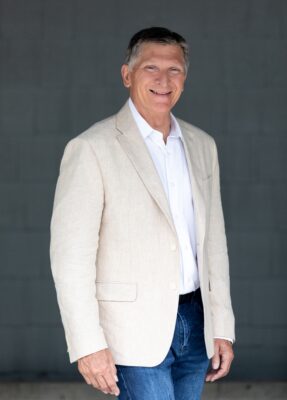 income—but successful investing requires understanding market cycles, conservative underwriting, and disciplined risk management.
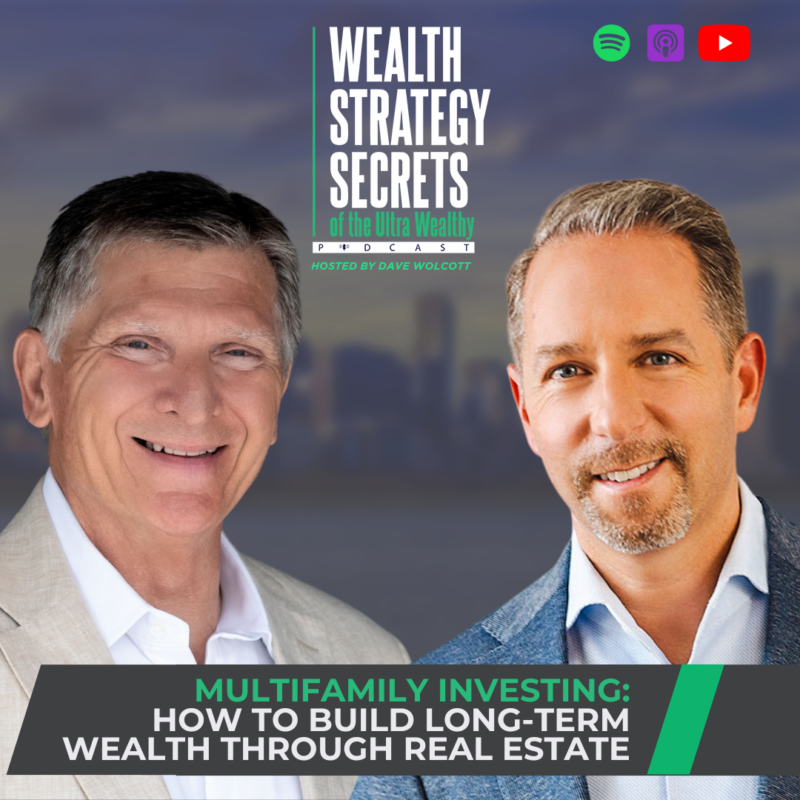
In this episode, Dave Wolcott sits down with veteran multifamily investor Mike Morawski to discuss the lessons he learned after building a $100 million real estate company, navigating the 2008 financial crisis, and why today’s market may present one of the best buying opportunities in years.
In This Episode
- How successful multifamily investors manage risk through conservative leverage and underwriting
- The pros and cons of active versus passive real estate investing
- Why today’s multifamily market may create long-term wealth-building opportunities for disciplined investors
Mike Morawski is a multifamily real estate investor, syndicator, coach, and author with more than 30 years of experience. He has built and managed a $100 million real estate portfolio, overseen more than 7,500 apartment units, coached thousands of investors, and successfully navigated multiple real estate market cycles.
This episode covers multifamily investing, passive income, real estate investing, wealth strategy, alternative investments, cash flow, real estate syndication, conservative underwriting, financial freedom, accredited investors, and long-term wealth building.
Like people have said to me, “Hey, why don’t you go do something different?” And I’m like, “Well, because I love this business.” And I think if you invest in yourself and you invest in what you’re passionate about, you can be successful and increase where you’re headed.
Welcome back to Wealth Strategy Secrets of the Ultra Wealthy. Today’s guest is Mike Morawski, a real estate investor, syndicator, and coach with more than 30 years of experience in multifamily investing. After scaling a $100 million real estate company and managing over 7,500 units, Mike has experienced both massive success and major market cycles, including the lessons learned from the 2008 crash. In this episode, we discuss today’s multifamily market, the biggest mistakes investors make with leverage and underwriting, active versus passive investing, and how to build long-term wealth through real estate the right way. Mike, welcome to the show.
Hey, thanks, Dave. Appreciate it; I’ve been looking forward to being here.
Yeah, it’s a pleasure to have you on the show today and look forward to really helping you dispel some of the myths around investing into real estate and multifamily from your years of experience in coaching and doing. It’s always great when people actually eat their own dog food and are actually doing things and then coaching on it, versus the opposite way around. So why don’t we begin, Mike, with telling the listeners about your journey, because there’s always a lot of learning to do from that story and I’m sure there was an incredible amount of expertise garnered along the way.
Yeah, so, Dave, I’ve been in real estate for about 30 years now. Prior to that, I had a general contracting business. We built residential room additions; we were building about 25 a year. And I always love this part of the story because as an entrepreneur, you do everything. So I was on sales calls, I was doing marketing, I was ordering material, writing contracts, hiring people, firing people, and doing the bookkeeping. And I was still in the field banging nails—just burned out and got to a point where it was like I woke up one morning and said, “I have to go do something else.” I was fortunate, though. I had somebody knocking at my door to buy my company. Somebody bought my construction company and I was going to take a year off.
But like any good entrepreneur, you never take time off. Your mind is always spinning and something’s going on. And so I went out, I bought a couple of buildings to rehab—a couple of two-flats—and I did rehab those. Along the way, I met a real estate agent who was extremely successful and said I thought I wanted to go into the real estate business. And he encouraged me to do so, and I did. I really followed this guy’s systems and techniques. In my first nine months in the real estate business, I sold 78 single-family houses and went on to build a team selling about 125 homes a year, and did that consecutively for about 12 or 13 years.
In 2005, I went into the apartment business over the next 30 months. I didn’t just jump into the apartment business; I believe I manifested it because it was something I always wanted to do. When I was in the contracting business, I did a lot of work for a couple of large syndicators in the Chicago market and I understood the model: you raise private equity from individuals, you marry it with a great real estate deal, you stay in the middle, and as long as everything goes well, everybody does well. So in 2005, I syndicated my first multifamily deal. It was 11 units, and I scaled a $100 million company over the next 30 months. We bought 4,000 apartments in five US markets, raised about $18 million to do that, and I built a property management company managing 7,500 doors. 2008 rolled around and we crashed and burned, and learned a lot of great lessons along the way.
Yeah, I was just going to ask: 2008, what were some of the biggest lessons you learned from that, Mike?
When I tell my story, I love to talk about five mistakes I made. The first mistake was I grew way too fast as a business. I don’t think anybody needs to buy 2,000 units in one year unless you’re an institutional buyer. I was over-leveraged, so I owned everything at 85% loan-to-value, which was just brain damage. But back then, banks and everybody was throwing money at you. I also was under-capitalized as a business owner. I had built this company, I had 100 people working for us, and wondered how I was going to make payroll week to week sometimes. Then, I didn’t pay attention to the details. Today, I’m very specific on asset management. My asset management calls are very detailed and my on-the-ground teams know that they need to come to those calls with very specific data, because we drill down. And then the fifth mistake I made was I didn’t listen to people who were smarter than me who were around me saying, “Hey, I don’t like this, I don’t trust this, I think you need to look at things differently.” So I learned some really valuable lessons. Today, we asset manage at a very high level. We underwrite much more conservatively, very market-driven and market-specific. Today, things have to make sense in the market before the deal does. So I think that you learn by those issues along the way.
And what are you seeing today in terms of today’s market? Because 90% of the industry basically in multifamily, and also really across commercial—even office and other areas—really got surprised with if they were underwriting in ’21, ’22, or ’23 with that floating-rate debt and the rapid rise in interest rates. Tell us about what have been some of your recent lessons in the past couple of years.
Yeah, so we know that we’ve been in this cycle. Dave, I always say there’s no geniuses in this business; there’s just market cycles. We top-picked in maybe ’21 or ’22, and then the market started to come back down. In 2024, we bought about 400 units. In ’25, we didn’t buy anything because absolutely nothing made sense. We probably wouldn’t have closed those last 150 units in ’24 except that we had started the process earlier in the year. But we got to a point in the market cycle where nothing penciled, and now I’m starting to see deals pencil again. I see a big price adjustment in the marketplace. I see some cap rate adjustment and some more balancing. I see a lot of buying opportunities today. So we’ve been underwriting a lot, and I like probably 20 markets right now around the US and we monitor those, making maybe a few more just kind of watching what’s happening. We are a buyer in today’s market. I love the comment that you should watch the smart money and do what the smart money is doing. And if you look at some of the bigger institutions, they’re actually out there today deploying money into assets. So everything from super distressed to moderately distressed, as well as core assets, are being bought today.
Yeah, for sure. So do you think we’re at the bottom of the cycle or just really coming out of the trough?
I believe we’re at the bottom, but we’re floating along the bottom. So the question becomes, how long are we there? I always use this analogy: I’m an old scuba diver and you get down on the bottom and you’ll see a stingray scaling across the top of the sand. And that’s how I feel we are right now—we’re just at the bottom, just kind of going across the sand. And at some point, we will start to go up; it just becomes a matter of time. And I really believe that with some of the things that are happening in the world today—the war, some of the pricing in oil needs to reset. And I think that the stock market has just been very robust and people have had better opportunities in the stock market today. But I think that there’ll be a little bit of give coming up here, and when those fundamentals start to direct us in the path that real estate makes more sense, that’s when we’ll start to grow again. But I really believe we’re going to have a little bit longer run this time around. I think we’ll probably run for a good eight years on the upside.
Yeah. Talk to us about your thesis on real estate overall versus equities markets and why you are so bullish in real estate.
I have always been a real estate guy, and maybe I’ve had my blinders on for many years, but I like market-rate multifamily. I don’t like tax credit deals and I don’t like student housing because I think in a lot of the other asset classes in the multifamily bucket, there’s too much hair on those deals. And I like market-rate rent because I can go in and I know that I can put $1,000 into a unit or 10, and I can get a 10% return on that. So I can get a good return on my renovations, plus I can increase value to the property by adding to the NOI. Plus, people need a place to live. We’re still in a world economy that has a very large housing shortage, especially affordable housing, and people need a place to live. So I believe multifamily gives us that opportunity to supply that for people who need it, and also for our investors to benefit from being involved with us as we continue to run operations and reposition property in the marketplace.
Do you still think that there’s upside in terms of increasing rents in certain markets on doing value-add? Because multifamily had quite a strong run for quite a while. And I know certain markets, even today, are having a difficult time really pushing rents. People just can’t afford it; now you’ve got oil and gas prices going up, you’ve got inflation going up and everything. So do you still think that your thesis on doing value-add makes sense?
I do. And if you look at some of the tertiary markets, you see that there’s been price increases. When you look at the Austins, the Houstons, and the Phoenixes of the world, they really accelerated in their rent increases and values of property went up. But look where they’re at today: they’re like flat, they’ve plateaued. And even in Austin, Houston, and San Antonio, those prices have come back down, and it’s because of the overbuilding. But when you look at a tertiary market where there’s not a lot of new construction going on, those products aren’t getting overbuilt; you still get the opportunity to reposition.
There was a report that I read from Yardi about a month ago now, and it talked about the top 10 tertiary markets. And number seven on that report was Tulsa, Oklahoma. I bring Tulsa up because I bought 400 units in Tulsa back in 2024, and I love that market because of the economic growth. Just this week alone, I saw a report that said the top cities that college graduates are moving to this year, and Tulsa was number seven. So I’m looking at those tertiary markets as being opportunistic places to be. They’re not opportunity zones, but they’re opportunistic for sure.
Yeah, definitely. Mike, tell us about your thought on interest rates as well, where you see interest rates headed, and how is that really going to impact your underwriting moving forward?
Mike Morawski: So, Dave, when I first got in real estate, interest rates were 11%. And I can remember saying, “If I could just buy a house at where my parents bought interest rates at 3%.” And it took us 50 years to get back down. We had gone all the way as high as 22% or 23% interest rates back during the Carter administration. Interest rates today, I think, are normalized. When you can get a 6% or 6.5% interest rate, you could do a buy-down into the mid-fives or low-fives and fixed-rate debt today—that is not a bad place to be.
The problem, I think, that happens is that you’ve got cap rates that are lower than interest rates. So I’ll give you an example: I’ve been looking at some deals in the Las Vegas market, and deals are still trading in Las Vegas at a 4 and 5 cap. Well, if I buy a property and I’ve got a 6% interest rate, I’m in a negative yield position out the gate and behind the eight ball to work even harder to try and get that property to cash flow. Whereas if I can go to a market like Tulsa and I could buy a property at a 7 cap and get a 6% interest rate, I’m in a positive yield position. So even with interest rates being normalized today, if you’re in the right market, you can make money. And I’ve always said I’ve made money in real estate when rates are high, when rates are low, whether there’s a Republican in office or a Democrat in office—it makes no difference. You just have to be logical and systematic about where you’re buying and how you’re buying.
Yeah, that’s fair. Tell us a little bit about your coaching. I know you’ve got a strong coaching program and you’ve been helping people for a long time, so how is that structured? What are some of the biggest challenges people are trying to figure out when it comes to real estate investing?
Great question, thanks for asking. So, Dave, I’ll just tell you that I’ve coached thousands of people over my career in real estate. I did a lot of residential coaching, worked for a couple of big coaching companies as an independent coach for them, and coached hundreds and thousands of real estate agents. For the last six years or so, I’ve run a coaching program that I’ve put together and I run two sides of it. I have a group program where I bring groups of people together, and I run a partnership program also where I actually partner with individuals and help them get their first multifamily deal done. In my coaching program, I teach all the fundamentals—everything from goal setting to how to pick a market, the buying strategy, underwriting, due diligence, closing, and operations and management.
So I teach all the fundamentals, but in my partnership program, I actually have the ability to hold people’s hands—or they can hold my hand—and we get their first deal done. Just about every multifamily property I’m in right now, I’m in with one of my coaching clients who was in my partnership program. So I love coaching; I love helping people, helping them grow, look at things differently, and being able to succeed.
Yeah, that’s great. And why would someone look towards purchasing their own multifamily asset? Because that is completely active real estate; you’re essentially running your own business. It could be four units, could be 50. But that’s a full-time business versus doing a passive investment where you’re getting a full-time team with acquisitions and asset management that you’re able to leverage.
One of the greatest advantages of passive investing is leveraging experienced team, not just leverage on the asset.
Yeah, I think a lot of times there’s so much influence in the marketplace today on social media—Instagram, Facebook, TikTok. Everybody’s out there saying, “Oh, you should be in the apartment business or be in the real estate business and own these assets.” But I think people don’t know, as an operator, all the details that go into it—everything from what’s the traffic pattern and where is that traffic coming from to get tenants, to what the move-outs look like in the next days. “Oh my God, this is the third tenant that moved out of this apartment and they trashed it.” That stuff is real. I think a lot of times people live in a fallacy that it will be easy for them to handle it. And there are people like you and I, Dave, that it is easy for us—we handle it; it’s become second nature for me today to be able to move a tenant out, go in, rehab a unit, and put a new tenant in there. But in the beginning, it’s tougher, and I think a lot of people get dismayed with the process when they start to operate real estate on their own.
The alternative for people is to passively invest. And I always say by being a passive investor and partnering with a good, strong operator, you don’t have to deal with tenants, trash, and toilets, and you can benefit from real estate because there’s a lot of benefits in investing in real estate. First of all, I think there’s strong preservation of capital, there’s cash flow, there’s building generational wealth, and then there’s the tax benefits that you get which add cash to your pocket and give you long-term benefits. So you can get the same result from passive investing that you could from being a hands-on operator.
(Commercial Break) If you’ve ever wondered how the wealthy use energy investments to reduce their tax bill while generating cash flow, we just answered every question on camera. Go to pantheoninvest.com/energy to find out. (End of Commercial Break)
Do you have a view on the LTV sweet spot in terms of what you do, and where the debt is in the capital stack?
Yeah, so that’s a great question. As I mentioned earlier, I was way over-leveraged at 85%, and even last year I saw some multifamily loan programs that were being pushed out there like 80% LTV—just things you should shy away from. I believe your first bank debt should be at a minimum of 65%; 70% would be high. And then if you were even at 60% to 50% LTV, you’d be in a much, much better, much safer position. So I always coach the clients I work with to start their underwriting process at 65% LTV. You can always go and find a preferred equity provider that would come into that capital stack and bring that up to maybe 85% for you, depending on the asset, the location, and the story around that. But yeah, for first bank debt in the capital stack, I think you need to be at 65%.
Yeah, appreciate that. I think it’s quite an interesting dilemma investing actively or passively for people. And I’ve never seen someone who’s building wealth go from passive investing down to active investing; it’s usually the other way up on the ladder because, number one, you don’t need to be accredited to be doing real estate. So you’ll find a lot of the fix-and-flips, the wholesalers, and people trying to create wealth out of the start. And then you get to a point—probably like you did when you were saying you had 75 different single-family properties—where the complexity gets really steep and you kind of hit a ceiling. So one of the benefits to passive investing is that you have this ability to get leverage not only in terms of the debt and the asset, but also getting a professional team and all of their experience in acquisitions and asset management.
But one thing contrarily to that that I think is really powerful from an active perspective—and it’s great that you run that coaching program—is one of the best things we could do is look at achieving real estate professional status. Maybe you could have your spouse achieve that, or let’s say you exited your business and you have a lot of capital that you now have to deploy. As you said, you can really truly create generational wealth, you can create cash flow, but then you can also drive really good tax efficiency if you get that real estate pro status. So that’s a really good benefit. And then overall strategy into really redeploying assets strategically on the active side.
Yeah, I agree with that a lot. I like what you said at the beginning—that rarely do we see somebody go from active investing back to passive investing. But what’s funny is I have a lot of investors that are active investors that are invested in some of our offerings as passive investors, so I think they do both sides. But a funny story: I had a client that started coaching with me who owned about 500 units as a passive investor. He was in a number of deals, had about 500 units, and wanted to go into active investing. Well, we worked together for about eight months. We were in the process of negotiating his third offer on a multifamily deal and we lost the deal to a higher bidder. And he finally said, “You know what? Forget it. It’s so much easier for me just to do my day job and continue to invest money in real estate and receive the benefits from it.”
So I think that the investor who’s considering becoming an active investor may want to rethink some of that in today’s market cycle, because this is a tough cycle to get started in. And as a passive investor with a good operator that’s being a good steward of your money, you’re going to do better than trying to go out on your own. There’s that cost analysis for your time, too—it takes a lot more time today to get a deal done than it did three years ago.
Yeah, 100%. I mean, you are your biggest asset. Oftentimes people can get allured into real estate because they think it’s a quick way to generate cash flow—and it can be successful—but it’s just like any other business that has its own inherent risk. And the other point that I would make in that conversation as people kind of think about these things is that overall, if our goal is to truly create wealth for ourselves and our family, you want to do that on a risk-adjusted basis. So when you’re able to invest passively, you can actually spread your capital out into multiple operators, multiple deal profiles, and multiple markets. That way, you can really de-risk things versus if you had everything in your own 200-unit building where if there was a flood or just something crazy happened, you’ve got an inordinate amount of risk. So I think it’s important to consider that on the front end as well.
Yeah, absolutely, 100%.
Mike, how would you define wealth? What does it mean to you?
It’s an interesting question. I think when I was younger, I defined wealth by my net worth and how many assets I owned. Today, I don’t define it monetarily; I define it more about how I behave and who I am as a person and an individual. I think wealth for me today is: what can I do for somebody else to make their life better? I’ve gotten involved with a couple of organizations, and we go to Mexico and build houses for the less fortunate. I love to do that. I love working with my coaching clients because I really feel like I’m giving them a gift—30 years of knowledge. And by all means, Dave, I don’t know everything. I continue to learn and learn just as much from my coaching clients as they learn from me. I think wealth comes from my satisfaction today of giving back and doing something to help others grow.
Wealth isn’t what I own anymore. It’s what I can do to make someone else’s life better.
And what are you focused on primarily today to help you continue learning at your level?
Well, I am in some coaching; I’ve had a coach in my life for well over 20 years. I’m very focused on my morning routine. I spend time in scripture, prayer, and meditation in the morning, go to the gym and work out, and then spend that time in gratitude and setting up my intentions for the day. So I’m real big on that. But I continue to read—I’ve probably read 1,500 books since I graduated high school. I continue to read and learn, and go to seminars. I think I’m a student of this industry and of business. I love to continue to look for that one little thing I can learn. I was at a networking event last night, and the speaker was talking about AI. Everybody’s talking about AI today, but all the noise is kind of the same. This guy said some things last night about just how to do things a little bit differently with AI to get better responses, and I thought, “Wow, that’s really interesting.” So I always want to see what I can learn from a situation, an event, or a conversation.
It’s interesting—you leave the traditional school paradigm, and then the learning really just starts to begin when you get out. I spend more money on my own learning outside of the traditional one. But yeah, that’s fantastic. Being a lifelong learner is really fantastic along the way. You have to stay focused on things that light you up and align toward your unique ability. That’s probably another great point about investing in real estate as well, whether that’s either passive or active, because if you have passion and curiosity about a certain asset class, it can be more exciting for you to actually invest in that. Where energy goes, your focus is going to be there as well, so that’s really great for you as well. Mike, if you could give just one piece of advice to the audience about how they could accelerate their own wealth trajectory, what would it be?
How they could accelerate their own wealth trajectory? Well, I think first you have to take an inventory of where you are, and then follow your passion. What are you passionate about? Like people have said to me, “Hey, why don’t you go do something different?” And I’m like, “Well, because I love this business.” And I think if you invest in yourself and you invest in what you’re passionate about, you can be successful and increase where you’re headed—both financially and spiritually, emotionally, mentally, and financially. Those areas of our life. I know that was more than one piece, but that’s okay.
No, that’s good. We’re all trying to learn from each other and that’s really the mission of this show—to really take your 50 years of experience and distill that down into some great, bite-sized pieces of knowledge for people. So I really appreciate your time today and you sharing that wisdom and insights with the audience. And if people would like to connect with you, what’s the best place for them to reach out?
Yeah, thanks for asking. I love to network. You can find me anywhere on any social media platform; connect with me on Instagram for sure, and that’s a great place to direct message me. Also, if you want a direct conversation, just email me at Mike@mikemorawski.com and jump on my calendar. Let’s set up a time that we can talk, see where you’re at, and maybe exchange a piece of advice for each other.
Awesome, we’ll make sure to get that in the show notes. Mike, thanks again for your time today.
Thanks, Dave. I appreciate you, your show, and what you’re doing for your audience. You bet.
Thanks for listening to this episode of Wealth Strategy Secrets. If you’d like to get a free copy of the book, go to holisticwealthstrategy.com—that’s holisticwealthstrategy.com. If you’d like to learn more about upcoming opportunities at Pantheon, please visit pantheoninvest.com—that’s pantheoninvest.com.