

Listen Here



What if the biggest obstacle to building wealth isn’t your strategy—but your psychology?
In this powerful conversation, Dave Wolcott sits down with financial 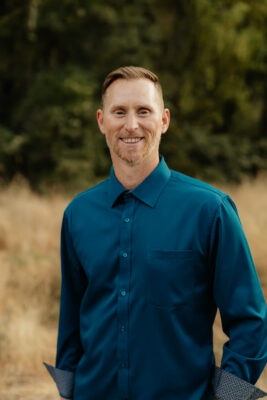 hypnotherapist, entrepreneur, and author Dr. Travis Parry to explore the hidden relationship between wealth, stress, relationships, and the subconscious mind. After losing his father to a stress-induced heart attack at just 49 years old, Travis began a lifelong journey to understand why so many successful entrepreneurs achieve financial success yet still struggle with fulfillment, burnout, and personal conflict.
Together, they unpack how childhood experiences, limiting beliefs, money psychology, and unresolved emotional patterns can quietly dictate financial outcomes for decades. They also explore why true wealth extends far beyond money and requires alignment across health, relationships, purpose, mindset, and business.
In This Episode
- How subconscious beliefs and childhood experiences shape your financial decisions
- Why entrepreneurs often struggle with burnout, overwork, and relationship conflict despite financial success
- The framework for creating holistic wealth through alignment in business, marriage, health, and purpose
Dr. Travis Parry is a financial hypnotherapist, entrepreneur, speaker, and author of Achieving Balance and Marry and Grow Rich. After experiencing the sudden loss of his father to a stress-induced heart attack, Travis dedicated his career to helping entrepreneurs overcome limiting beliefs, improve relationships, and create lasting success without sacrificing their health or fulfillment.
This episode covers financial psychology, wealth mindset, subconscious beliefs, entrepreneur burnout, financial freedom, personal development, marriage and money, financial planning, wealth strategy, business growth, work-life balance, holistic wealth, mindset transformation, and financial success.
Understanding who you are, really understanding who you are. When my dad passed away, it was a gut check, was who in the world am I? I had this sort of very spiritual but just wake up call slapped in the face if you would say, of who am I? What if I only made it to age 50? What if I died tomorrow? What would the legacy that I left look like?
How’s it going, everyone? And welcome back to Wealth Strategy Secrets of the Ultra wealthy. Today’s episode is a powerful conversation about the hidden connection between wealth, stress, relationships, and personal psychology. I’m joined by Dr. Travis Parry, author, entrepreneur, and financial hypnotherapist, who shares how the sudden loss of his father to a stress induced heart attack completely transformed his perspective on success and fulfillment. We dive into why so many high achievers struggle with burnout, overwork, and financial conflict at home, and how true wealth requires alignment across your business, health, marriage, mindset, and purpose. If you’re building a business while trying to create a meaningful life, this episode will challenge the way you think about success. Travis, welcome to the show.
Hey, thanks, Dave, for having me.
Yeah, it’s a real pleasure and an honor to have you on the show. And I know the audience is really going to get a lot out of this one as we dive deep into psychology, human behavior, all around wealth, vision. What does wealth really even mean for people? And how can we really embody that? Because we talk a lot about achieving financial capital, financial success, financial strategies, and those are all great. But when you’re truly aligned towards your vision, your values, and really creating this design of your own lifestyle, you can really, truly win in life. And I’m excited today to have you unveil some of the techniques and strategies you’ve used that you’ve written in your book and that you share with your audiences that are really quite unique. And so everyone knows Dr. Travis Parry is actually a financial hypnotherapist. So if you’re driving in the car, better buckle up. Right? We want full attention here.
We don’t want any crashes. But today’s discussion is going to be quite insightful. So with that, Travis, welcome, and why don’t we begin with your journey? I always find that there’s so many insights around people’s journey because it was about your life lessons. What led you up to this point? What type of clarity did you receive in your life that you can help share with us now?
You know, so I just grew up in a big family. There was eight of us, six kids. And my dad was an entrepreneur. I always wanted to be an entrepreneur at a very young age. I did pool deck renovations, pool cleaning. I worked in my family’s plumbing business. I did paper routes, refereed on the weekends. My friends are having fun. I was earning money. Probably one of the biggest reasons is when you’re in a big family, like, nothing just comes straight to you. And quite honestly, even if my parents were fabulously wealthy, I wouldn’t expect anything to just come straight. I wanted to earn it, and my parents taught me that. So that was a motivator for me to really get fascinated about money. And I thought, well, when I grow up, I’ll have to be some kind of financial professional, a financial planner or a stock trader. And so I was really fascinated by the market and a bunch of these things. And so I became a financial advisor, and I learned a lot about money and how to manage wealth, how to deal with tax implications, how does insurance fit in all this? And I was very holistic. And I went down this, what I would call traditional financial planning role and into this role and down this road. But I was building a business. And with that, you’re not just managing funds and helping people.
You are marketing and you’re networking and you’re doing sales. And quite honestly, that part of it was pretty stressful at first, until I found a niche, until I found my groove, until I started getting referrals. It was really bumpy. And so I was working a lot, working too many hours. I was stressed out. My wife and I had two children at the time, when I graduated school, and that’s not for everybody. It was for us. God said, hey, this is your path. We said, let’s go. And right about this time, I was pretty stressed out and trying to be all things to all people, because I thought that’s what you had to do. And my father, age 50, he was actually a month away from being 50. We were planning his 50th birthday party. We were doing all the things, super excited to come and visit him in California. I was up in Utah at the time. And all of a sudden I find out from my family almost all at once that dad is in the hospital. He had a heart attack on his bike ride, and nobody knew the status. So I’m waiting around, I’m two states away, trying to figure out what in the world’s going on, what does this mean? How does my really healthy dad have this problem? And only to find out that he passed away. So I’m completely devastated. My family’s devastated.
My mom, they’ve been married 25, 26 years at that point, is beside herself. And I spent the next two years really helping her rebuild her financial life and be there as a support until she got remarried. And in that process, I did a whole lot of research on stress induced heart attacks. And you can believe I was extremely worried because you’ve seen a picture of my dad, I look almost exactly like him. Body build, every, like there are some things I get from mom, thank goodness, and that helps round us all out with the DNA that way. But here’s the thing. I was concerned. I was worried about stress. And the more I worried about it, the more stressed I got and the more I realized I’m actually kind of a overworked workaholic. I’m in this industry to help people with their money, and I’m getting really stressed out trying to build this. And it’s impacting my marriage, it’s impacting my physical health. It’s pulling me away from God in some aspects. I’m developing habits of coping that weren’t healthy at all. And I couldn’t figure out how to get out of those. It was quite the piece of work. I know we all have challenges, I know we all have struggles, but for most men, we kind of hold them in, right? No, we’re the high performer.
We’re doing well, we’re doing fine, and we want to show the world everything’s just fine and it wasn’t. I tried to get help from coaches, from counselors, from any source that I seemed good, deemed worthy of just following scriptures. God and I believe God carried me through all this and he helped me to figure a lot of this out. So I decided to jump back into school. It’s like, well, let’s dive deeper into psychology because there’s obviously something here. Yes, there’s some health and routines and habits. Possibly, people say, well, DNA. Well, that’s a factor of why my dad possibly passed away of a stress induced heart attack. Why did the health community, why didn’t they capture this when he was going in for his regular physicals every single year? Like there’s just a lot of unanswered questions. But what I wanted to know was how to prevent this and why are other men in their 50s dying of heart attacks, just sudden heart attacks. Actually, heart disease is the number one killer in the United States, all ages, but specifically for men, very high, like number one. Between ages 35 and 55, they typically will have no symptoms and something called the widowmaker shows up. It’s a heart attack. If you survive it, you’re very lucky. But most don’t. So that’s why they call it the widowmaker. So anyway, heart disease is really rampant in our society and there’s tons of reasons, but I started to look into one of the main reasons.
Financial success alone isn’t enough if it isn’t aligned with the life you’re trying to create.
The main causes is stress. Stress produces all sorts of bad things for your body. And long term stress can result in diabetes, cancers, again, heart attack, all these things. And so there are different ways that people kind of cope with that. I started coping, I started trying to figure this out. And in my psychology degree, I really dove deep, I thought at that time, into what I call a level one and level two, more of a what’s going on with your brain? What’s going on with your conscious mind? How can you change habits? So if you want to change your diet, the doctor’s like, you got six months to live. Wow, that’s a motivating factor. That’s the conscious level. Well, if you want to really understand how to cope with stress, it’s more of a level two. Like how do you get into that space where now you can deal with the coping mechanisms, the emotions that most men don’t, you know, we don’t want to talk about.
Right.
We’re programmed and society tells us not to. So I complete my psychology degree and realize that most of my clients who have been taken through the traditional financial planning practice, they actually, most of the married couples don’t see eye to eye on money at all. And their psychology is so different that they’re often in conflict. And one will kind of be a dominant figure, typically the male, the man, the husband, when it comes to investing and wealth building, as it’s more on his mind traditionally, or a woman is typically, again, what I’ve seen when the research shows, typically controlling the pocketbook at home, right, where the money gets spent, what are we buying, what are we consuming, etc. etc. And I saw this divide and I realized, oh my goodness, yes, there’s communication issues around money, yes, there are family relational issues around it, but so much of it had to do with the individual psychology that even if you teach them how to communicate, even if you teach them about a financial plan and investing and all these things, one might be really excited about it. And the other is saying, absolutely not.
That brings me anxiety. I want to throw up. So I went to work and researched a lot, interviewed close to 2,500 business owners, over 1,600 couples, about money and psychology and overworking. Because overworking tends to be this coping mechanism for if we’re stressed, we overwork. We want to change something that we can’t control so we work more. Well, that makes our health and our relationships worse. So it’s kind of this addictive cycle, Dave. And so I wrote my first book, Achieving Balance, in 2020, had it published in 2021. I just finished Marry and Grow Rich. Those are watching, you can see that on the shelf there. We published last year. So it encapsulates these ideas of how do we actually achieve a sense of balance with our time and our energy, and then how do we get on the same page financially with our spouse? And a lot of it just boils down to our psychology. Wow.
Really love that, Travis. Yeah, I think psychology is literally 80% of this game. And it’s so fascinating because if you don’t figure it out, regardless of what your net worth, your bank account is today, as that grows, you’re still going to have the same issues, right? We’ve seen so many entrepreneurs, they have great eight figure exits, but then they still have scarcity of money, right? Or they still don’t see eye to eye with their spouse, even though they’re living completely abundant lives. So really, wherever you are on that journey, it’s all about getting great clarity on what that psychology is, what that means to you. And I think it’s about really living your best life and defining your own chessboard, rather than playing someone else’s game.
I can’t stress that enough, like how important that is, because that’s really the only way you’re going to achieve fulfillment. And if you can do that in an aligned partnership, in your marriage, then that’s going to even create much more freedom and alignment and fulfillment as well. So can you please break down some of the concepts in your book so we can get a little bit more of a sense of that and people can try to start to assimilate that?
Absolutely, 100%. Being on the same page financially with a spouse is supportive is, it’s the secret weapon. And this is why I wrote Marry and Grow Rich. So my framework is actually pretty simple. There are three types of business owners or high achievers. The first one is a what I call a type one. Type one is I really want balance. I want to go golfing whenever I want. I want to be at my kids’ recitals, I want to go on vacations. So I’m also afraid of working too much. So they won’t get their business to the next level. They won’t maybe even start the business that they know they should because they’re afraid. Does that make sense? So at this level they’re saying that because they enjoy some kind of comfort and peace of having balance. Well, that’s wonderful.
Having balance is great. I wrote a whole book about it. But if you don’t have the growth, you’re really going backwards. As we know, there’s external factors like increasing prices and problems in society that will bring us to really struggle to improve, like labor force increases, taxes, payroll, etc. all these things, right? And what we’ve discovered is that there’s a type two. This type two kind of has the opposite mentality. I really don’t care about balance. And they typically say there is no balance. Balance is baloney. Balance is 1990s. And I actually kind of agree with them. I’m the author of Achieving Balance. But I could have written a book that says the myth of balance because what we thought in the ’90s of balance was equal time in every area of your life. It’s impossible. You can’t do it. It is impossible. What is possible is creating priorities and then making sure that the highest things in life get accomplished. I call it the make time method. So those that are type two, they say I’m going to build my business or I’m going to work really hard. I’m going to use this word hustle.
Okay.
And there’s a hustle culture. Man, I thought hustle was getting to first base, right? Hustle, hit it and hustle, get out there, do the things. But no, what really people are saying is grinding. And grinding is the real word because they’ll grind and they’ll hustle, quote-unquote, and they’ll sleep under their desk, they won’t leave the office, they won’t do anything in the meantime. They will put off relationships, marriage, they will put off having children because they’re not at a financial place to do so. And it’s very fear-based. So a type 2 is that person’s like, yeah, I’m a workaholic and I own it. Okay. They almost wear it like a badge of honor. Well, in my research, I found that there is a type 3, and in this type 3, this is really what everybody wants. Even though they might say, well, I don’t want to grow my business because I don’t want to lose my balance, type one, or I don’t really care about balance because I’m going to grow and I’ll deal with my health and relationships in five years, I’ll put those on the shelf for a minute.
Well, they don’t know the detrimental effects that could happen in the meantime. They actually do want those relationships, but they’re afraid. They’re scared, they’re anxious, they’re full of shame or guilt or something. And in type three, we found that the ones who actually have the greatest business success, there are some anomalies out there, but typically speaking, the ones that have the greatest success in business and in their careers, they’re also very well balanced, meaning they make time for golf, they make time for their health, they have great morning routines and time with their kids. It’s not just quality time, but it’s quantity time. They take them on vacations, they enjoy being there together. Okay? And what a lot of them have told me, those type three business owners, entrepreneurs, high achievers, they’ve told me personally the reason why they were able to have such great balance was their team at home, their spouse and their children, and their team at work.
The team at home is ideal, like if you have a supportive spouse who sees the vision of your business, of your career, and they’re all in, you’re going to feel that and you’ll be able to grow while also keeping balance, where you might work a late night or have a weekend, sure. But if that’s every day and that’s every week, you’re going to burn out. And a good wife, typically speaking, is the one who is normally caring about health more than anyone else in the family. Throughout history, it’s why men die first. They don’t care about their health as much. Women go to the doctor, they always get checkups, they make sure that the kids go to the dentist. Right? On and on and on and on again. Are there men that may take that role? Sure, but I’m being very gendered here on purpose because that’s what the research is showing. And so men do very well with the brain that we have to decompartmentalize life. I’m at work now, I’m going to focus, I’m going to do my task, and then I’ll come home and I will be with my kids. That’s how our brains work. Okay? Now, that said, when the two work together, I believe that we’re equal and I believe that we need that partner, that supportive partner to help us stay balanced while we’re growing our empire, while we’re building our estate, while we’re building our business, whatever it is. And the two of you are way stronger than the single person alone.
Now, are there single people out there listening? Sure, I’m sure there are. Are there divorced dads or moms? Yeah. Can you make it? Yeah. There’s resiliency, I believe in all of that. I’m a big fan of that. I’m just simply saying what I’ve seen in the research shows that when married men and women really support each other at home, they’re going to have the balance they need and the space to grow their business at work. At work, if you have a supportive team, if you have middle management and employees and partners, whatever, that are understanding your vision for the company, your vision for the future, and they’re understanding that when you delegate or automate or delete parts of the business or tasks that are involved, that they get on board with that. They protect your time, they help you to grow. They’re not just in it for themselves. Right? We always say, what’s in it for me? Yeah, that’s important. They do care about that. But when they’re bought into the vision of the company, when they’re bought into the values that the company embodies and they get your direction, then everything is so much more fluid at work and you have a supportive team. I’m not a leadership expert. I’ve read a lot of books on it. But I will tell you, when you’re the thought leader in your space, in your company, in your industry, when you’re the thought leader and the rest of the company is falling in line, as I talk about in my book, that you can have a wonderful team that supports you because you’re helping the company to grow and you can 10x, you can exponentially grow. But most business owners do it backwards.
They want to control everything. They want to be the guy that’s doing the advertising, the marketing, the sales. They want to be in charge of client acquisition, and they want to have a say in every employee that comes in and out of the business, et cetera, et cetera. You get what I’m saying? So because they do that, they’re literally shooting themselves or figuratively shooting themselves in the foot because they can’t be all things to all people at work. Step one is to really just get focused on where you do well. I call it the playing field of work. In soccer, we look at offense and defense, right? So on offense you’ve got marketing and sales. On defense you have fulfillment and operations. Decide where you’re really good at and let everything else go. And then replace yourself and become the thought leader, become the CEO, the real CEO of the company and allow others to run the systems. The reason why most guys will never do this is because they have such an ego, they think nobody else can do it as good as them.
If you listen to any of my podcasts, I call it the D word: delegation. They struggle with delegation. It’s because they felt like they’ve built the business. So if I’m letting go part of it, if I’m letting go of client acquisition, oh my goodness, nobody will do it the way that I do it. It’ll die. It’s very fear-based. But when they can, and when they do, life totally changes and they can take their business to the next level. So support at home, support at work.
Yeah, really agree with that philosophy, Travis. And I think it’s challenging for people, right? Especially in this western culture. In the United States, we really reward the hustle and grind culture, right? And as you said, we wear it like a badge of honor. And there’s many people that promote it out there, right? Gary V, David Goggins, right? All these folks: just work harder, hustle harder, keep grinding and everything.
But I think you’re really right, is the people who can embody that level three. And the way I would describe that, and we’ve talked about this with our audience, is that I would describe absolute true holistic wealth as a formula. And that formula consists of actually six forms of capital, not just financial capital, but it also involves intellectual capital, it involves spiritual capital, it involves human capital, it involves social capital, right? So all of these other components that make that up to create that balance or harmony, as you say. And when you can have the relationships in your life, yourself, spouse, your family, to be able to support you on that journey, you know, you’re going to be exponentially more successful in your business, in your life, with the things that you have. And then conversely, right, you can be great with the family and at home if your business is good, like you said, if you’re excelling from that standpoint.
So tell us now, can you give us some hypnotherapy and kind of tell us how do we get there? I think a lot of us really understand that’s the challenge. And we understand, okay, we all want to get to that level three. We want that balance in our lives, we can see that, but it’s easier said than done, right? We get pulled in a lot of different directions and everything. So what’s an approach or some tactics that you can recommend people can achieve that?
Yeah. Well, you nailed it. Most of us, I mean, we live in the information age. Getting the right information is super important. And that’s why I put out books and podcasts and really tried to get the word out about these systems. But I’ve trained people on time management for years, and that’s why I wrote Achieving Balance. And I realized that, well, I need to get the spouse on board, I need to help them with their team at work. And so I wrote Marrying and Grow Rich. Well, those are systems. And to integrate a system, one needs a coach or a trainer or mentor.
So I’ve been coaching and training and mentoring for 20 years, and I love it. But I also found those that really struggle with limiting thoughts, limiting beliefs, that their psychology isn’t really aligned, they also struggle with implementation. So I have a certain percentage that they come on board, I mentor them, and they pay the money, they show up, but they just can’t put into practice the things that they say they’re going to do. So I’m going to use a different analogy here about going deep. Okay, so before I talked about the three different types, there’s a type one, there’s a type two, and then the type three, who’s balanced and he’s 10Xing his business.
Nothing changes until you identify and remove the limiting beliefs holding you back.
Right.
That’s awesome. And you’re exactly right, Dave. It’s the spiritual, it’s the physical, it’s all these other types of capital in your life. Those are the things that we really care about. And to be truly balanced, you’re working on the highest priorities, you’re healthy, you have great marriage, connection with God. Those are the three things that I hear from people over and over and over again. So that said, how do we then change behavior so that we can have what it is we desire? Well, that’s the $60 million question or whatever they say it is. And I’ve studied psychology in my master’s degree.
They taught us about behavioral change. It was all behavior change, behavior, behavior, behavior. What you see is what you can research, it’s what you can measure. So this is why all these studies in psychology, like with rats and mice and birds and monkeys, and then they’ll do experiments with humans. But humans are funny because as soon as we realize somebody’s watching us, we act differently, right? We all of a sudden, oh, the camera’s on, oh, we get really camera shy, or we do a dance, right? Psychology is fascinating, but as humans, what we’ve come to understand is that there’s really this divide between behavioral change and thought process change or the cognitive. And we were told, all through my master’s program, cognitive and behavioral, kind of this combination is actually the most effective.
Behavioral psychologists, they will say, “Nope, nope, nope. You want to change something, you have to change behavior.” Atomic Habits, right? This is like the number one personal development book out there right now. It’s all behavior, behavior, behavior, behavior. Okay. And then there’s the deep work. You know, you got Deepak and his book on deep work, etc. and it’s all about the psychology. It’s all about the cognitive. Well, I look at these in layers, and if the first layer, if you think of an onion, right, you got the outer layer, you’ve got to peel that back to get to the other layers. Well, the first layer, or the first level is the conscious mind. Right now you and I are talking consciously back and forth about concepts.
Somebody’s driving down the road and they’re trying to focus on it, but we’re going too slow, we’re not speaking fast enough. So they’re probably thinking about two or three other different things at the same time, right? Dave, you’re probably doing the same thing. Unless I’m talking too fast, you might be thinking about what’s the next thing you’re going to say, or how are you going to respond to Travis, etc. Well, that’s the conscious. It’s because we’re actually only here about 5% of our day. 5% logical, critical thinking, analytical, etc. But this is where most of the behavioral change is taught. So think about that. We’re at 5%. We’re trying to fight 95% of what’s going on in our day, which is happening in different parts of our mind. Level two is, and by the way, in this first level, this is where coaching, mentoring, training, this is where it all happens. Level two is understanding the brain, emotions, and how all of our stimuli—sight, sound, hearing, touch, taste, all of that, even spiritually, all these senses—how they give us a stimulus that goes to our brain, interacts with our thoughts and memories, creates an imagination and gives us an emotion.
So in level two, really understanding our emotions is key. The people who typically work here are therapists. “Hey Dave, talk to me about how you feel about that. What did you feel when your parents divorced? Okay, is that normal? All right.” And the work that therapists do is wonderful, like they really do a great job at level two. But if you peel back that first level, that layer of the onion, and you only get to layer two, you never really get to the heart, you never get to the center, you never get to the core. If you do, it’s because you’ve spent years and years and years in therapy. Does that make sense? Okay, so I’m not knocking any therapists. It’s what they know, it’s what they’re trained. It’s a very master’s level understanding. A layer deeper than that is the subconscious. And in the subconscious, this is this third layer. This is where all of your limiting blocks and beliefs are stored. Let me give you an example. Just the other day, a client of mine was really trying to figure out why he can’t break through his ceiling.
Why can’t he break through his income? Well, what’s going on? Like he really is sort of a type one where he enjoys the balance. He was kind of apathetic. He couldn’t figure out like, “I used to be so much more motivated, but now I’m kind of comfortable, but I want to do this. I’m just kind of stuck here in these behaviors, but I get overwhelmed.” And we found that when we drilled down into this third layer, it was because at age six, his parents got divorced and that six-year-old self started to take on some guilt and some anxiety because of that experience. What does that have to do with money, Dave? What does that have to do with money? Literally nothing. But his mind, since he was six and he’s in his 40s now or late 30s, for at least 30, maybe plus 35 plus years, whatever, he has been stuck with this anxiety.
So whenever he goes to take an action, layer one behavior, that third layer goes, “You can’t do that. That’s going to give you anxiety, it’s going to make you feel bad, you’re going to be at fault.” All these negative limiting blocks and beliefs come up into his mind, and so he does nothing. Makes sense.
If you’ve ever wondered how the wealthy use energy investments to reduce their tax bill while generating cash flow, we just answered every question on camera. Go to pantheoninvest.com/energy to find out.
Yep, this is what so many high producers, entrepreneurs, business owners struggle with. We might actually be really successful. Maybe we’re stuck at type one or we are an overworked workaholic in type two. I keep saying levels and types, but type one, type two, type three, we’re stuck there and we really want to be at the type 3 where we’re 10xing our business, where we have unlimited growth and potential, and we are healthy and wealthy and spiritually connected. But we’ve got these limiting blocks. I call them money blocks. But most of the time they’re not related to money.
Sometimes they are, sometimes they are. Our upbringing, we need to look at our money history. Where does this come from? That’s usually a good way to start, but that’s usually level two. That’s stimulus and stress. And level three is like what really got that kicked off. I’ve worked with some who just got stuck. They got left at a store as a kid and that created some sense of abandonment. Even though they loved their parents, it created a confidence issue. Some viewed pornography and they know it’s wrong, but their 15-year-old brother said, “Hey, you know what, this is great, I want you to watch with me.” And right when they saw their first images and they felt guilt, and that guilt has never left them. And that guilt, until it’s taken care of, even if they stop using pornography or watching it or using it as any sort of coping mechanism for stress or whatever, even if they stop using it, that guilt is still stuck in that 10-year-old self. Does this make sense?
Yes.
So how do you get rid of it? Well, this is, Dave, my admission. For the last 20 some-odd years I was convinced that if I was in the first layer, I could use the conscious mind to get rid of these layer three limiting blocks and beliefs. But all it really does is show you how weak you are, how weak the conscious mind is actually to the subconscious. So I buckled down and became a hypnotherapist because of my own experience. I experienced it myself, and in one session, my hypnotherapist got me down into a level four. Level four is what we call the superconscious.
So level three is the subconscious. Level four is a superconscious. It doesn’t have anything to do with superego, any of the Freudian stuff. This existed way before Freud came out with any of his theories, by the way. But in this area, you’re able to tap into a very spiritually minded part of your mind, not your brain. Your mind can exist outside your brain. Your brain can be dead and your mind can still be there. It still exists. People have come back from the dead, right? And they still have their mind, even though their brain was actually pronounced dead at one point. So that said, you can tap into this level four, into a hypnotic trance. I know for some people this is crazy. Like, this is lunatic. No, I’m not talking about being on a stage with a hypnotist who is doing comedian style show.
I’m talking about doing really deep work. And essentially what you’re doing is you’re tapping into your imagination and you’re getting rid of the blocks that exist in the subconscious by tapping into your superconscious. Superconscious is able to destroy those blocks and belief systems that are there in the level three, then level one, the behaviors, they can be changed, finally. For example, I’ve had a client I’ve been working with for about a year. He has read everything I’ve ever asked him to. He’s watched everything, done all of the steps to growing his business and keeping his balance. He just didn’t have the confidence. And this is very typical of a lot of men that I work with. Even though they’re type A and they’re high achievers, deep down inside, they’re being pushed by fear, they’re being pushed by guilt, they’re even being sometimes pushed by shame, trying to prove their worth, trying to show the world who they are. Because some sports coach, some parent, grandparent, whoever, some interaction that doesn’t even have to do with money, it’s caused them to feel this way. But once we went in one session, we nailed this, we just destroyed this.
It was major anxiety, major anxiety. Got rid of it in one session. He has had an absolute night and day 180 turn on his life. Watching him just take off in his career with opportunities that would never have been there ever in his life, are all of a sudden showing up for him because his mind has been radically reprogrammed. And I’m not talking a little bit of behavior change. I’m not talking coping with your stress at a level two. I’m not even talking like understanding your level three limiting blocks. I’m talking about getting to a level four and completely eradicating what’s going on.
Yeah, no, that’s really fascinating. And I believe that there’s so much opportunity for people, it’s truly an unlock to get to the next level in life by doing this deep work on your subconscious. And microdosing with psychedelics is one approach to do it. Hypnotherapy is another approach. But yeah, it’s really quite almost inconceivable how much you’re up till you’re seven years old, your inner child is created. All of those thoughts and beliefs that you have that literally shape you for like the rest of your life. And if you don’t come to grips with some of those things and figure them out and how to manage them right, you’ll always be, as you say, kind of have some of these ceilings in your life. And that deep work is really well worth it, working with the right person.
So really appreciate you sharing that breakdown. And it’s really quite a good approach. If you could give, I guess, now that we’ve kind of talked through your books and your approaches and everything, if you could boil it down to just one piece of advice that you could give to people about how they could truly accelerate their own trajectory around balance, around their financial life, around fulfillment, what would that be?
Great question, I think. Understanding who you are, really understanding who you are. When my dad passed away, as I talked about earlier, it was a gut check. It was, who in the world am I? And I had this sort of very spiritual, but just wake up call, slap in the face if you would say, of who am I? What if I only made it to age 50? What if I died tomorrow? What would the legacy that I left look like? Would anybody even show up to my funeral? If so, what would they say about me? Why would they be there? You know what, more importantly, what would God think about who I’ve become, not what I’ve accomplished. We’re all going to accomplish different things in life. No accomplishments are on the tombstones. If they are, that’s pretty rare, right? But quite honestly, our relationships are usually there: parent, grandparent, brother, sister, whatever, daughter, son. And so what really, really matters to me is making sure that I’m living my highest priorities in life.
I talk all about in Achieving Balance. That’s all there, a whole system of breaking that down. And while I can speak all day about families, family systems, marriage, and how important, and all the behaviors, none of it’s ever going to change unless you get rid of these limiting blocks and beliefs. So really getting clear about who you are and then really understanding what these limiting blocks are and getting rid of them. If you get rid of them on your own, phenomenal. But if you’ve had coaches, trainers, therapists, even financial planners that were not really trained to do this deep level work, we may know about it, but because I’ve had experience in all these different areas, Dave, I’ve really felt the call to go deep here with people and I’ve seen more actual change, lasting change—not just going to a class and going back to where you were six months later kind of change, or going on a retreat and then getting back into the routine kind of change, lasting change.
So yeah, you know, if that’s something that you guys are interested in, you want to explore that, definitely reach out on my podcast, The Travis Parry Show. I have a whole just one hour session on this. We’ve kind of done the highlight here on this podcast. I really appreciate that, Dave, but there I talk all about the levels in deep details. And if that’s something that you want to take me up on, please reach out and I’d be happy to tell you how we work with you.
Yeah, I really appreciate that, Travis, and couldn’t agree more. I think you could literally spend your lifetime going to every Tony Robbins seminar there is, reading all the self help books. But this level of work really requires a specialist to be able to access your subconscious in a really unique way. So if you’re really committed to making change and making it to that next level in your life, I highly recommend working with someone like Travis or anyone to be able to help you to get there because it’s something that, it’s because you can’t try to solve it in your language from a type 1 or level 1, level 2 of trying to think about it with your cognitive brain, it really, it just doesn’t connect.
You know, you need that deeper level. So really appreciate your insights and thoughts today. Lots of wisdom here. And you mentioned your podcast. Any other places for people to connect with you, or is that the best place?
The podcast is great. My books, highly recommend Marry and Grow Rich. I mean, it’s the latest and greatest. I’m working on a new one. It’s coming out probably next year. But Marry and Grow Rich has all of the how to work with your spouse at home, how to work with your team. But again, it’s very much a level one type of interaction, like here are the patterns, here are the behaviors. If you want to know about my books, if you want to know about me being a guest on your show or speaking for your business or event, I would just say go to travisparry.com—Parry with an A, so travisparry.com—and I’ve got my books there.
I have my podcast. And yeah, everything you need to know about me is on that website. And grab my book, Marry and Grow Rich, marryngrowrichbook.com. You know, pull the audio down. For five bucks, you can get it on Amazon. Of course, you’re gonna, and I even give you a discount for getting the paperback and I’ll throw in the audiobook for you for free. So go there if you’d like, but everything’s going to be there at travisparry.com.
Awesome. Thanks so much, Travis. Appreciate it.
Thanks, Dave.
Thanks for listening to this episode of Wealth Strategy Secrets.
If you’d like to get a free copy of the book, go to Holistic Wealth Strategy. That’s holisticwealthstrategy.com. If you’d like to learn more about upcoming opportunities at Pantheon, please visit pantheoninvest.com, that’s pantheoninvest.com.