

Listen Here



What if the biggest threat to your wealth isn’t a market downturn, but failing to protect the assets you’ve already worked so hard to build?
In this episode of Wealth Strategy Secrets of the Ultra Wealthy, 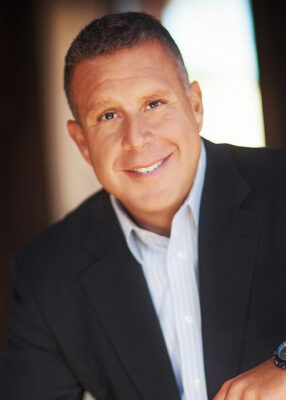 Dave Wolcott sits down with David Warren, founder of Bridgeford Trust Company, to explore how modern trust strategies are reshaping asset protection and estate planning. They discuss domestic asset protection trusts, dynasty trusts, the importance of choosing the right trust jurisdiction, and how entrepreneurs and affluent families can potentially strengthen privacy, improve tax efficiency, and preserve their wealth for future generations.
What You’ll Learn
- How domestic asset protection trusts, dynasty trusts, and modern trust structures can help eligible families protect and preserve their wealth
- Why selecting the right trust jurisdiction, including states such as South Dakota and Nevada, can make a meaningful difference in asset protection, privacy, and tax planning
- How to coordinate estate planning, asset protection, and your advisory team to create a more flexible and effective generational wealth strategy
David Warren is the founder of Bridgeford Trust Company, an independent trust company specializing in modern trust structures, asset protection, and estate planning solutions.
With more than 15 years of experience building Bridgeford, David has worked with affluent families, entrepreneurs, family offices, and their professional advisors to implement sophisticated trust strategies. His approach emphasizes independent trustee services, jurisdiction selection, and leveraging modern trust laws without unnecessary complexity.
Asset protection, estate planning, wealth preservation, generational wealth, domestic asset protection trusts, dynasty trusts, South Dakota trusts, trust jurisdiction, directed trusts, trust protectors, independent trust companies, family office planning, estate tax strategy, creditor protection, privacy planning, high-net-worth estate planning, legacy planning, wealth strategy, and asset protection for business owners.
I’ve always said, and I’m adamant about it, that for us to ignore what’s going on around us, and when I say us, I mean you and me as planners in our industries, to pretend this craziness is not happening, would be a disservice to our clients. Our clients are worried about this. So I think our job is to help them find some modicum of certainty in a chaotic world. That’s where the asset protection trust means a lot to them, and where the privacy provisions mean a lot to them.
Hey guys, welcome to another episode of Wealth Strategy Secrets of the Ultra Wealthy. What if the biggest risk to your wealth isn’t a market crash, but failing to protect what you’ve already built? The ultra wealthy understand that building wealth is only half the equation. Protecting it from lawsuits, unnecessary taxes, and generational risk is what creates a lasting legacy. Today I’m joined by David Warren, founder of Bridgeford Trust Company, a pioneer in modern trust strategies who helps affluent families and entrepreneurs leverage sophisticated asset protection, tax planning, and estate planning solutions. In this episode, we uncover how modern trust laws are changing the game, from domestic asset protection trusts and dynasty trusts to the powerful advantages of choosing the right jurisdiction, like South Dakota. We’ll also explore how to protect your assets without sacrificing control, reduce unnecessary complexity, and create a legacy that can endure for generations. David, welcome to the show.
Very happy to be here.
Such a pleasure to have you on the show today. I’m really excited to dive deep into estate planning and asset protection, because throughout my journey I’ve found it to be a very complex topic. It’s very unique to your individual needs: your legacy, the risk exposure you currently have, what your family makeup looks like. I find it’s almost like buying a TV these days. You walk into the store and there are things you haven’t even heard of before. It used to be 2K, then 1K, now it’s 4K or 5K. And in this world, you can actually overbuy. The ROI isn’t as good, and it also creates a layer of complexity and administration that makes these plans very difficult to implement. So I want to walk through some of the specifics, the structures you can create, but also the practical side: how you can more effectively and simply manage this level of complexity around asset protection and estate planning. With that as a backdrop, David, tell us how you view this entire space. I know you have a unique philosophy, so let’s start at the 30,000-foot level before we jump into the specifics.
Thank you for the question. This industry has become incredibly dynamic across the board. I always chuckle, because when I was a law student, I did not like trusts and estates at all, and now I’ve grown up to found and own a trust company. The big story, and exactly what you said, is the ability to do asset protection and high-end tax planning while removing the complexity. And the big story around all of that is modern trust law. There are so many things we can do in the United States now that didn’t exist when I was in law school, or when I was a young boy. Asset protection is for certain one of them.
In the old days, to get asset protection or high-end tax planning, and I should say none of what I’m about to talk about is illegal or nefarious, of course, we follow the rules, you’d think of people going to the Cook Islands or Nevis or elsewhere around the world to achieve asset protection. For a whole myriad of reasons we can get into, that’s less attractive to very large families now, and they’re realizing there are ways to structure their assets in the United States that bring a tremendous amount of asset protection and privacy, plus the tax benefits, all within a framework of maintaining direction and control through some really powerful aspects of modern trust law, called directed trusts and trust protectors, which we can get into.
So for me, this trust industry is a brand-new paradigm. Over the last 15 years of growing Bridgeford Trust Company, we’ve seen the evolution of independent trust companies that have flourished in this new environment, fueled by modern trust law. When I say independent trust companies, I mean companies that exist only to serve as a trustee. They do not manage money, they do not sell insurance, and they’re very specific and niche-oriented. That’s important because of some of the traditional criticisms of the industry, and we can talk about that.
Along with the big story of modern trust law, what makes this whole thing rhyme is the ability to find the correct trust jurisdiction. There’s a quote I love that has really been our mantra for over 15 years. It came from a speech someone at Bernstein gave: the decision as to where to put a trust is as important as the decision to create a trust in the first place. I think that’s more true now than ever. You see the proliferation of top-tier trust jurisdictions in the United States: South Dakota, where we are, Nevada, and a handful of others. It’s an exciting time for families, who have a lot more choices than they otherwise would, including the ability to work with your firm and my firm as independent co-equals. That resonates. So it’s a big-picture reason we’re so excited about what we’re doing at Bridgeford: we think we’re solving an industry problem while delivering exactly what the market has been demanding, which is flexibility, independence, and no conflict of interest.
Got it. One of the things I’ve really enjoyed doing over the past 25 years is what I call curating ninjas. Through many mistakes and trial and error in hiring, say, a trust attorney, I found that when I was younger, I’d think, “Sure, your financial planner has a recommendation, or your brother-in-law’s friend is a trust attorney.” You set up a will, maybe you set up some irrevocable trust, and you check that box and feel like you’ve got something in place. But as you know, I spend time with nine-figure family offices and very advanced structures, and there are a lot of unique and advanced planning strategies for people with different needs. It could be a very high-income individual like a physician, or an entertainer who has much more exposure from the work they do, or someone with an extensive legacy plan. So help us think this through: where is the beginning level of asset protection, what’s the most basic thing you should have in place, and how does that expand out based on certain needs?
That’s a great point, and I want to touch on something before we get to that specific question. The challenge in our industry is what you alluded to: people think they have a will, they have a trust in place, they’ve checked the box and they’re fine. They don’t even know what they don’t know is available to them in the marketplace, because modern trust law has advanced so fast. So I’m a huge believer in education, education, education. That’s what we focus on at Bridgeford very heavily. We also have a podcast and a YouTube channel, all about explaining asset protection, what a directed trust is, and how modern trust law can benefit you. We do a lot of speaking around the country, because we’re so passionate about making sure families understand this is available in top-tier trust jurisdictions.
You might wonder why I’m saying that. It’s because I continue to be shocked at how many families have not been given this advice by their financial planner, their attorney, or their CPA. I’m not being critical of any of those industries, because we’re all on the same team. But what we talk about at Bridgeford, and what you talk about on your podcast, are big ideas that have been proven, that aren’t nefarious, and that are being used by the top planners, not just here but around the world. We have representative offices in Miami, Newport Beach, and Silicon Valley, and soon New York City. If any of your listeners are in New York City, join us on November 4th for a big launch party.
My point is that I’m in and out of all the largest markets in the United States, and I’m constantly surprised at how many practitioners aren’t talking about domestic asset protection trusts and haven’t kept up with how they’ve evolved, or about jurisdiction selection and how important it is. Does it ever make sense for a nine-figure family to have a trust in California? Probably not, for a whole myriad of reasons, and taxation is just touching the surface. That’s why we’ve become so passionate about making sure people understand what’s available, and not in a salesy way, but in a real thought-leadership way: this is what asset protection is all about.
To your question, there are various ways to achieve asset protection. Before domestic asset protection became a thing in the United States, about 20 or 25 years ago, the traditional way for married couples was to hold everything as tenants by the entirety, which was a rudimentary way of getting some pretty solid protection. There was also the ability, even before that, to create LLCs in states with stronger LLC laws than others, Delaware in particular, and South Dakota for sure, and Nevada. Those were the precursor moves. Then there were third-party trusts, which is an important aspect to understand before we talk about domestic asset protection trusts.
A third-party trust is exactly what it sounds like. You set up a trust for the benefit of your son or daughter or someone else, not yourself, and in that trust there’s a spendthrift provision. That provision brings asset protection, which means it’s very, very difficult, in some cases I’d argue impossible, for a creditor to pierce a third-party trust. Here’s an example: you set a trust up for your children and put $5 million in it. You’re not the beneficiary; they are. The spendthrift provision is there. Your son or daughter gets into a bad car accident, some people are injured, and they get a giant judgment. Then they say, “There’s a $5 million trust there, let’s go satisfy the judgment.” They go into a jurisdiction, hopefully a top-tier trust jurisdiction, and the court says that’s not the beneficiary’s money, because of that spendthrift provision. That’s widely accepted as a very powerful form of asset protection in the United States.
But here’s the exciting part, in my opinion. Following the lead of the Cook Islands and the Channel Islands and the other traditional asset protection havens around the world, states like South Dakota, Nevada, and Delaware, and now somewhere between 16 and 20 states in all, have adopted something called a domestic asset protection trust. That’s a legal term. What makes it different is very important for your audience to understand, because it’s exciting: in this instance, you can settle the trust for your own benefit. You can be the settlor, you can fund the trust, and you can be a beneficiary. After a time certain, which in South Dakota is two years, asset protection vests.
That’s powerful for business owners, for physicians, for anybody worried about a creditor or claim or divorce. If it’s done before a divorce, we see this used all the time instead of a prenup, because prenups are messy, complicated, and hard to deal with. This is what revolutionized, for lack of a better word, and it sounds dramatic but it’s true, what has become an industry in the United States for asset protection. In the early days of the self-settled asset protection trust, there was a debate about whether they would work. I would debate it for years at conferences, and I’d say, “Show me an instance where it has not worked.” As I sit here now, there’s not a single case in the United States that has pierced a domestic asset protection trust, other than when there was outright fraud.
Let me define what I mean by that. If you contacted Bridgeford and said, “David, I just got a judgment against me, I have to move $5 million into a domestic asset protection trust,” a court would call that a fraudulent transfer. You knew you owed somebody $5 million. But if you said, “David, I do a lot of work in the financial services industry, I’m a high-risk business owner, I have no reason to believe anybody is upset with me, and there’s no claim against me,” then I’d say there’s no fraudulent intent, and after two years the protection vests. There’s tremendous support around the country now, and commentators have embraced it. There are cases that have held these spendthrift provisions work, because that’s what it all turns on: the same legal framework.
It’s compelling for many reasons, primarily because the appetite for going offshore for asset protection is gone. You may be familiar with the Common Reporting Standard, CRS. A lot of the offshore haven jurisdictions have signed up for it, and the United States has not, which means the United States isn’t sharing information on a worldwide basis. That drove a lot of people to come back to the United States, because they didn’t want their information shared worldwide. Also, large families started to wonder: if I could have my assets in the United States instead of some island in the middle of the ocean with a shaky banking system, I’d rather have the certainty of the U.S. banking system for housing and custody. So offshore asset protection trusts have become very much out of favor. I’m not arguing that they don’t work, but that’s not what families really want to gamble on.
The final thing I want to mention, because I get passionate about it, is that the game here isn’t so much whether it works. The game is that when a creditor tries to get through to your domestic asset protection trust, plaintiffs’ attorneys often see you have one, say in South Dakota, and think, “This is going to cost the client way too much money to try to pierce. Chances are very slim.” So it behaves more as a deterrent. Instead of the $5 million they want from you, they’ll settle for $50,000, because they know it’s going to be too complicated and too protracted. They have to come into South Dakota, they have to sue the trust company, and it’s a long, expensive process. So I always say we sometimes miss the point of what asset protection is. It’s throwing up as many legitimate barriers as you can to dissuade a plaintiff’s attorney from wasting their time trying to get into the assets in your trust.
We’ve written a lot about it, and when you break it down, it’s not complicated. There’s also a mechanism under modern trust law, in addition to being the settlor and enjoying a beneficiary interest, meaning you can have all the income, that keeps you in control of various aspects of trust administration. I’ve mentioned it a few times: the directed trust, which lets you maintain tremendous decision-making authority over the investments and various other aspects. That has been tested, and it has never been a problem in using these asset protection trusts to dissuade creditors.
When I think about asset protection, I think of it almost like the castles in medieval days, where they had a moat around the castle. You’re trying to build a moat around you to provide some fortification and protection. And in a world with so many different products and so many people giving different advice, I find you could actually build multiple moats, almost like an onion, where you keep going based on what you need. But let’s help the audience understand who this is a fit for. Who would a domestic asset protection trust be a fit for? Who is maybe just fine with a basic will and trust setup? And who are the people who need something greater? Is it determined by the amount of assets they have, or by the exposure they face? How would you walk through that?
Building wealth is only half the equation. Protecting it is what creates a lasting legacy.
I love that question, and I like that you mentioned the size of assets. It’s absolutely not the size of assets, in my opinion; that’s relative. Our firm’s work has been with very large families, but if somebody has a million dollars, it’s as big to them as a billion dollars is to somebody else. If they want to protect it, they should be able to protect it, which is why we don’t particularly have minimums at Bridgeford. But the profile, in the last 15 years, has been business owners of all kinds, in particular construction company owners from all over the country and around the world, even out of India. We also have lots of physicians who carry a degree of insurance, but if they get hit with a $20 million verdict, it’ll use everything, so there’s a lot of interest there.
We’re also seeing a lot of private equity professionals, young men and women doing extraordinarily well, who use it instead of prenups. As I mentioned, they’d rather do that, and the advantage unlike a prenup is that there’s no disclosure. You don’t have to tell the spouse or prospective spouse the trust even exists. With a prenuptial agreement, there are all kinds of financial disclosures, and every state has a different rule about how many days before the marriage it has to be signed. A domestic asset protection trust can be signed and funded the day before a marriage, and it isn’t designed to be a nefarious tool to disadvantage the spouse. Sadly, divorce is a reality, and why shouldn’t any man or woman have the ability to protect assets going into a marriage? We’re seeing more and more of that.
Then you have family offices. What we do, and what your business does, is really about protecting families from themselves, in current and subsequent generations. I love the HBO show Succession, a pop-culture example of the very worst that can happen with extreme wealth, and asset protection was a big part of that. In some cases you’re protecting siblings in the next generation from each other, or from themselves, because you never know who’s going to go crazy. Sometimes money makes people make some crazy decisions. You and I could do a whole other podcast episode on the crazy stories we’ve come across in our careers.
Back to the profile: if we have an executive at a company who’s very wealthy but may not have a lot of risk and carries a lot of personal and umbrella insurance, we’d say maybe it’s not necessary. We’d like to see umbrella policies; very wealthy people are always a target anyway if there’s a car accident or somebody falls down the stairs in a rental property. That’s another demographic we work with: lots of real estate moguls around the world with both commercial and residential property, who can’t get enough protection. Somebody’s constantly falling down, and in some cases there’s a cap on the insurance the companies will give.
The nice aspect is that in the old days of going to a trust company, you lost control. You couldn’t choose your asset manager, and it was hard to get distributions. We all know what was wrong with the industry, and that’s really why we started Bridgeford: to be the antithesis of all of that. All of this asset protection comes with not much inconvenience and doesn’t disrupt people’s lives. They can still work with you, they can still custody their assets wherever they want, and they keep making all those decisions. It really is the best of both worlds, and that’s what gets me excited, because when I was in law school, I didn’t like trusts and estates since I thought it was so rigid and stodgy. Now it’s dynamic, and it’s exciting what we can do for families.
For years, I thought building wealth meant finding the next great investment. But as my portfolio grew, so did the complexity. I had real estate, private investments, insurance, tax strategies, and multiple advisors, yet no one was looking at the entire picture. I was still the one trying to connect all the dots, wondering if my wealth was actually working as efficiently as it could be. That experience taught me something most successful investors discover too late: building wealth isn’t just about owning more assets, it’s about making sure every part of your financial life works together. That’s why I created a complimentary masterclass called the Wealth Friction Tax. It reveals how disconnected investments, tax strategies, advisors, and financial decisions can quietly erode your wealth, and introduces a more coordinated way to manage it. If you’ve built significant wealth but still feel like you’re the one holding all the pieces together, watch the complimentary masterclass at contrarianwealthbuilder.com.
Now really love that. You mentioned a triggering event, obviously marriage is one potential event, but I find this is hard for people, because you may have to make an initial investment and might not see the ROI right away. Unless people have some kind of event, like their teenager being in a car accident, it isn’t front and center how important asset protection is. Are there other events, or ways people should think about this in their planning?
That’s a great question, and I’m glad you took this in this direction. When somebody comes to Bridgeford looking only for asset protection, I try to explain there’s a whole other bunch of advantages in addition to asset protection, which gets to the ROI. Usually we see the asset protection conversation in conjunction with a tax play, such as getting assets out of a high-tax state like California into a no-state-income-tax jurisdiction like Nevada or South Dakota. That’s very much an asset protection play too. We talk about protection from creditors, but protecting assets from unnecessary taxation is another form of asset protection, and often those two objectives coexist when people talk to us. It usually isn’t just, “Bridgeford, I need asset protection because someday somebody’s going to fall down.”
It’s more like, “I’m going to sell this business in the next two years, and I want to sell it in a jurisdiction without state capital gains tax.” That still works very well in places like New York and California, which have tried to block it, and there are still ways to do that. So there’s a very powerful ancillary tax benefit. There’s also, perhaps not even ancillary, the primary tax benefit for a liquid portfolio. Say you’re managing a $25 million portfolio for a client inside a trust. If the trust is in a jurisdiction without a state income tax, the home state can’t tax undistributed income. A lot of attorneys still haven’t embraced this, and even CPAs have challenged it, but there’s a Supreme Court case on point, Kaestner, which came out six or seven years ago.
So we talk about modern trust law as a bundle of advantages, and asset protection is one of them. The other huge advantage is privacy. We live in a world that’s increasingly transparent, and I think we should be vigilant about that. We all have a right to privacy. South Dakota unequivocally has the most powerful privacy provisions in the country, so strong that families from around the world are placing their trusts in South Dakota. I’m not talking about hiding anything from the government; that’s secrecy, and it’s not what I mean. We’re talking about privacy: a family’s ability to decide who even knows of the existence of the trust, including their own siblings or their own children in the next generation. It’s called a quiet trust. Large families, especially first-generation wealth creators, love the ability to keep this information out of the public domain, and I think they’re entitled to it. South Dakota became the leader in this many years ago, and there are things you can only do in South Dakota to protect a family’s privacy.
That was another thing we saw with Succession: part of the problem in that show was that everybody in the family knew too much. Maybe the second and third generations are better off not knowing exactly how wealthy mom and dad are, so they learn the value of wealth. That’s an individual family discussion. But my point, going back to your observation, is that there are multiple advantages to selecting the proper trust jurisdiction that come along with asset protection, and they get to the ROI question.
If I can show a family, “Hey, you place your assets in a jurisdiction that has a dynasty trust,” your audience probably knows a dynasty trust lives forever, meaning it will never be forced to distribute the assets, which means those assets will never be subject to federal estate tax. That’s pretty powerful. Talk about ROI: avoiding, in perpetuity, the 40% tax the government can take. We know those thresholds go up and down, but we deal with families who worry about these issues. Then there’s the proverbial no-brainer: paying, say, $10,000 a year to a trust company that brings you asset protection, privacy, and these tax plays, and you can show on a spreadsheet that you’re going to save millions and millions of dollars over the lifetime of your family dynasty. It becomes a very easy math equation, and the cost is not cost-prohibitive. You and I can partner very well to serve these families, in some cases more cheaply than the traditional bundled model you’d see at a bank in New York or Maryland. The fees always make sense because families are typically saving so much in state and federal taxation.
David, walk us through an example. Let’s say I’m a prospective client looking to work with you. What is your process, and how would you walk through structuring that?
We have a very specific process, and we’re lucky to get a lot of interest from families all over the world directly, because of all the thought leadership, writing, speaking, and the podcast. Last year we had over 650 inquiries through our website, and the majority were serious people saying, “My lawyer didn’t say anything to me about this. My CPA didn’t either. This is for real.” So we’re typically in a situation where very sophisticated people step outside their advisor team and contact me directly, in many cases. I’m very careful to say that although I’m a lawyer, and we have several lawyers on our team, we’re not practicing law. I’m sure you make that same disclaimer too.
Our process is very disciplined. We talk about big ideas and what other families have done, and then I very quickly bring in an attorney we know understands this, or I meet with their attorneys and say, “Here’s how this works. Here’s template language. This is what other families have done. This is what this expert has said.” There’s often an education session with their own advisory team, which is usually very successful. Nobody wants to lose a client, so sometimes advisors get defensive, and I say, “Don’t be worried about me. I’m not going to steal your client. I don’t want to manage the money, we don’t sell insurance, and I don’t want their banking relationship. We’re part of your team.” Even with the lawyers, we’re not taking your client to another attorney. Here’s what you need to do to get this done, and you can do it.
In instances where families are just mad at their service team and want a full change, or don’t really have an attorney they trust, which surprises me, I’ve met lots of hundred-million-dollar families who have a business attorney but not an estate planning attorney, we’re lucky to have a cadre of attorneys all over the country who understand how to do this in every major city where we operate. And of course, South Dakota itself has a tremendously sophisticated bar. They’ve watched the evolution since 1983, when South Dakota abolished the rule against perpetuities, which is what kicked this whole thing off, in my opinion, the modern trust. Some of the most sophisticated, clever, creative attorneys I’ve ever met are in South Dakota doing this work. So we quickly pull somebody in, whether it’s their existing attorney and advisor team, or we build one around them with the professionals we work with, not just in the United States but around the world. I’m very, very picky about that. When I’m in L.A. sitting with a law firm that doesn’t have any idea how any of this works, I’m concerned, and a lot of time goes into the education, so I gravitate toward firms that have done this multiple times.
The process continues: we get the advisor up and running, whether existing or one we bring to the table. The attorney drafts and gives the legal advice. At the same time, we work on the onboarding process, which is much like opening a bank account. At Bridgeford we’re particularly nimble, so we move quickly, and we can get it done in a couple of weeks, depending on how quickly the attorney moves. Then it goes through a trust committee, which I chair, where we very carefully review the documents and the situation and accept the trust. Then we develop a relationship with an asset manager, since as I mentioned, we don’t manage money on purpose, and we slowly build a very strong relationship with the current team, or help build one. The trend has been that we’re helping very wealthy families build a whole brand-new team, which has been a bit of a surprise to me, because they’re so upset that their current team never mentioned a dynasty trust or how asset protection works in the United States.
It’s fun to watch the evolution, and if we have time, we could talk about how the independent model is under siege a little. But the modern trust law story is real and only getting more compelling. If you look at Trusts & Estates magazine, there are charts comparing jurisdictions, and we have a very detailed chart of our own. This jurisdiction discussion is red hot right now, and for an advisor or attorney in particular not to raise it is a problem. You can show damages. If a California family was never told they could simply move a trust to Nevada or South Dakota and save an enormous amount in state income tax, and I’m the patriarch of that family, and I find that out, I’m not going to be too happy with my lawyer, and I might think about seeking damages. So I think attorneys need to pay very close attention to this. I think it’s a matter of time before a case works its way into the court system where somebody gets sued for malpractice for not making this recommendation. I know that’s a scary word, and I’m a lawyer and never like talking about it, but again, this isn’t voodoo. There’s no scheme here. This has all been tried and tested, and there’s even case law that supports it. For an attorney not to at least mention it could cause some problems in their practice.
We’re in Q4 right now. What should people be thinking about as they come to the end of the year? If you were to give them an asset protection and tax audit to uncover gaps, when, and at what level, do they need asset protection?
That’s why there’s usually a surge at the end of the year to get these trusts in place before December 31st. Often it’s driven by the sale of a business, or sometimes there are false deadlines, where people just want to start the new tax regime on January 1st, so that when they file the next round of taxes, they enjoy some benefit of no state income tax. Then there are market forces. Yesterday or today there was an article in the Wall Street Journal about the wealth tax, and how families are starting to panic around the country, not just in California, though California is leading the wealth tax discussion. That should drive advisors to call trust companies like ours in Nevada and other top trust jurisdictions. Those kinds of developments often drive the urgency more than anything else.
The other thing driving the urgency, quite honestly, is the geopolitical chaos and uncertainty, which I think is unprecedented. It’s why we’re going to get more than 650 inquiries through the website this year, probably close to a thousand. And you know what the theme is? What is going on in this country? This isn’t a political statement, and I’m very careful to say these are statements of fact. As an attorney, and I’m sure you’re very well educated yourself, we’re seeing things I don’t think any of us could have predicted. Tariffs, no tariffs, war, is it a war, what do we do, threatening this, threatening that, Canada is now our enemy. Nobody ever anticipated these things. So very smart people and very wealthy families are spooked, and they’re coming to us looking for asset protection and privacy more than ever. I think it could be a year-end deadline because they’d like to start fresh, but everywhere I speak around the world, this is front and center.
I’ve embraced it, and I’ve been criticized a bit for being a little too political. I’ve always said, and I’m adamant about it, and I say to your audience, that for us to ignore what’s going on around us, and when I say us, I mean you and me as planners in our industries, to pretend this craziness isn’t happening, would be a disservice to our clients, because our clients are worried about this. I think our job is to help them find some modicum of certainty in a chaotic world. That’s where the asset protection trust means a lot to them, and where the privacy provisions mean a lot to them. I get very passionate about this because we now live in a world where modern trust law allows families to avail themselves of all these great planning techniques without giving up control.
What I’ve said is anecdotal, since I haven’t done a study, but the theme is there. Going into the midterms, people are very nervous, and I’m not talking about red or blue or whatever color it becomes. There’s a lot of anger, a lot of unhappy people, a lot of scared people. I’m 53 years old, and I never thought I’d see this. Pretending it’s not happening is a disservice, and I think we need to talk about it with our families and say, “Here are some things you can do.” I’m sure on the investment management side you’re talking about building portfolios that protect against the uncertainty somehow, and that’s what you’re good at. We have to think about it. I’m glad you asked that question, because that’s been the biggest driver for the last 12 months.
If you could give just one piece of advice to the audience about how they could accelerate their wealth trajectory, what would it be?
Focus on the jurisdiction question. Get the right team in place, one that understands how to operate in a top-tier trust jurisdiction. There are three or four excellent ones, and we happen to be in South Dakota. I think that’s the single biggest factor right now, especially for families in high-tax states like New York, New Jersey, and California. There are also states that don’t have asset protection statutes. To take advantage of the very best of modern trust law that exists in the United States right now, that’s a threshold question. If your advisory team doesn’t understand it or hasn’t embraced the conversation, I encourage you to talk to somebody who has, because this is only growing and isn’t going away.
We’re all trying to do the right thing for the client. It’s not a punchline at a cocktail party; we’re in a fiduciary role, doing what’s best for the client. I don’t believe certain jurisdictions in the United States are in the best interest of the client. And there has been case law out of the Massachusetts Supreme Court suggesting we all have a fiduciary duty to best protect the assets. If those assets are in a jurisdiction without asset protection, without privacy, and without the tax advantages, it can be argued that we’re in breach of our fiduciary duty to those assets and to subsequent generations. That’s how important this has become. I think it’s paramount, and it’s what we continue to talk about.
Building wealth means nothing if you fail to protect it.
Excellent. David, I can’t thank you enough for all your wisdom today. I know I learned a lot; I’m always learning on this topic. It’s very exciting, as you say, and dynamic, and really changing. I encourage listeners to do some deep thinking about this and start to get educated, because whatever your net worth is, you’ve worked so hard to achieve those assets, and protecting them for your family and your vision means everything. I love being proactive versus reactive, because otherwise you pay ten times the price and it becomes a much bigger resource drain. So be proactive; the end of the year is great timing to be thinking about it. David, if people would like to connect with you or your firm and learn more, what’s the best place?
Thank you. Through the website; we’re really proud of it. There’s lots of education on there, and it links to all of our thought leadership. There’s an easy way to connect directly with me or with our team to ask any questions, and I like to take a lot of the initial calls, so I welcome them. These conversations are great, every story is different, and everybody has a story they want to tell. I love that. Thank you for the opportunity to tell our story and explain why we’re so excited about what we’re doing in the industry. It’s changed so quickly, and our goal, and I think our collective objective, is just to keep up and make sure we’re doing the best we can for our clients.
Awesome. We’ll make sure to get the link in the show notes for everyone. David, again, thank you. Grateful for your wisdom, and we’ll see everyone on the next one.
Thanks for listening to this episode of Wealth Strategy Secrets. If you’d like a free copy of the book, go to holisticwealthstrategy.com. If you’d like to learn more about upcoming opportunities at Pantheon, visit pantheoninvest.com.